On Medicine and Music
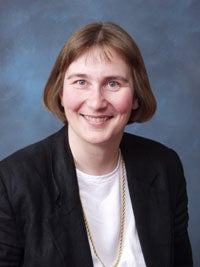
Kirsten E. Fleischmann, MD, MPH, FACC
In 1982, Dr. Fleischmann received a degree in chemistry from Case Institute of Technology and a degree in music from Western Reserve College.
 I am a musician. I'm also a mother, physician, wife, researcher, and teacher--but my involvement with music predates all the others. Music, with its ability to both reflect and shape my mood, has supported me through the rigors of medical training, even when it meant getting up at 5:30 a.m. to ensure that rounds and notes were done before an afternoon performance, or stealing away from a rehearsal when the muted buzz of my pager called. I am by no means unique in this double life. In this calling to both medicine and music, I follow in the footsteps of eminent physicians such as Theodor Billroth and Albert Schweitzer. Billroth, a well-known surgeon in the second half of the nineteenth century, was also a talented violinist and close friend of the composer Johannes Brahms. Schweitzer, on the other hand, was already a theologian and accomplished organist when he decided to become a medical missionary in French Equatorial Africa. Even today, doctors' orchestras thrive in many cities, paying tribute to an unseen highway connecting medicine and music. I am a musician. I'm also a mother, physician, wife, researcher, and teacher--but my involvement with music predates all the others. Music, with its ability to both reflect and shape my mood, has supported me through the rigors of medical training, even when it meant getting up at 5:30 a.m. to ensure that rounds and notes were done before an afternoon performance, or stealing away from a rehearsal when the muted buzz of my pager called. I am by no means unique in this double life. In this calling to both medicine and music, I follow in the footsteps of eminent physicians such as Theodor Billroth and Albert Schweitzer. Billroth, a well-known surgeon in the second half of the nineteenth century, was also a talented violinist and close friend of the composer Johannes Brahms. Schweitzer, on the other hand, was already a theologian and accomplished organist when he decided to become a medical missionary in French Equatorial Africa. Even today, doctors' orchestras thrive in many cities, paying tribute to an unseen highway connecting medicine and music.
This also makes music a wonderful way to connect with both colleagues and patients. At a recent Messiah performance, I found myself smiling at a string player in our shared joy at performing Handel's classic. Only later, at the reception, did I learn that she, too, was a physician, struggling as I do to maintain this passion for music, this beloved avocation, against the demands of career and family. Another colleague of mine, who professes no special performing talent, nonetheless possesses an encyclopedic knowledge of classical music and its history, and I learn something from every conversation. The connection with some of my patients is equally strong. When I mourned the loss of Lorraine Hunt Lieberson's powerful voice and presence with a patient recently, she not only commiserated but thoughtfully brought to her next visit a copy of the New Yorker's eloquent eulogy to Lieberson. Others have appeared at my concerts, sometimes unintentionally but more often to cheer on their singing doctor. Whether we are discussing jazz saxophone, hopes for a nascent rock band, or the tranquility of an unaccompanied cello suite, music forms invisible bonds between people. It is a language that largely transcends cultural and linguistic barriers, allowing for a fuller and more three-dimensional relationship with patients and colleagues.
It is said that the brains of musicians are different than those of others in auditory, motor, and visual-spatial areas, and that they have a larger corpus callosum (Gaser and Schlaug 2003). As a cardiologist, I have no firsthand knowledge in this area, but I do know that my life has been different, and infinitely richer, because of music. Like many others, I play multiple roles in life. I like to think I'm better at all of them than I would be otherwise, because "musician" is on the list.
Dr. Fleischmann is a cardiologist and Associate Professor of Clinical Medicine at the University of California San Francsco, as well as a mezzo-soprano who performs in the Bay Area.
This article originally appeared in San Francisco Medicine Magazine, the official publication of the San Francisco Medical Society. To learn more, please visit www.sfms.org.
|

