

Case Western Reserve University’s Experimental Humanities initiative empowers students and faculty to explore the human dimensions of innovation.
Bridging the arts, humanities and STEM fields, the program equips students to address complex challenges, foster creativity and examine the ethical and social implications of technological change.
Established within the College of Arts and Sciences in 2023 through a $2 million commitment from the Jack, Joseph and Morton Mandel Foundation, Experimental Humanities advances education and research that unite humanistic inquiry with scientific and engineering approaches.
In 2024, the Mandel Foundation deepened its partnership with an additional $1.5 million gift to expand the program’s reach and impact—support that led to the creation of a new Humanity and Technology (HAT) major and expanded opportunities for faculty and students to collaborate on interdisciplinary research.
The Humanity and Technology major, a cornerstone of the initiative, was co-designed by the inaugural cohort of Jack, Joseph and Morton Mandel Fellows in Experimental Humanities—nine exceptional students whose studies span the arts, humanities and sciences. This flexible and collaborative curriculum allows students to craft individualized paths that merge critical thinking, ethical reflection, creative exploration and technological innovation.
These efforts reflect Case Western Reserve’s commitment to preparing adaptable thinkers and compassionate leaders—individuals ready to shape a future where progress and humanity move forward together.
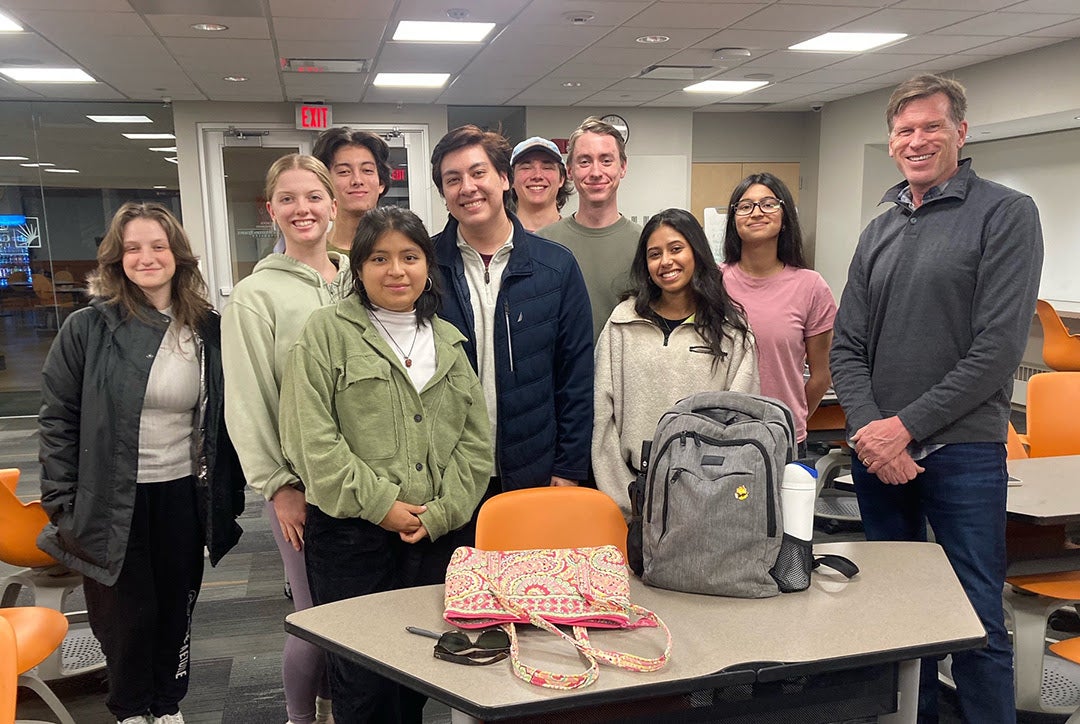
Back row, from the left: Amber Tilling-Richards, Charlotte Hooker, Aidan Bugayong, Sawyer Gourgey, Michael Rinderle, Bhoomika Khatri.
Front row, from the left: Adriana Navarro, Noah Medrano, Shreya Girish, Tim Beal