

UP M1 Students
Angelina Atieh
Undergraduate: The Ohio State University (2024)
About Me: My interest in global health grew during my time as a Fulbright English Teaching Assistant in Cyprus, where I taught English to students from diverse backgrounds, including refugees, and saw firsthand how migration and access can shape people’s experiences in a new healthcare system. My experiences living and working internationally have continued to shape my interest in ophthalmology, particularly the challenge of expanding access to eye care in communities where specialists and resources may be limited. In college, I also founded a digital health startup focused on improving diabetes education for patients with limited English proficiency, which sparked my interest in using technology to make care more accessible. As a medical student, I am excited to explore how global health approaches can inform both clinical care and research, particularly in ophthalmology, while learning from communities and healthcare systems around the world.
Ireland Johnson
Undergraduate: University of Oregon
About Me: Ireland graduated from the University of Oregon, Robert D. Clark Honors College with a B.S. in Biology. Before coming to medical school she came to be passionate about global health through hands-on emergency care in resource limited settings while living and working in Asia. This experience shaped her interest in preventative care, emergency medicine, and medical education as tools for closing health disparities, both internationally and in underserved communities at home. She is excited to be working and learning alongside a community who share a commitment to practicing medicine responsibly and sustainably across different cultures.
Sujay Marisetty
Undergraduate: Rice University (2023)
About Me: During college, I pursued basic and translational cancer research, with an initial ambition to work as a physician-scientist. However, my perspective on what my future work could entail broadened while volunteering as a patient navigator at Ben Taub, a safety-net hospital which primarily serves underinsured and uninsured patients. There, I became more aware of how socioeconomic factors can influence health outcomes and how a simple referral to a community organization could impact a patient’s life. After college, I spent several months volunteering at an ashram in India. Although my work there was unrelated to medicine, witnessing the living conditions in nearby rural communities made me reflect on how infrastructure that we easily take for granted in the US shapes disease spread and health outcomes. Given these experiences, I am ultimately inspired by the idea that we can strive towards realizing health equity among populations at home and abroad. Through this pathway, I am excited to better understand approaches to developing and strengthening health systems that promotes equitable care.
Nour Mimouni
Undergraduate: University of Pennsylvania (2024)
About Me: I earned my B.A. in Neurobiology from the University of Pennsylvania, with minors in Data Science and Statistics. I grew up in the U.S. and spent much of my time visiting family in Morocco, which gave me early exposure to differences in healthcare across countries and communities. My interest in global health grew while working in a dialysis clinic in an underserved region of Morocco, where I saw how clinicians adapted to limited equipment and infrastructure to continue providing care. In Philadelphia, I later founded a multilingual vaccination outreach program for immigrant and refugee communities from West Africa, where I learned how important trust and community involvement are to effective healthcare delivery. My background in data science and clinical research has also made me interested in how technology and health data can be used to address gaps in care, particularly in resource-limited settings. Through the Global Health Pathway, I hope to bring these interests together and learn how to develop solutions that are practical, sustainable, and shaped by the communities they are intended to serve.
Shivani Rao
Undergraduate: Case Western Reserve University (2025)
About Me: Shivani is originally from Chicago, IL. She is passionate about maternal & neonatal health equity and health literacy, and she is interested in applying health informatics to global health coordination. When she's not at school, she can be found exploring Cleveland's coffee and restaurant scene, on a hike, or playing pickleball.
Lena Sharara
Undergraduate: Tufts University (2024)
About Me: I was born in Egypt and spent part of my childhood in Sudan before moving to the United States. My interest in global health and medicine was inspired by these experiences and by seeing and learning about healthcare inequities in different countries. During college, I had the opportunity to study abroad in Ghana, where I became particularly interested in maternal health disparities. I conducted research on the Ghanaian healthcare system and learned more about the barriers to accessing care faced by women working in Ghanaian markets. When the war in Sudan began, I also became involved in efforts to raise money and resources, including menstrual products, for those affected. After studying Cognitive Science and earning my MPH, I am excited to continue exploring the intersections of clinical medicine, research, advocacy, and global health. I am particularly interested in maternal and child health, environmental justice, and building more resilient healthcare systems. In the future, I hope to use what I learn to improve healthcare both locally and globally, including one day contributing to efforts to rebuild Sudan's healthcare system.
Nethra Srinivasan
Undergraduate: Case Western Reserve University
Graduate: University of California, Berkeley
About Me: Nethra obtained her B.S. Neuroscience at Case Western Reserve University and her M.P.H. Epidemiology at University of California, Berkeley. Her interests lie at the intersection of global health, epidemiology, and health equity, with a particular interest in understanding how culture, geography, and access to care shape patterns of disease across populations.
She is the founder of The NeuroKidz, a nonprofit that has expanded neuroscience and mental health education to more than 3,000 students across the US and internationally. She also serves as a Vision Examination Core Leader with Remote Area Medical, providing care at free pop-up clinics for underserved communities and working with Spanish-speaking patients facing barriers to healthcare access.
Through the Global Health Pathway, Nethra hopes to combine her experience in large-scale epidemiologic research with community-based fieldwork to explore how locally informed research can improve healthcare delivery across diverse settings. She is particularly interested in preventive care and developing equitable approaches to healthcare that reflect the needs of the communities she serves.
UP M2 Students
Jivan Achar
Undergraduate: Dartmouth College (2025)
About Me: Hey everyone. My name is Jivan and I’m from San Diego, California. I graduated from Dartmouth College in 2025 with a degree in Development Economics. My interest in global health grew from both hands-on experience and academic work, including research and volunteering in a government hospital in India, where I witnessed firsthand the challenges and ingenuity of delivering care in resource-limited settings. My senior thesis on infant mortality in India deepened my understanding of how social and environmental factors shape child health outcomes. Inspired as well by my father’s work with Doctors Without Borders, I hope to integrate global health—particularly pediatric care—into my future medical training and career.
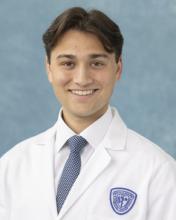
Nicolas Alvarez
Undergraduate: Case Western Reserve University (2024)
About Me: Living abroad, constantly moving homes, I was raised a “third culture kid”: a mixture of Arab, Latino, and Texan cultures, yet labeled an outsider by each. I soon discovered that my mixture of cultures no longer made me an outsider, but gifted me with an appreciative, open mind, eager to learn. Working in healthcare I regularly connected with patients from a diverse conglomeration of backgrounds excited to learn more about their identities; however, I was consistently greeted with the cultural and linguistic barriers that hindered their access to care. Motivated by my mixture of cultures and shared experiences I hope to utilize the unique experiences from the Andrew B. Kaufman Global Health Pathway to dismantle cultural and global healthcare barriers for marginalized communities both locally and internationally. I want to practice personalized, patient-centered care that combines medical intervention or palliative care with consideration for each patient’s quality of life based on their culture, beliefs, lifestyle, and preferences.
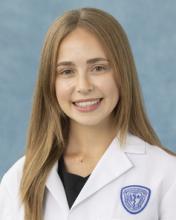
Lauren Menke
Undergraduate: Case Western Reserve University (2024)
About Me: Growing up in rural Ohio, my first exposure to global health was witnessing the barriers migrant farmworkers faced in my community. While working as a spoken English tutor during college, I often tutored students with a medical background in their home countries, which further broadened my view. After college, I spent a summer working in the Dominican Republic and a year teaching English in Spain. While in Spain, I volunteered at the hospital in my neighborhood, where I visited patients who did not have many visitors, including patients in the incarcerated wing who amazed me with their resiliency. These experiences have contributed to my passions, including language-concordant care, removing barriers to healthcare locally and internationally, and ensuring the sustainability and efficacy of global health initiatives. As part of the Global Health Pathway, I hope to continue growing in these areas and defining the role I can play as a future physician.
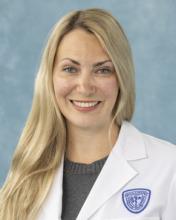
Lucia Pallier
Masters: Stanford Law School
About Me: I grew up in Germany, and as a student in Berlin, I volunteered with immigrant communities and in a program connected to the criminal justice system. That early work first showed me how social, legal, and cultural barriers can make it much harder for people to access healthcare and sparked my interest in global health and health equity.
I later worked as a bioethicist and researcher in the psychiatry department at Charité – Universitätsmedizin Berlin, one of Europe’s largest academic medical centers. After immigrating to the U.S., I completed a master’s degree at Stanford Law School and practiced as a healthcare attorney, where my pro bono work focused on women’s rights and reproductive justice.
Those experiences ultimately led me to medicine. I’m now a medical student in the Andrew B. Kaufman Global Health Pathway at Case Western Reserve University School of Medicine, where I’m excited to explore global health and opportunities to improve access to care across cultures and communities. I’m especially interested in global women’s health and hope to combine my background in ethics, law, and policy with clinical training to help expand access to care in diverse health systems.
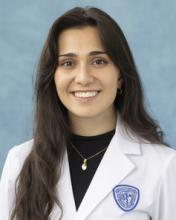
Nadia Rajab
Undergraduate: The Ohio State University (2024)
About Me: My interest in global health began with my family. As the daughter of a Syrian immigrant, I learned early how conflict and displacement can impair access to health, sparking my initial interest in contributing to change. During undergrad, I became involved with the Community Refugee and Immigration Services (CRIS), a nonprofit resettlement agency in Columbus, Ohio, working for their youth mentorship program. There, I saw how language barriers, trauma, and limited resources affect so many New American families in our community, and how non-inclusive systems further impede care and health. My experiences reinforced my understanding that global health is not limited to international work, but is also reflected in local community engagement. As a medical student, I hope to continue exploring ways we can address health disparities and collaborate on sustainable, community-centered solutions to improve care locally and internationally.
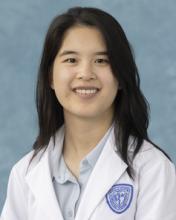
Daisey Yu
Undergraduate: University of Michigan (2024)
About Me: During my undergraduate education, I worked as a research assistant studying how trust and other factors influenced pandemic response in Liberia. This experience offered insight into the complex interplay between history, culture, and health in shaping medical outcomes. Through the World Medicine Pathway, I hope to build on this foundation by moving beyond data analysis and engaging in hands-on global health work.
During my gap year, I worked as a medical assistant at a pediatric clinic in Michigan that served a predominantly Hispanic/Latino population. In this primary care setting, I gained firsthand insight into the barriers faced by new immigrants navigating the healthcare system. This experience deepened my appreciation for the importance of cultural humility and awareness in clinical practice.
Through this pathway, I hope to continue developing the skills necessary to become a competent and culturally aware physician. Beyond clinical care, I am committed to advocacy efforts aimed at dismantling barriers to healthcare access. In an increasingly interconnected world, understanding diverse cultures and drawing on the strengths of different cultures is essential. Incorporating these perspectives enables us to provide truly comprehensive, patient-centered care that respects individual values and fosters trust.
UP M3 Students

Michael Bian
Undergraduate: Emory University (2024)
About Me: Whenever I visit my ancestral home in rural China, I straddle two worlds; my American upbringing, where emergency services are a phone call away, and my Chinese heritage, where the nearest surgeon is 300 miles away. This is a chasm I believe we can close.
My journey in global health began during a cultural exchange with a Chinese boarding school. I was exposed to differing values within hospitals, and I found myself asking: What makes a healthcare system effective? I explored the ethical dimensions of this question with my college minor. I also became involved with Emory’s chapter of Partners in Health. I embraced Paul Farmer’s idealism and saw the need for tangible impact. Thus, I served as a fundraising chair for a cancer nonprofit. My team raised over $64,000 to make cancer care financially accessible to immigrants. I view the World Medicine Pathway as the next step to elevate my grassroots efforts into a fulfilling profession. As someone who enjoys hands-on work, I’m drawn to the growing field of global surgery and its emphasis on health equity. I think there is much opportunity to improve health outcomes in developing countries, and the challenge now is not whether to address this issue, but how to effectively implement solutions.

Kayla Hudson
Undergraduate: The Ohio State University (2023)
About Me: I grew up in West Liberty, a small town in Ohio, and my interest in global health began when I first shadowed a doctor. This experience occurred while I was in Belgium as an exchange student during high school, and I had the opportunity to learn from a general practitioner about how the health care systems works there. From this, and through volunteering with an organization called Remote Area Medical in college, I began to realize how different health care can be depending on where you live, varying between countries, states, counties, and even zip codes. After undergrad, I completed a research internship in a lab in Norway and experienced the value of international collaboration as it allowed us to find more effective experimental methods. Now as a medical student and future physician, I am excited to learn about medicine from a global health perspective and be able to leverage these lessons to improve the quality, efficacy, & justice of local & international health systems.

Sarah Lytle
Undergraduate: Columbia University (2018)
About Me: My pathway to global health has been non-traditional, much like my pathway to medicine. After growing up in a rural part of Ohio, I moved to Reims, France to pursue a degree in political science, specifically law and the environment. This time of my life was deeply formative, allowing me not only to study international governance and policy, but to learn about the world through travelling and through my classmates and friends from around the world. As I transitioned to environmental engineering while in New York City, I focused on how climate change affects extreme weather, and how it impacts communities around the world. Spending the next five years as a climate scientist and hydrologist for the US Army Corps of Engineers, my research focused on climate predictions and population vulnerability for watersheds, both domestic in the Mississippi River Basin and abroad, like the Rio de la Plata river basin in South America and for man-made infrastructure such as the Grand Ethiopian Renaissance Dam. Now as a first year medical student, I am excited to apply my passion and experience in global initiatives to world medicine. This interest stems not only from my desire to grow from learning other ways of medicine, but also to use my prior research knowledge to have a greater understanding of the needs of patients from around the globe, and to mitigate such vulnerabilities as a researcher and physician. My research interests center on gynecology, especially pelvic disorders, such as stress urinary incontinence and endometriosis, as well as social conditions that influence availability and acceptance of such medical treatment.

Amisha Paul
Undergraduate: University of Connecticut (2022)
About Me: Amisha obtained a B.S. in Physiology & Neurobiology and B.A. in Economics from the University of Connecticut. She is passionate about understanding and addressing broader social and economic issues alongside her love for medicine. Over the last few years, she has organized numerous global health academic events, advocated for global health programs and education, and worked on global health delivery programs on the ground in India. In the future, she hopes to combine her passions for medicine, innovation, and public service to develop sustainable infrastructure and initiatives to improve health and surgical access and outcomes for all.

Muskan Sidhu
Undergraduate: Case Western Reserve University (2023)
About Me: I was initially interested in World Medicine while studying Medical Anthropology in undergrad. I was able to learn about various cultures and their approach to health and wellbeing. I gained an appreciation for how although Western biomedicine has many benefits, it must be adapted within specific cultural contexts to serve populations effectively. This was clear in my undergraduate thesis research which took place in India and investigated the intersection between patient attitudes and medical pluralism. Here I was able to discern the importance of cultural humility in treating patients, and ensuring that diagnosis, treatment, and prognosis are all framed within their cultural environment. I furthered my interest by getting a Masters abroad in Health, Medicine, and Society where I was able to further learn how different countries are able to deliver healthcare. I hope to continue to gain exposure to different countries and their approach to healthcare to further understand the nuanced contexts of delivering equitable care to patients facing dire situations.

Sarah Yashar-Gershman
Undergraduate: Princeton University (2022)
About Me: I have had a longstanding interest in health as a human right. My knowledge of global health was especially informed during college through my participation in the Global Health and Health Policy certificate program. This interdisciplinary program allowed me to explore health inequities, policy, and research in the U.S. and abroad. Additionally, I had opportunities to participate in global experiences such as an internship in Ecuador with an organization/clinic that aimed to address the health of Indigenous people in the region. While there, I saw the power of community-based health in proactively addressing the needs of marginalized communities. This experience, along with subsequent global and public health opportunities, deepened my interest in the health of women and children (and the intersections between the two). I am looking forward to participating in the World Medicine Pathway as a way to strengthen my global understanding both of medicine and how best to incorporate global health into my future practice. I am particularly interested in conducting research projects and participating in experiences abroad that focus on vulnerable populations – especially women and children.
UP M4 Students

Anish Katta
Undergraduate: Vanderbilt University (2022)
About Me: My interest in Global Health stems from my family’s experience with healthcare disparities in India. In college, I majored in Medicine, Health, and Society to learn more about how social determinants of health affect people. In college, I worked with rural villages in India and saw the infrastructural and economic disparities between rural areas and urban centers and how this affects how healthcare is accessed. Through the global health pathway, I hope to explore ways to remedy these inequities and discover what role I can play in those solutions as a future physician. I’m passionate about sustainably improving access to health care for vulnerable populations through research and policy-making.

Ese-Onosen Omoijuanfo
Undergraduate: University of Notre Dame (2023)
About Me: I was born overseas in Timisoara, Romania and I grew up in Benin, West Africa. Growing up overseas exposed me to many different health care systems. I witnessed first-hand how poverty, lack of transportation, and social status can stand between an individual and their health. I participated in many community initiatives to help reverse these trends and worked with a non-profit that partnered with the local Ministry of Health. I saw how these disparities within the community had to be approached in a multidisciplinary manner. In college I studied international development and I conducted research overseas. These experiences have compelled me to continue to pursue a deeper understanding of the complexity of global health. I am passionate about research, education, and sustainable development.

Olivia Asimakis
Undergraduate: University of Michigan (2020)
About Me: My interest in global medicine was sparked by the work of Dr. Paul Farmer and Partners In Health. Their mission inspired me to advocate across global channels and join the work of grassroots organizations in the Dominican Republic. These experiences demonstrated how social responsiveness is not confined to where we are; instead, it’s a calling that has no geographical or physical limitations. Dr. Farmer identified this as the connection between moral clarity and action, a guiding principle in my personal and professional life. My experiences abroad have showcased how systemic injustices perpetuate de-investment and health disparities. My work in law has shown me how the legal framework of different countries significantly impacts the health and healthcare access of its residents. I believe health is a fundamental human right and am committed to participate in efforts to secure such rights around the world. As a medical student, I am humbled at the opportunity to join the collective fight against global health injustices. I’m eager to connect with other global health advocates and leverage these partnerships to achieve health justice on local, national, and global scales.

Seung Hyeon Shim
Undergraduate: Massachusetts Institute of Technology (2023)
About Me: Born in South Korea and immigrating to the U.S. at age ten, I was always interested in world medicine and reaching out to the globally underserved population. Through my mission trips to Tijuana, Mexico, and serving students with disabilities like autism and Down syndrome as well as volunteer experience to teach North Korean refugees in South Korea, I witnessed the importance of abridging health disparities around the world. Moreover, I realized that understanding global health is the key to delivering equitable and culturally sensitive care. I hope to continue learning about providing country-specific care and partake in research and international excursions that will benefit the global community.
CP M5 Students

Akua Abrah
Undergraduate: Tufts University (2012)
Graduate: Case Western Reserve University (2014), George Washington University (2020)
About me: I have a keen interest in the health of vulnerable populations. During my undergraduate education at Tufts University, I conducted independent ethnographic research on natal care in my native country of Ghana and later worked with a public health field research team on the control of Schistosoma haematobium in Asamama, Ghana. As a Master of Science in Medical Physiology student at Case Western Reserve University, I used scientific methodologies to investigate neonatal hyperoxia on later airway hyperreactivity. This experience reinforced my desire to one day use the knowledge I gain through my medical training in the US to help those in Ghana and in other low- and middle-income countries. As a Master of Public Health student at George Washington University, and through my internship as a global health advocacy intern with the Fund for Global Health, I identified the causes of social and behavioral factors that affect the health of individuals and populations. Following my MPH, I helped conduct novel phase 1 HIV vaccine clinical trials during my postbaccalaureate fellowship at the Vaccine Research Center of the NIH. Currently, as a Cleveland Clinic Lerner College of Medicine medical student, I look forward to continuing my contributions towards medical advancements and global health.