5 questions with…Michael Johnson, a nurse with 20 years of experience who is sitting in the student chair again
Michael Johnson isn’t your typical nursing student.
For starters, he’s often the one leading the class—as an instructor. But after earning a master’s in nursing education and a PhD in nursing science—and spending 20 years in nursing education, administration, clinical practice and research—Johnson decided to take a seat in the classroom as a student again.
It all began with a desire to return to direct patient care, especially for those struggling with mental health challenges. Knowing Case Western Reserve University Frances Payne Bolton School of Nursing’s reputation for nursing excellence, Johnson enrolled in the Family Psychiatric Mental Health Nurse Practitioner (NP) program in 2025. The program teaches advanced practice registered nurses to address psychiatric, mental health and substance use needs across the lifespan using a systemic family lens.
Read on to learn more about Johnson, who is also a part-time instructor at the School of Nursing, and what compelled him to become a student after decades of working in the field.
What first inspired you to pursue psychiatric mental health nursing?
My interest in mental health really goes back to my childhood. I grew up around family members who struggled with mental illness and substance use, so I saw firsthand how these challenges affect not only the individual but also the people who love and care about them. Those experiences have stayed with me throughout my life and shaped the kind of nurse I've become.
I've been particularly struck by how often people experiencing mental health challenges have felt dismissed, misunderstood, or judged by others. When you take the time to build trust and approach someone with genuine curiosity and compassion, you can often see a real difference in how they engage in their care. For me, those are the moments that reaffirm why I chose this path. One of the things I've always loved about psychiatric mental health nursing is the opportunity to really connect with people, particularly when they're going through some of the most difficult moments of their lives.
Why is it important to consider a patient’s family when assessing and treating their mental health?
I don't think we can fully understand a person without also understanding the family, relationships and support systems that are part of their life. And when I say family, I don't necessarily mean a traditional family structure. Families come in all different forms, including biological families, adoptive and foster families, partners, close friends and chosen families.
Mental illness rarely affects just one person. It can affect relationships, family dynamics, and the overall well-being of everyone involved. At the same time, those relationships can play an incredibly important role in a person's recovery. Understanding that broader picture helps us provide care that is more individualized, compassionate and realistic. That's why I think a family systems approach is so valuable. It encourages us to be curious about those relationships rather than making assumptions about what a person's family looks like or what role they should play in treatment.
How are you balancing being a student again while managing a full-time career?
I would be lying if I said balancing everything has been easy! I work full-time as a nurse on the Behavioral Emergency Response Team at University Hospitals Cleveland Medical Center. Our team responds to behavioral emergencies throughout the hospital, working with patients experiencing everything from acute psychiatric crises to agitation, confusion and delirium. I also continue to teach graduate-level nursing courses, which is something I've always enjoyed.
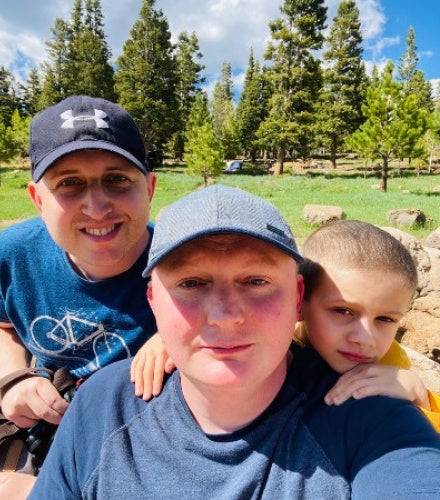
On top of that, I'm completing my coursework and clinical rotations. Depending on the semester, that has meant spending several days a week in clinical, attending synchronous classes, studying and completing assignments. And, of course, I also have a husband and son at home, so there is plenty happening outside of work and school!
I've had to become very intentional about managing my time and prioritizing what's important. I try to maintain some consistency with exercise, because physical activity has always been an important outlet for me. I also make a conscious effort to spend time with my family and enjoy the things we love doing together.
Balance doesn't necessarily mean giving everything equal attention every day. Some weeks, school requires more of my time, while other weeks I can be more present with family or other commitments. I've learned to be flexible, give myself some grace, and remember that this is a temporary season of life.
What advice can you offer someone thinking about a similar career path?
Approach the field with an open mind, genuine curiosity, and compassion. Mental health is incredibly complex, and every person brings a different set of experiences, relationships, and challenges. You have to be willing to listen, challenge your own assumptions, and recognize that we can learn just as much from our patients as they can from us.
Follow what you're passionate about, even if it means taking a path that's a little different from what you originally imagined. When I started my nursing career nearly 20 years ago, I never would have imagined that I would go on to earn a PhD, spend much of my career in academia and then return to school to become a nurse practitioner. But I've learned that professional growth doesn't have to follow a straight line. Our interests evolve, our priorities change, and sometimes the experiences we have along the way help us discover what we really want to do.