Ancient cousins: New evidence that two early human species lived side by side
Case Western Reserve University researchers help solve 3.4-million-year-old mystery
By analyzing recently found bones, researchers have finally solved a puzzle that's been around since 2009: Who did a mysterious 3.4-million-year-old foot belong to? The discovery changes how we think about our ancient human ancestors.

“For over a hundred years, it was hypothesized that our ancestors lived in grassland savannahs and that this major ecosystem change drove human evolution, including the origins of bipedalism and changes in teeth and diet,” said Beverly Saylor, professor of earth, environmental and planetary sciences at Case Western Reserve University, who was involved in the new research. “However, new fossil discoveries show that some of our ancestors continued to live among trees and make use of forest resources and that the links between grassland expansion and human evolution are not so simple.”
The research, which reveals that two different species of early humans lived as ancient neighbors sharing the landscape, was recently published in the journal Nature.
The mystery foot gets an identity
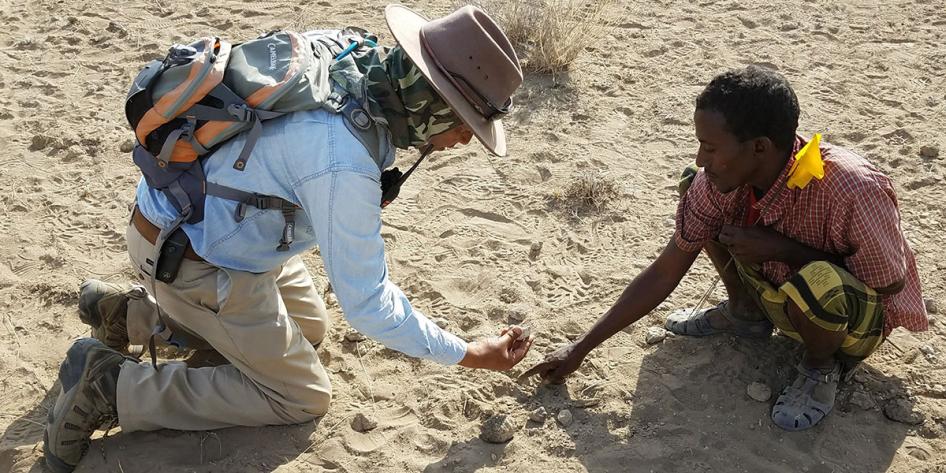
In 2009, Saylor and a team of researchers led by the Cleveland Museum of Natural History found eight foot bones in Ethiopia's Afar region. This foot, nicknamed the "Burtele Foot," was clearly different from the famous fossil Lucy, who belonged to the species Australopithecus afarensis.
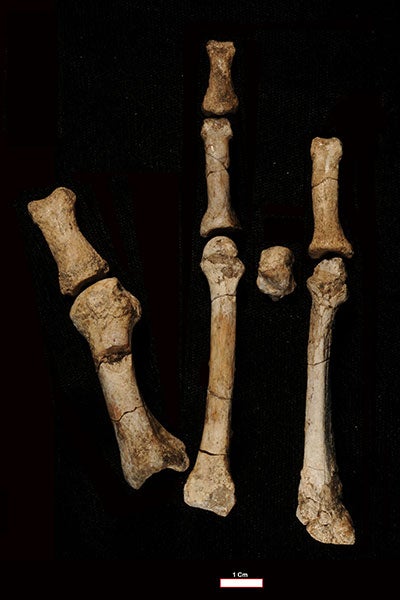
But the big question remained: Which species did this foot belong to?
Now, after years of careful detective work, the team has its answer. The foot belongs to Australopithecus deyiremeda, a different species that the team discovered nearby in 2015. Assigning the Burtele foot to A. deyiremeda, and analysis of the diet of this species, provides the first clear evidence that two related human ancestor species lived side by side—within three miles of each other—at the same time.
“These early hominins seem to have been adapted to different ecological niches, which allowed them to share the landscape,” Saylor said.
What made these species different?
Studies of the teeth and anatomy of the feet of these two species showed that they had different lifestyles, even though they were close neighbors:
Lucy's species (A. afarensis)
- Walking style: Walked upright and pushed off with their big toe, similar to how we walk today.
- Diet: Ate from both trees and ground—fruits, leaves from trees as well as grasses and other plants from the ground.
- Lifestyle: More adapted to life on the ground.
The Burtele foot species (A. deyiremeda)
- Walking style: Also walked upright, but had an opposable big toe (like a thumb) that was perfect for climbing. When walking, they pushed off with their second toe instead of their big toe.
- Diet: Made use of forest resources.
- Lifestyle: Had adaptations for trees.

Why this discovery matters
This finding challenges old ideas about human evolution. For over a century, scientists thought our ancestors evolved because they moved from forests to open grasslands. But this discovery shows the story is much more complex.
These human ancestors found different ways to make a living in the same area—one focused more on ground resources, the other on tree resources.
The bigger picture
This discovery shows us that early human evolution wasn't a straight line. Instead of one species replacing another, multiple species coexisted, each finding their own way to survive.
"What that means is that bipedality–walking on two legs–in these early human ancestors came in various forms," said Yohannes Haile-Selassie, director of the Institute of Human Origins and professor at the School of Human Evolution and Social Change at Arizona State University and the study's lead researcher. There were many different ways to walk upright, not just one.
A scientific detective story
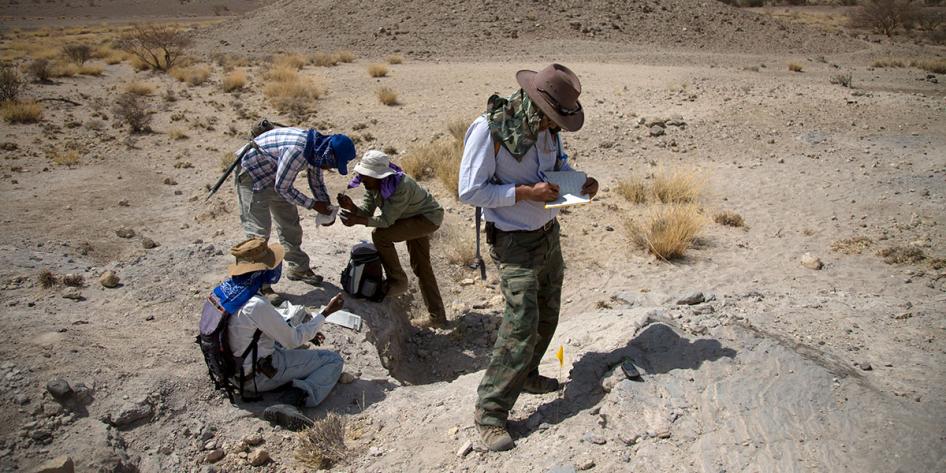
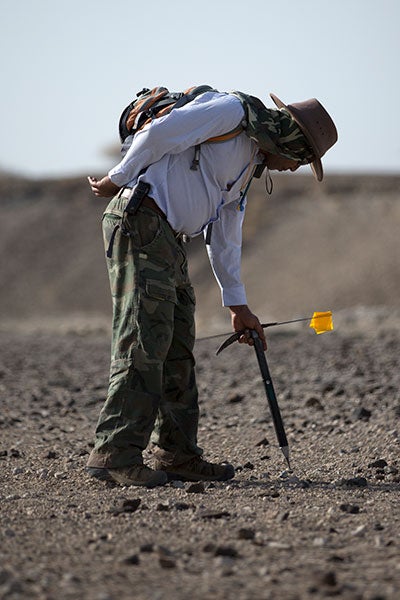
The researchers did extensive geological work to prove these fossils were from the same time period.
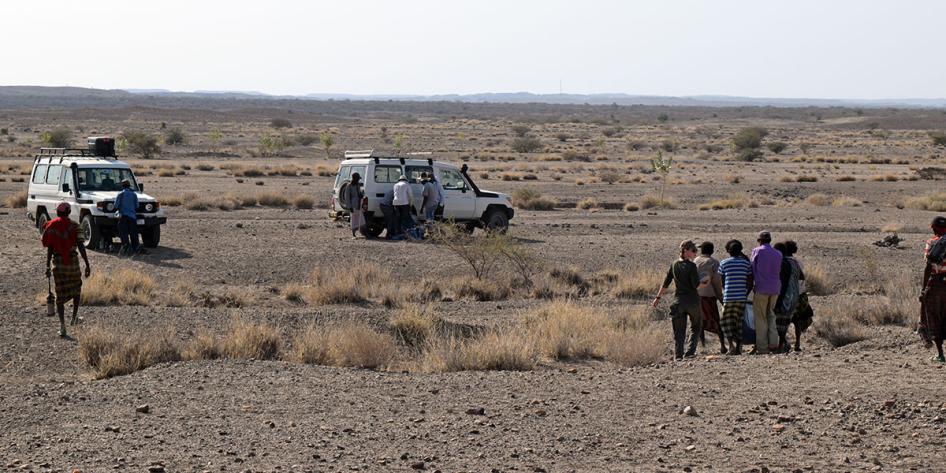
"We have done a tremendous amount of careful field work at Woranso-Mille to establish how different fossil layers relate, which is crucial to understanding when and in what settings the different species lived," Saylor noted.
The international research team also included scientists from Washington University, St. Louis; Berkeley Geochronology Center; Universitat de Barcelona; University of Tampa and University of Michigan.
The research was supported by the National Science Foundation and the W.M. Keck Foundation. Field and laboratory research in Ethiopia was facilitated by the Ethiopian Heritage Authority.