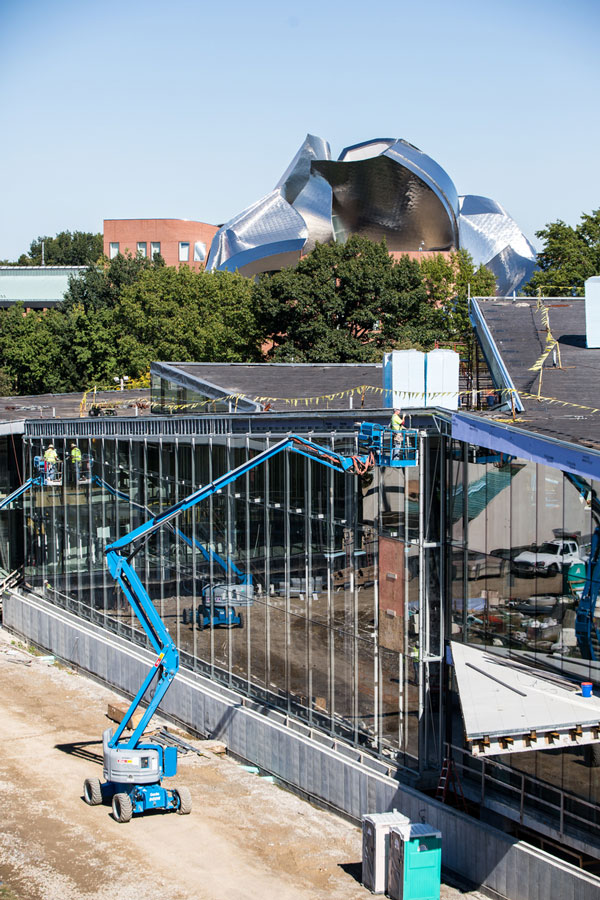
 At the moment, most partitions on the 82,000-square-foot building are in place, and the entire building is dry walled. The building “envelope” was closed in this month, and the electricity and heat now are on—allowing workers to continue with interior finishes, such as painting and carpeting.
The building is designed to attain at least Leadership in Energy & Environmental Design (LEED) Silver status, with a vegetative green roof, flat-panel solar collectors, radiant heating and a two-story double curtain wall that will reduce entering heat.
Construction is expected to finish in April, when the university center will have a “soft opening.” After, new building occupants—including the LGBT Center, Flora Stone Mather Center for Women, Inamori International Center for Ethics and Excellence, food-service venues and more—will begin a phased move-in approach.
“It’s going to be delivered as promised—on time and on budget,” Campbell said. “We’re really excited about the variety of spaces in the building and to see how students and the campus community use it.”
At the end of construction phase, Freiberger Field will return to its status as a recreational sports field, and the Severance Hall parking garage entrance on Bellflower Road will reopen.
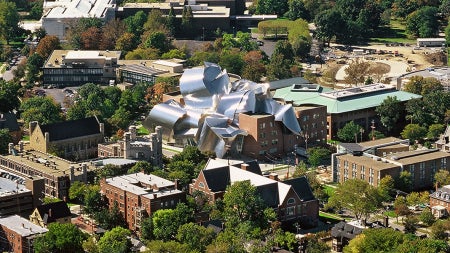
Global architecture firm Perkins + Will designed the building, which students can walk through as they move from one side of campus to the other. The building may seem oddly shaped—“a starfish with a bite taken out of it,” as Plain Dealer architecture writer Steve Litt once described it—but the design aimed to take advantage of available space. Such a massive structure could not be built atop the underground parking garage that serves the university and Severance Hall, nor did university administrators want to remove buildings from campus.
Members of the campus community have been involved throughout the entire process, with students serving on the architect-selection committee and offering ongoing feedback on the design and contents of the space. Faculty and staff members also have served in similar roles, providing input and guidance to ensure the university center meets the goal of unifying the entire campus.
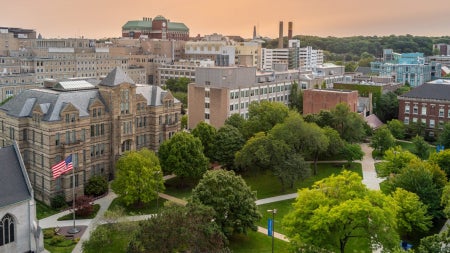
“This project really shifts the center of gravity from the Case Quad to north of Euclid Avenue, as the university’s master plan intended,” Campbell said. “We’ll provide a better link between the east and west side of campus and create a new center of the university.”
At the moment, most partitions on the 82,000-square-foot building are in place, and the entire building is dry walled. The building “envelope” was closed in this month, and the electricity and heat now are on—allowing workers to continue with interior finishes, such as painting and carpeting.
The building is designed to attain at least Leadership in Energy & Environmental Design (LEED) Silver status, with a vegetative green roof, flat-panel solar collectors, radiant heating and a two-story double curtain wall that will reduce entering heat.
Construction is expected to finish in April, when the university center will have a “soft opening.” After, new building occupants—including the LGBT Center, Flora Stone Mather Center for Women, Inamori International Center for Ethics and Excellence, food-service venues and more—will begin a phased move-in approach.
“It’s going to be delivered as promised—on time and on budget,” Campbell said. “We’re really excited about the variety of spaces in the building and to see how students and the campus community use it.”
At the end of construction phase, Freiberger Field will return to its status as a recreational sports field, and the Severance Hall parking garage entrance on Bellflower Road will reopen.
Global architecture firm Perkins + Will designed the building, which students can walk through as they move from one side of campus to the other. The building may seem oddly shaped—“a starfish with a bite taken out of it,” as Plain Dealer architecture writer Steve Litt once described it—but the design aimed to take advantage of available space. Such a massive structure could not be built atop the underground parking garage that serves the university and Severance Hall, nor did university administrators want to remove buildings from campus.
Members of the campus community have been involved throughout the entire process, with students serving on the architect-selection committee and offering ongoing feedback on the design and contents of the space. Faculty and staff members also have served in similar roles, providing input and guidance to ensure the university center meets the goal of unifying the entire campus.
“This project really shifts the center of gravity from the Case Quad to north of Euclid Avenue, as the university’s master plan intended,” Campbell said. “We’ll provide a better link between the east and west side of campus and create a new center of the university.”