Case Western Reserve University Environmental Law Clinic wins court victory for Ohio clean air protections
A Franklin County court has struck down Ohio budget provisions that weakened clean air protections and restricted the use of community-collected air quality data.
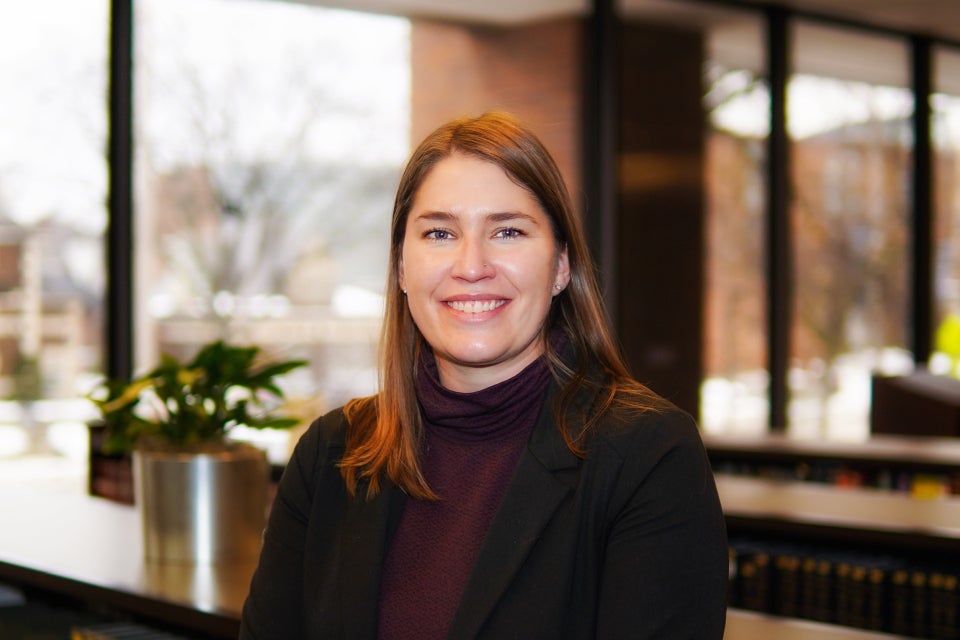
Case Western Reserve University School of Law’s Environmental Law Clinic helped make it happen. Miranda Leppla, the clinic’s director, represented plaintiffs Ohio Environmental Council and Sierra Club, with the clinic’s fellow and law students contributing to the case under her supervision.
The court ruled that the provisions, included in the state’s 2025 budget bill (H.B. 96), violated Ohio’s constitutional one-subject rule because they were not rationally related to appropriations or agency operations.
The court severed the provisions from the law, barred Ohio EPA from further action to remove the Air Nuisance Rule from the state’s clean air implementation plan and ordered the agency to withdraw its pending request to U.S. EPA to remove the rule.
“Lawmakers cannot use the state budget to bypass constitutional safeguards and strip Ohioans of tools to protect their health and communities,” Leppla said. “This ruling reinforces the importance of holding the government accountable and ensuring residents can document pollution and seek meaningful enforcement.”
For decades, the Air Nuisance Rule has allowed Ohioans to challenge pollution near industrial facilities. The struck-down provisions also would have barred the use of data from community-operated air monitors, which can help residents identify pollution in areas with limited government monitoring.
With the provisions invalidated, Ohioans retain the ability to enforce the Air Nuisance Rule and use community monitoring data to document pollution and seek enforcement, Leppla said.
The lawsuit also involved residents living near steel plants in Middletown and Youngstown, along with Licking County community members who built their own air monitoring networks.
Co-counsel included the Ohio Environmental Council’s general counsel; Fair Shake Environmental Legal Services, representing SOBE Concerned Citizens and Freshwater Accountability Project; and AltmanNewman Co. LPA, representing Middletown resident Donna Ballinger.
“Working on this case was the first time I felt like an actual attorney,” said Alexander Brown, who graduated from the School of Law in May, “and the experience working on this case alongside experienced attorneys gave me the confidence I needed to feel like I belong in this field.”
Leppla said the ruling underscores the importance of constitutional safeguards in ensuring major policy changes receive public debate on their own merits rather than being tucked into must-pass budget legislation.
“The court’s ruling in favor of our clients and all of the plaintiffs is a testament to their advocacy for our environment and the health of Ohioans,” she said.