Collaborative convenes to reimagine youth justice
How a CWRU Law initiative is tackling Cuyahoga County’s highest-in-the-state youth incarceration rates.
For more than a decade, Cuyahoga County has sent more children to Ohio detention centers than any other county in the state. Nearly 20% of the incarcerated population within the Ohio Department of Youth Services calls Cuyahoga County home.
Statistics like these are impossible for Ayesha Bell Hardaway, JD (LAW ’04), to ignore. That’s why, in 2022, she decided to join advocates from the community, the court and many other social justice advocates, to do something about it.
And so the Youth Justice Collaborative was born.
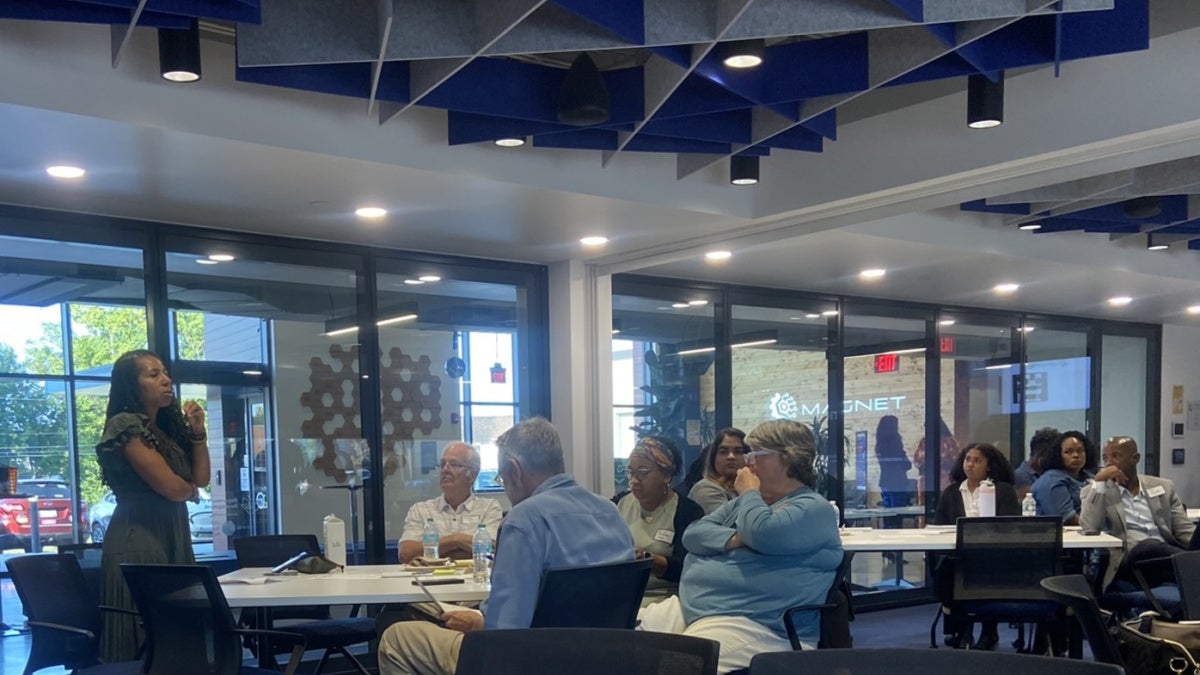
The Collaborative is a strategic initiative facilitated by the Social Justice Law Center (SJLC) at Case Western Reserve University School of Law, where Hardaway is a professor of law and director of the SJLC. Supported by the St. Luke’s Foundation, the Collaborative functions as a convening body that brings together a diverse cross-section of youth justice professionals, service providers, court officials and youth representatives across Cuyahoga County to align local practices with national best standards.
“Our goal is to discuss what is needed to improve youth justice in Cuyahoga County and foster better outcomes for young people here,” said Hardaway. “We want to identify gaps in the system that drive youth encounters. We want to explore best practices, to address the conditions of our young people and what we can do to provide support and reduce involvement with the criminal legal system.”
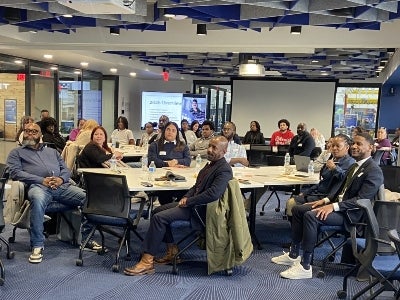
Every other month, as many as 50 advocates from the community, the judiciary, social service agencies and academia come together to discuss, learn and take action on ways to ensure the youth justice system is restorative rather than simply punitive. A recent event featured a panel of speakers who presented to the Collaborative about very young children (9- and 10-year-olds) facing sentences in juvenile detention.
“They shared their stories with the youth system, their insights on youth development, and gave us a window into how the court system works,” said Hardaway. “It's not designed to meet the needs of [very young children], so that was a really powerful moment for us.”
Ideally, Collaborative members walk away from the bi-monthly “convenings” with new and practical ideas they can implement in the part of the system they own, whether they’re social workers, lawyers, judges or academics.
Building a more restorative system
The Collaborative envisions a youth justice system that moves beyond the courtroom to include equity, education and social determinants of health. Their work can be categorized into “upstream interventions”—mentorship, community-based support and access to resources—as well as “downstream reforms,” which address issues within the youth justice system itself.
“We're looking at closing the gaps that exist, making sure that we provide wraparound services, and where the opportunities exist to reduce the number of kids that we're sending into detention and the legal system,” said Hannah Christ, JD, postdoctoral fellow at the SJLC who has been working with the Collaborative since its inception.
In her role, Christ manages the day-to-day operations of the Collaborative, communicating with members and organizing the convenings and subcommittees.
“These are really big systemic issues that we're grappling with,” Christ explained. “So nothing is really a quick fix. We’re asking: Where can we learn? Where can we brainstorm? What ideas can we bring to the table that would help address the issues that we're seeing? And also, how do we identify the holes?”
To help tackle these broad, pervasive issues, the Collaborative has enlisted the help of rising second-year law student, Chikamso Chijioke, who joined the SJLC last fall as a research assistant. Having just moved to Cleveland after living in the Twin Cities and then New Orleans, she was drawn to the fellowship because it focuses on community support and engagement; she wanted to get involved in her new city.
And although Cleveland is a new place, Chijioke quickly recognized some familiar problems.
“I think it’s unfortunately a lot of the same,” she said. “You see Black and Brown kids who have been put in a system that's not the most productive place for them to get the help they actually need. It was the same in New Orleans, the same in the Twin Cities—and the same in Cleveland. It's really unfortunate, but it’s great to be a part of the work to help change it.”
A future, reformed
While their geographic focus is local, the Collaborative looks beyond its own backyard for solutions by conducting national surveys and compiling data to create white papers and reports. Last year, a cohort of Collaborative members made a trip to Oakland, California, to visit Restorative Justice for Oakland Youth (RJOY), whose mission is to increase mental health and wellness for underrepresented communities using restorative justice practices. Members of the Collaborative—juvenile court judges, court and probation administrators, and community leaders—participated in specialized training and retreats to bring restorative justice models back to Cleveland’s daily judicial and community work.
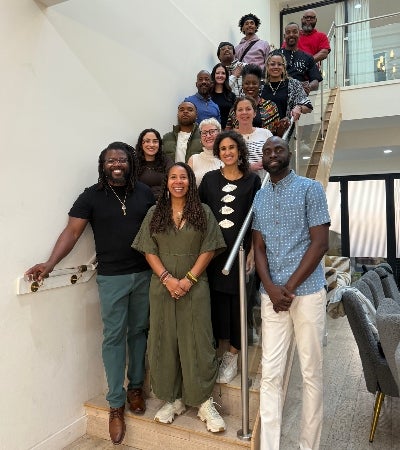
“It was good to see what it looks like in a juvenile system that has more fully adopted restorative practices into their facilities and into the way that they approach youth,” said Christ. “I think that was eye-opening. It really took away the fear of anticipated backlash that could result from these reforms. For [RJOY], incremental change has instituted lasting change. That's what we're really working towards.”
This year, the Collaborative is transitioning from a “learning journey” into an implementation phase. This includes conducting site visits to successful national programs such as RJOY and launching the Youth Advisory Council. This council, which will consist of youth, including some with system involvement, who will help inform recommendations with their insights, is being recruited with the help of local partners such as the Boys and Girls Club of Greater Cleveland.
“The goal is to make sure that their voices are heard,” said Hardaway, “but not to saddle them with devising solutions alone.”
At their most recent meeting in March, the Collaborative heard from local organizations that contract with the courts to support justice-involved youth. They also conducted small-group community-building circles on restorative justice principles. It’s all in service to the same goal: Give all young people the same chance at the same opportunities—even when they’ve made mistakes.
“The hope is that we're not reflexively sending kids to detention anymore, that we're making sure our community provides them with everything they need to reach their full potential,” said Christ. “That they're given the opportunity to be kids—and make the mistakes that kids make—and not be sent into the legal system for it.”
For Chijioke, every convening of the Collaborative’s members only deepens her understanding of—and appreciation for—its mission.
“Everyone in that room truly wants to see youth thrive, whether impacted by the criminal legal system or not,” she reflected after the March meeting. “These are people and organizations from all over the city, all here for a common purpose. I think that's something really beautiful, and something that is sustainable, in and of itself. I'm excited to see where this work leads.”