CWRU researchers investigate how environment affects developmental and clinical outcomes in deaf or hard of hearing individuals
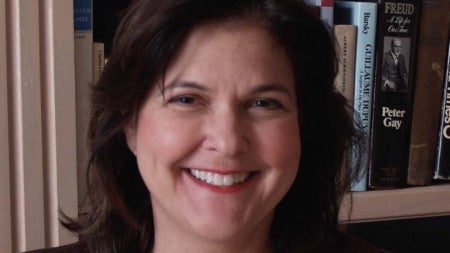
Kristina Bowdrie, AuD, PhD
Assistant Professor for the Communication Sciences program, Department of Psychological Sciences, College of Arts and Sciences
Area of Focus: Aural Rehabilitation
With innovations such as hearing aids and cochlear implants, individuals who are hard of hearing have access to technology that can support spoken communication. However, following such auditory interventions, it’s often difficult to predict how their language development and communication effectiveness will progress.
Kristina Bowdrie, AuD, PhD (CWR ‘17), has found that communication outcomes might be connected to more than just the severity of an individual's hearing loss.

“You can’t really predict who is going to be a successful hearing aid or cochlear implant user if you only take into account audiologic information [such as] the amount of hearing loss they have, or how long they have had the hearing loss before the intervention,” Bowdrie, assistant professor in the Department of Psychological Sciences at the College of Arts and Sciences. “They help explain some of the differences we see in patient outcomes, but not all of them.”
Bowdrie plans to further study how different factors influence the outcomes of auditory interventions in the Human Ecology and Auditory Research (HEAR) laboratory, which officially began operations earlier this summer in its new location at 11635 Euclid Ave., formerly home to the Cleveland Hearing & Speech Center.
The influence of home environment on children
In a paper published in 2022, Bowdrie and her colleagues examined how different family environments play a role in the language development of children with and without typical hearing abilities.
The team considered both audible and non-audible sources of sensory stimulation occurring in the family and home, including visual and cognitive stimuli that could function as forms of “noise”—such as physical disorganization or a lack of structure or routines. They paired these with the child’s ability to regulate their emotions, behaviors and attention—a capacity known as effortful control—as assessed through caregiver questionnaires.
The study found that school-aged children who are deaf or hard of hearing with stronger effortful control skills tended to have better language skills than those with less robust effortful control skills, but only in environments with low to moderate levels of sensory stimulation. This same pattern was not observed among typically hearing children of the same age.
These findings suggest that children who are deaf or hard of hearing may be able to draw on their self-regulation skills to support language development, but highly stimulating family environments may limit those benefits.
Even with hearing aids or cochlear implants, children who are deaf or hard of hearing may have reduced access to auditory information. Environments with high levels of stimulation, including audible noise, visual clutter or a lack of structure and routines, may place additional demands on their ability to process and develop language.
As a result, even children with a high level of control over their own emotions, attention and behavior may face challenges with language development when their home environments are overstimulating.
Understanding how the environment influences children's ability to regulate their attention and develop language can help practitioners identify tangible ways to support children who are deaf or hard of hearing and their families, beyond addressing auditory access through hearing technology alone.
“While we can't control every factor that influences language development, we can help families make changes to their everyday environments that may support their children's learning,” Bowdrie said.
This can mean encouraging parents to create a home environment that better fits their child’s temperament and regulatory abilities, which could enable them to better perceive, understand, and respond to communicative interactions.


The next endeavor for CWRU’s new audiology lab
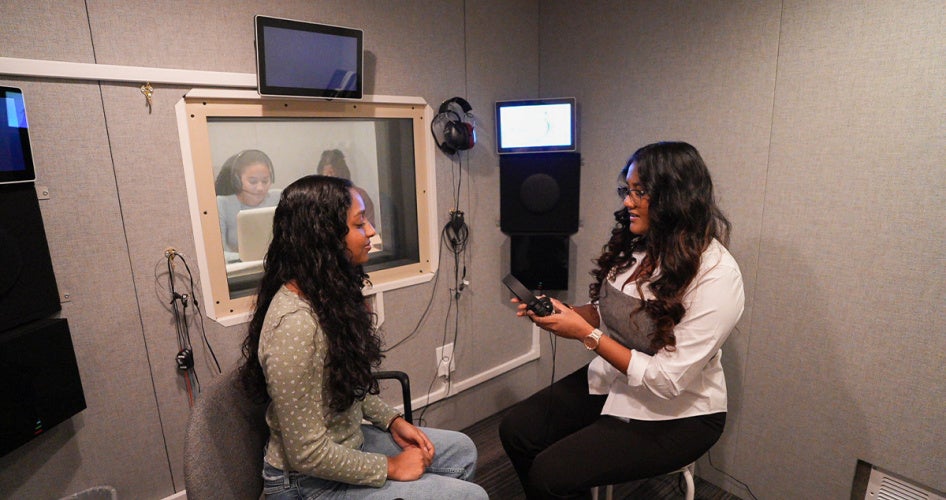
The new HEAR Lab features sound-treated booths where researchers can assess participants’ hearing and speech perception abilities, as well as a shared space for conducting other research activities and holding collaborative meetings. The facility will also serve as a workspace for lab members, many of whom are undergraduate students. In the future, Bowdrie plans to add community-based hearing rehabilitation research and programming within the space.
With this new space and a team of student researchers, Bowdrie's next endeavor is to investigate how the environment influences clinical outcomes for adult patients.
“I was very empowered and motivated by the results that we found in terms of the relationship between temperament and environment in children who are deaf or hard of hearing, and I want to take that same theoretical model and apply it to adults who experience hearing difficulties or other hearing-related concerns,” Bowdrie said.