CWRU’s Writing Program hosts national conference
Earlier this year, Case Western Reserve University’s Writing Program served as local hosts for the annual NCTE Conference on Communication & Composition in Cleveland.
At this national conference, thousands of writing instructors, rhetoricians and program administrators gathered for four days of presentation, workshops, and networking events.
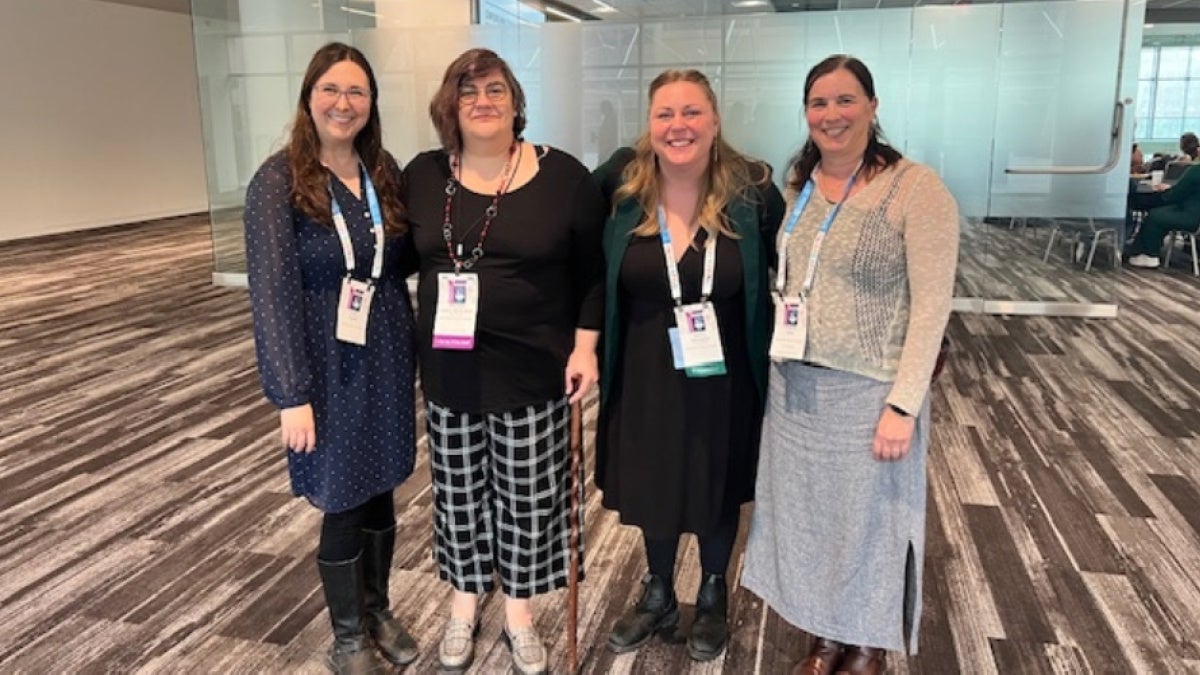
Kimberly Emmons, PhD, writing program director and Oviatt Professor of English, welcomed conference attendees to the city at the opening ceremony. Hospitality chairs Erika Olbricht, director of the SAGES program, and Martha Schaffer, senior instructor at the Department of English, provided recommendations for local restaurants and sites to see.
Other contributing members of the staff included:
- Volunteer chairs, Thom Dawkins and Shayna Sharpe, who coordinated more than 40 volunteers from across CWRU and neighboring institutions to assist with the conference; and
- William Breeze, administrative director for Faculty Advancement and Postdoctoral Affairs, who organized the Northeast Ohio Writing Programs Visibility Project;
At pre-conference events and workshops, Peer Writing Fellows and undergraduate Writing Resource Center (WRC) consultants Justine Allen, Annabel Degenholtz, James Gomez Faulk, Lucian Alexander-Roy, Sarah Secret, and Pehel Pehel, presented at the International Writing Center Conference on “Community outreach and writing center programming in an age of disconnection.”
During their presentation, they explained projects designed to connect the WRC to students' lives through activities and events that promote community and human interaction. The fellows also described:
- Their Peer-Assisted Writing Support (PAWS) evenings;
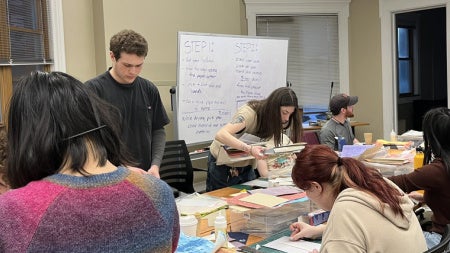
- Social events like cookie decorating and zine-making; and
- A series of classroom introductions and workshops about the WRC.
Gabrielle Parkin and Marion Wolfe, director and assistant director of the Writing Resource Center, presented to a full room of attendees on “Rethinking required writing center visits to build community through collaboration.” During their session, they shared a collaborative project between the WRC and AIQS 110: Foundations of College Writing, where students were required to attend two WRC sessions with drafts of their Academic Inquiry Seminars (AIQS) papers at different points in the semester.
Several Writing Program faculty presented projects related to their teaching and research. Cara Byrne, Kris Kelly, Michelle Lyons-McFarland, and Denna Iammarino hosted a well-attended roundtable discussion titled “Make That Table Round: Multimodal Making and Inclusive Pedagogy in First-Year Writing,” in which they described their applications of critical making theory and making pedagogy in their writing-intensive courses. Using these concepts, they have been able to enhance their students’ writing experiences in skills by emphasizing the iterative process of composing as well as human-oriented and physical manifestations of thought and revision. Merging theory and practice, these instructors shared their class projects: an artist’s book, a zine, remixes for elementary students and their teachers, and a multimodal project designed to promote students’ individual voices.
Preliminary survey data from students, faculty and consultants showed positive outcomes, highlighting the value of writing as a social activity and the importance of human readers and feedback. The WRC plans to continue expanding and promoting this initiative, strengthening the partnership between the WRC and the Writing Program.