Filipino American History Month: Meet four Filipino members of the CWRU community
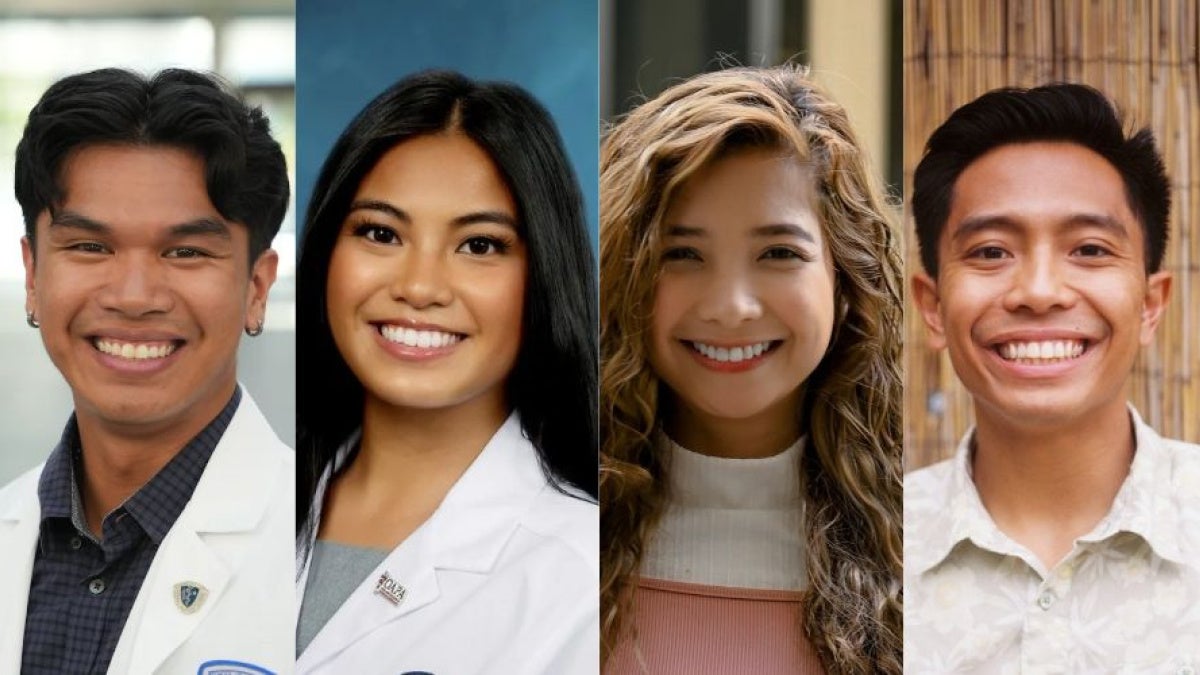
From advancing patient advocacy and exploring emergency medicine to researching gut nerve cells and carrying on a family healthcare legacy, members of Case Western Reserve University’s Filipino community make an invaluable impact in their fields and the communities they serve.
In recognition of Filipino American History Month, which takes place each year in October, The Daily is celebrating the accomplishments and experiences of four Filipino members of the CWRU community. Discover more about their experiences at Case Western Reserve—and learn how their heritage has impacted their lives.
Answers have been lightly edited for clarity and length.
Justin Mendoza
Fourth-year medical student specializing in emergency medicine
School of Medicine
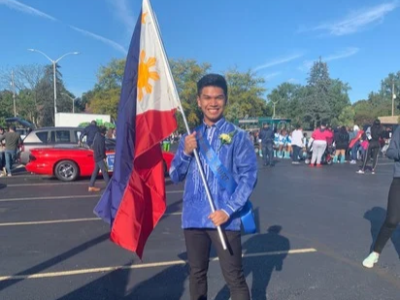
At an average family celebration with Justin Mendoza, the aroma of lumpia (a traditional Filipino spring roll) fills the air, karaoke rings through the house and multiple generations gather under one roof. On New Year’s Day, the family honors traditions believed to bring good fortune, including wearing polka dots, jingling coins in their pockets and displaying 12 round fruits for luck.
Throughout the academic year, Mendoza extends that sense of connection and cultural pride to the CWRU community by cooking and sharing homemade recipes he learned from his grandmother.
Following graduation in spring 2027, Mendoza hopes to build a career in emergency medicine that combines excellent clinical care with advocacy for patients from all backgrounds. His interest in global health will also take him to the Philippines for an international elective next year, where he can explore his medical interests while connecting with his heritage.
Learn more about Mendoza.
Why did you choose CWRU for your medical education, and what drew you to emergency medicine?
CWRU’s collaborative culture, incredible people and world-class hospitals throughout Cleveland attracted me to the university. I chose emergency medicine because of the incredible variety of conditions I encounter. I genuinely enjoyed all my clinical rotations, and I often say that I get to see the “coolest five minutes” of every specialty in the emergency department. Just as importantly, I value that emergency medicine is a field where we care for everyone, regardless of insurance status, race, age or gender.
What does Filipino American History Month mean to you personally?
When I hear “Filipino American History Month,” I immediately think back to my college years as a member of the Filipino American Association (FAA) at the University of Toledo. Throughout the month, we hosted events celebrating Filipino food, traditional dances and language, culminating in our annual Philippine Culture Night. I especially cherish the memories of performing Tinikling, Maglalatik and Sayaw sa Bangko alongside my classmates and friends. Many of our members did not have a direct connection to the Philippines, but Filipino culture brought us together and gave us a shared community.
Are there particular traditions, foods or celebrations that help you feel most connected to your heritage?
A song that instantly connects me to my heritage would be “Buwan” by Juan Karlos. I grew up speaking Tagalog (a major language spoken in the Philippines), but as I got older, I stopped practicing as much because I did not want to feel different from my peers. Over time, I have come to appreciate how important language is to staying connected to my roots. Learning Tagalog through music has made the process feel more approachable and enjoyable. Filipinos love to sing, especially ballads about love, so “Buwan” has become one of my go-to songs.
Marissa Orzame

Second-year physician assistant student
School of Medicine
Rhythmic steps of traditional dances, recipes passed down through generations and lively family gatherings have all helped shape Marissa Orzame’s connection to her cultural heritage. Growing up in Metro Detroit, Michigan, Orzame’s parents made it a priority to keep her connected to her roots through dances such as Tinikling and volunteer work at her local Filipino Community Center. These experiences instilled in her a lasting pride in her identity and an appreciation for the values of family, community and caring for others.
Those values also influence Orzame’s pursuit of a career as a physician assistant. Inspired by her background in dance and her family’s healthcare legacy, she hopes to follow in the footsteps of her grandmothers, both nurses, and her mother, a pharmacist. She also aspires to advocate for diverse communities and ensure every patient feels seen, heard and understood.
Beyond her academic and professional aspirations, Orzame preserves her heritage through food, having learned to make pork adobo and nilaga (a traditional Filipino soup) from her grandmothers—recipes she hopes to pass down to future generations.
Get to know Orzame.
Growing up, what traditions, values or experiences most shaped your connection to your heritage?
Christmas will always make me feel especially connected to my Filipino heritage. In the Philippines, Christmas is a huge celebration, with festivities and decorations beginning as early as September and continuing well into the new year! One of my favorite traditions is the parol, a traditional Filipino Christmas lantern that symbolizes hope and light. As a little piece of home, my family hangs our own parol alongside our Christmas decorations every year as a way to proudly celebrate our culture.
How has your Filipino American identity shaped your experience at CWRU? Can you share a particular moment that stands out to you?
Being a Filipino American in healthcare has given me an even greater appreciation for cultural representation in medicine. Coming from a family of Filipino healthcare professionals, I feel incredibly proud to follow in their footsteps while creating my own path as a future provider. Throughout my clinical rotations, I've become increasingly aware of how important representation is in building meaningful patient-provider relationships. It motivates me to become a provider who helps patients from all backgrounds feel safe, seen and respected.
In what ways do you share your heritage at CWRU?
I love sharing pieces of my Filipino upbringing with my classmates, whether that's through conversations about our food, family traditions or my experiences growing up in the Filipino community in Metro Detroit. Back home, I've also had the opportunity to volunteer with various Filipino organizations to help organize cultural celebrations and Filipino heritage nights. I would absolutely love to bring that same energy to CWRU and the Greater Cleveland community by helping create more opportunities for Filipino Americans to connect and celebrate our culture together.
Carlene Ledesma
Third-year chemistry PhD student
College of Arts and Sciences
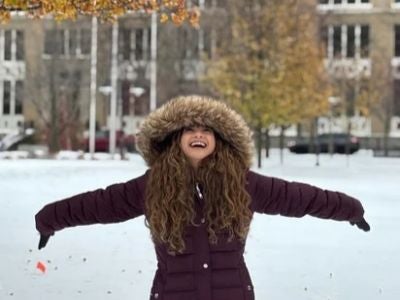
Before winter holiday celebrations, Carlene Ledesma and her mother rise early to prepare a feast for relatives and neighbors, chopping, stirring and tending to sizzling pans. The tradition is one of many ways Ledesma stays connected to her Filipino roots. She also enjoys making family favorites such as mango graham cake, a creamy, no-bake dessert layered with Philippine mangoes and graham crackers, and savoring Filipino-style spaghetti, known for its sweet sauce.
Ledesma’s journey to Case Western Reserve University began with a Google search and a longtime goal of studying abroad. CWRU was the first university she found, and as she learned more about the university, she grew confident it was the right place to pursue her education. Today, she is a third-year chemistry PhD student and graduate teaching assistant, with plans to graduate in 2029.
Her interest in chemistry took root in a high school classroom in the Philippines, where a teacher sparked her curiosity. Around the same time, reading about Filipino scientists in a textbook helped her see new possibilities for herself. Their accomplishments showed her that someone with her background could make meaningful scientific contributions, too. Now, Ledesma hopes to advance research and inspire young people to see a place for themselves in science, just as her teacher and those scientists did for her.
Read on to hear from Ledesma.
How has being part of the CWRU community allowed you to share your cultural background with others?
My fellow Filipinos and I do karaoke with our labmates. It’s such a familiar part of celebrations back home, so it’s fun to share that with the people we work with here. It gives us a chance to spend time together outside the lab and share a little of the atmosphere of a Filipino gathering. Sharing that I’m Filipino is a great conversation starter, especially here in the United States, where I meet people from so many different backgrounds. It often leads to discovering something we have in common.
In what way has sharing your Filipino heritage shaped your experience at CWRU?
As a Filipino living in the United States, I find a lot of joy in small moments of connection. Sometimes, when someone hears me speaking my native language, they ask, “Filipino ka?” which means, “Are you Filipino?” I get excited every time! There’s something comforting about being recognized that way when you’re far from home. A simple question can become the beginning of a conversation and make an unfamiliar place feel a little more familiar.
What do you think the campus community should know about Filipino heritage in general?
I think many Filipinos grow up dreaming of visiting the United States at least once. We imagine seeing snow, experiencing spring blossoms and colorful fall leaves, exploring the culture we see on social media, and visiting places we’ve only seen in movies. Coming from a tropical country, getting to experience four distinct seasons is especially exciting. I wish the CWRU community knew how meaningful those first experiences can be. Things that might feel ordinary to someone who grew up here can be exciting to someone seeing them for the first time. For me, coming here to study has also meant getting to experience a place I had imagined for so long.
JP Flores
Howard Hughes Medical Institute (HHMI) Gilliam Postdoctoral Scholar
School of Medicine
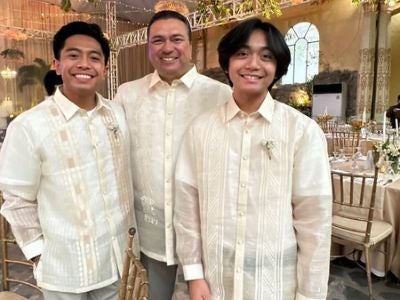
If you visited JP Flores for a typical family party, you’d find overflowing food trays with Filipino cuisine, singing that carries across rooms and children who scramble to grab treats during pabitin, a traditional party game in which prizes hang from a suspended bamboo grid. These gatherings offer Flores a taste of home and a way to stay connected to his roots as he settles into his role as a postdoctoral scholar, where he works in Marissa Scavuzzo’s lab in the Department of Genetics and Genome Sciences and Institute for Glial Sciences.
Flores joined the CWRU community earlier this year after earning his PhD in bioinformatics and computational biology from the University of North Carolina at Chapel Hill. As an undergraduate, he found inspiration in Filipino scientist Baldomero “Toto” Olivera, whose achievements helped him envision a future in research. In summer 2025, Flores met Olivera while presenting his own research at the University of Utah. The encounter brought his journey full circle, reinforcing how representation can help aspiring scientists envision a place for themselves in the field.
Flores carries that belief beyond the lab through his nonprofit, Science For Good, which aims to make science more accessible and help more people see themselves as part of the scientific community.
Learn more about Flores.
Why did you choose CWRU for your postdoctoral research, and what drew you to your field of study?
I chose CWRU because I felt like it would be a great place to grow both as a scientist and as a person. The people in the Institute for Glial Sciences were incredibly welcoming, and I was excited by the science happening here. I’ve also really enjoyed discovering Cleveland. There are so many hidden gems, from Lake Erie to places like Visible Voice Books in Ohio City, and I’m excited to keep exploring the city.
My path into computational biology began when I taught myself to code during the COVID-19 pandemic to analyze my undergraduate research on cone snail venom. That experience sparked a passion that led me to earn a PhD in Bioinformatics and Computational Biology at UNC-Chapel Hill. Now, I study how cells respond to environmental changes and hope to lead my own research group while growing my nonprofit, Science For Good, to make science more accessible and welcoming.
Are there any Filipino American History Month events or programs at CWRU or around Cleveland are you most looking forward to?
Since this is my first Filipino American History Month in Cleveland, I’m especially excited to learn more about the Filipino community that already exists here. Moving to a new city means getting to discover the people, organizations, restaurants and traditions that make up its communities, so I’m looking forward to experiencing Filipino American History Month from a Cleveland perspective for the first time. I also know when I first moved here, I couldn't find a Filipino Culture Garden, but I think I just saw a new sign propped up when I was driving through the Cleveland Cultural Gardens the other week!
What do you think the campus community should know about Filipino heritage in general?
I’d want people to experience the kindness, humor and sense of community that I associate with Filipino culture! We can be incredibly goofy! At our parties, there’s a lot of teasing, laughing, singing karaoke, food and the insistence that you eat more even when you’ve already had three plates. At the same time, there isn’t one single Filipino American experience. Our community encompasses different languages and dialects, regions, immigration stories and generations. I think that diversity is worth celebrating alongside the things that connect us.