Finding purpose in public service
Through their capstone projects, two 3Ls translate legal scholarship into meaningful public service.
As third-year law students approach graduation in May, some are doing so equipped with unique practical skills that have shaped their legal education—and the lawyers they will soon become. Through capstone projects, these students took on complex legal challenges with real-world consequences—translating years of rigorous coursework into work that serves clients, communities and the broader public.
For 3Ls Kalina Zutavern and Jenna Chirichetti, the capstone is more than a final academic requirement. It is an opportunity to dive deeply into an issue that has informed their law school experience, sharpened their professional identities and produced scholarship or advocacy that could extend well beyond campus. From intensive research and writing to hands-on collaboration with faculty mentors and community partners, their projects reflect both the intellectual depth and practical focus that define a CWRU legal education.
Read on to learn about their experiences.
Drawn by a desire to work within the criminal justice system and to remain in Wayne County where she has deep personal ties, Kalina Zutavern initially explored opportunities with the local prosecutor’s office. But when the public defender’s office offered her an externship instead, she embraced the opportunity. It would become one that provided an immersive, hands-on experience that shaped her understanding of justice, advocacy and professional responsibility.
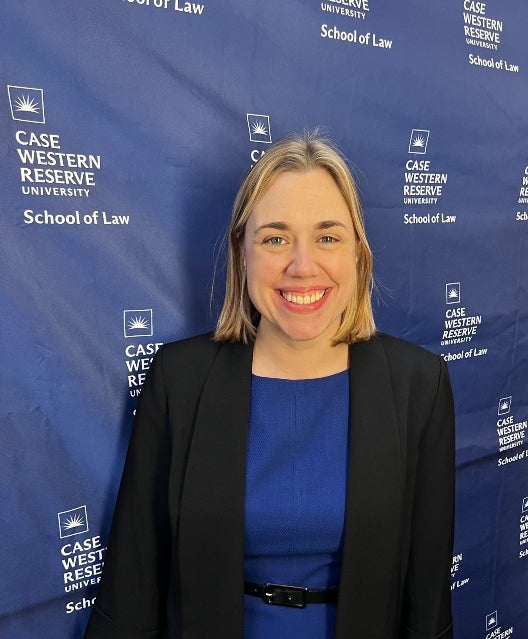
“The office has a strong collaborative culture,” Zutavern explained. “I worked with nearly every attorney in the office, which gave me exposure to different advocacy styles and approaches. That breadth made the experience especially valuable.”
Each day brought a new rhythm and challenges. Zutavern regularly checked in with attorneys on active cases, tracked developments that occurred while she was in class and shadowed attorneys managing complex or fast-moving dockets. She also sat in on client meetings, gaining insight into how experienced defenders communicate with clients and manage expectations during stressful and uncertain moments.
One of the most formative aspects of her externship was the level of responsibility with which she was entrusted. Zutavern was assigned three bench trials—an uncommon opportunity for a law student. While two of the cases were resolved shortly before trial, she prepared each as though it would be fully litigated. That preparation paid off.
“In both cases that settled, my preparation strengthened my client’s negotiating position and contributed directly to more favorable plea agreements,” she said. “It reinforced that trial preparation is never wasted effort—it’s often what makes resolution possible.”
One bench trial did proceed to court, and it left a lasting impression. Standing before the judge, Zutavern felt the weight of advocacy in a deeply personal way.
“It really hit me that any mistake I made wouldn’t affect me—it would affect my client,” she recalled. “That responsibility changed how I think about preparation and advocacy.”
Equally impactful were the relationships she built with clients. Many came into meetings anxious, frustrated or distrustful of the legal process. Navigating those interactions strengthened Zutavern’s communication and interpersonal skills.
“I learned how important it is to meet clients where they are,” she said. “Explaining legal concepts in plain language, adapting my communication style to each client and leading with empathy made a real difference.”
Looking ahead, Zutavern’s externship has clarified her interests while keeping multiple paths open. She has developed a strong respect for defense work and discovered a particular passion for trial strategy and evidence evaluation. While she is considering prosecution as a potential career path, she hasn’t ruled out public defense.
“Law school is the perfect time to explore public interest work,” she said. “You’ll gain foundational skills that translate into any legal career.”
For Pittsburgh native Jenna Chirichetti, completing her capstone requirement with the Allegheny County District Attorney’s Office was a chance to apply her legal training in a setting that felt both meaningful and familiar.

“I wanted to take the skills and knowledge I learned at CWRU back home,” she said.
Chirichetti worked in the appeals unit, where she was exposed to the legal analysis and writing that shape appellate advocacy. “I strengthened my analytical, legal writing and research skills by completing written assignments throughout the semester,” she noted.
In addition to her work in the office, Chirichetti regularly observed courtroom proceedings, including multiple jury trials. Watching experienced attorneys advocate in real time gave her valuable insight into how legal arguments are presented and refined in practice.
“It was a great opportunity to witness advocacy in action,” she said.
One of the most memorable aspects of the externship for Chirichetti was the strong culture of mentorship within the district attorney’s office. “The attorneys always made an effort to give advice, invite me to Allegheny County Bar Association events and provide meaningful feedback on substantive assignments,” she shared. Attorneys in her unit encouraged her to ask questions, get involved and explore legal issues she had not previously encountered, which made the externship a meaningful learning experience.
Chirichetti was also struck by how collaborative the office environment was. “The attorneys worked closely together to address complex legal issues, and involved me in these conversations on a daily basis,” she said—an experience that reshaped her expectations of how a prosecutor’s office functions.
The externship also gave Chirichetti insight into the practical demands of prosecution. By observing how attorneys balanced heavy caseloads and deadlines, she gained a deeper appreciation for the organizational and time-management skills required in the role. “I learned that it truly requires great organizational and time management skills to be successful,” she reflected.
When asked what advice she would offer to students considering an externship with a district attorney’s office, Chirichetti’s guidance is simple and direct: “Reach out early, be proactive and take initiative.”