A history of healing
Ulysses Grant Mason III aims to support future physicians
Guided by a strong sense of service, Ulysses (Chip) Grant Mason III (MED ’73) always cared for the most vulnerable patients, spending more than thirty years as a physician in urban hospitals and safety-net clinics where poverty and limited access often affected patient outcomes.
“Those were the people who needed the most help,” Mason said.
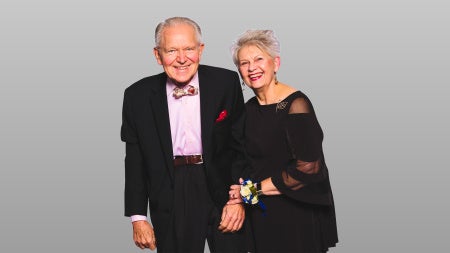
Now, Mason is building on his legacy of service by creating the Ulysses Grant Mason, III, MD and Gail Anne Bard Mason Endowment Fund through an estate gift at Case Western Reserve University School of Medicine. Named for Mason and his late wife, Gail, the fund will help reduce financial barriers for CWRU medical students with limited resources.
The endowment will provide crucial financial support to students to help fund research, conferences or travel for professional development.
“I received an outstanding education and training at CWRU School of Medicine,” Mason said. “This gift ensures future students have the support they need to focus on learning and serving their communities.”
A multi-generational mission
For Mason, medicine is both a family tradition and a way to break racial barriers. His grandfather, Ulysses Grant Mason, born in 1872 in Birmingham, Alabama, was a surgeon who received additional training in Edinburgh, Scotland, and balanced his medical practice with roles as a banker, civic leader and trustee of the historic 16th Street Baptist Church in Birmingham.
His father, Ulysses G. Mason Jr., moved to Cleveland in the 1930’s as part of the Great Migration, when millions of African Americans from the rural South moved to northern states. He faced a landscape where major hospitals often refused to admit Black patients or grant privileges to Black doctors. In response, he founded Forest City Hospital, Cleveland’s first fully integrated hospital. He later led the desegregation of City Hospital (now MetroHealth), becoming its first Black physician elected president of the medical staff in 1960, and was on the CWRU School of Medicine faculty from 1950 to 1980.
“I went with my father on house calls in Cleveland,” Mason recalled. “Watching him manage a patient with diabetes or chest pain was my introduction to medicine. It taught me that medicine was a way to make life really worthwhile.”
Overcoming invisible barriers
After serving four years as an Air Force officer, he entered medical school a decade after graduating from college. When it came time to choose a school, CWRU offered a sense of place no other institution could. I basically came home," he said. "Case Western Reserve was an easy choice...it was in Cleveland."
Mason now wants to make sure future caregivers have the same opportunities that he, his father and grandfather all had.
By investing in the next generation of CWRU-trained physicians, Mason is continuing his family’s legacy of service. Through his endowment, he hopes to ease the financial stress that can keep talented, dedicated students from important professional experiences that help them grow as leaders in medicine.
He offers simple advice to students who will benefit from his endowment: stay curious, ask questions and challenge assumptions.