Learn how the Mandel School is preparing nonprofit leadership of tomorrow
For National Nonprofit Awareness Month, CWRU Master of Nonprofit Organizations students share how they make real-world impact in the nonprofit sector
November is National Nonprofit Awareness Month—a time to recognize the vital role nonprofit organizations play in strengthening communities, advancing equity and addressing society’s most pressing challenges.
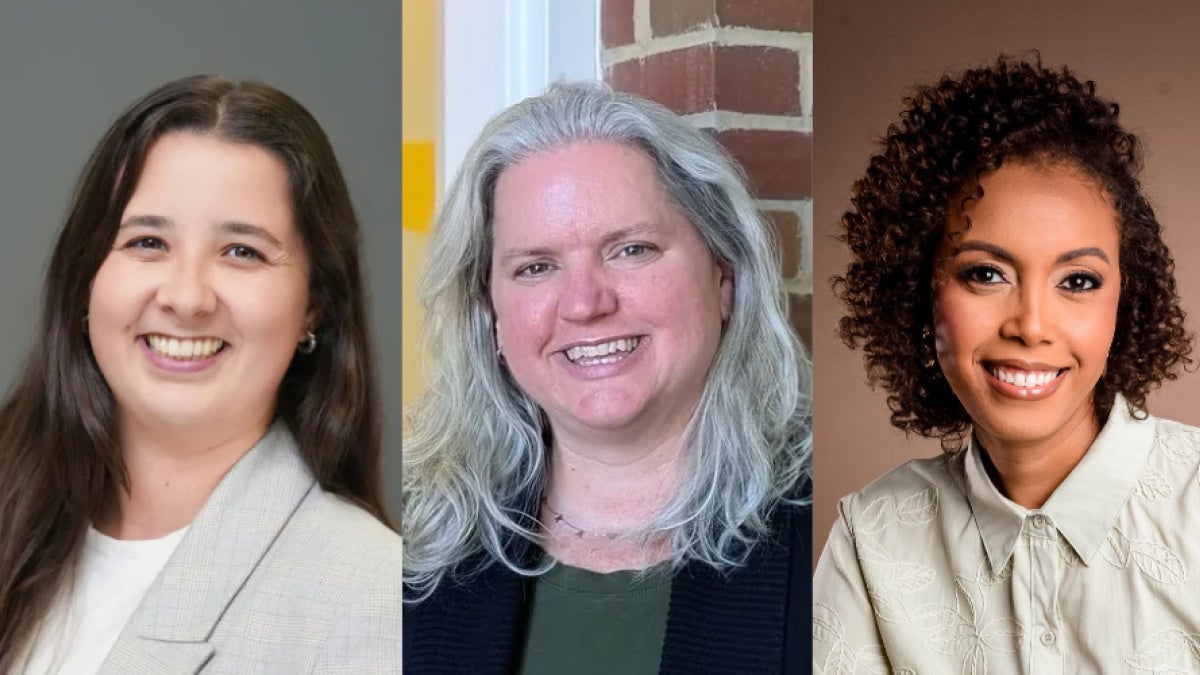
At Case Western Reserve University’s Jack, Joseph and Morton Mandel School of Applied Social Sciences, students in the Master of Nonprofit Organizations (MNO) program are preparing to make meaningful, real-world impact across the nonprofit sector. Read on to hear from three MNO students about their experiences, what inspires their work and how the Mandel School is helping equip them to lead with purpose.
Interested in the MNO program? Learn more and submit your application.
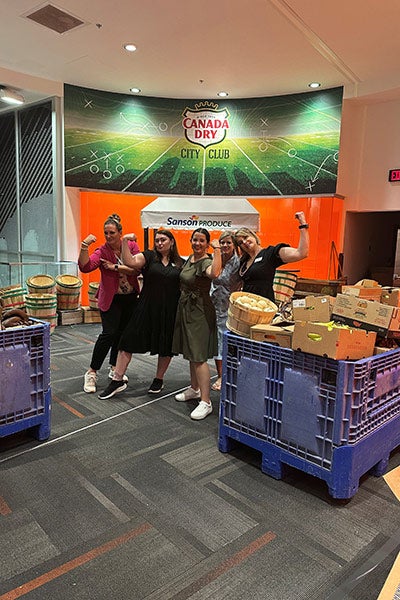
Annie Walsh
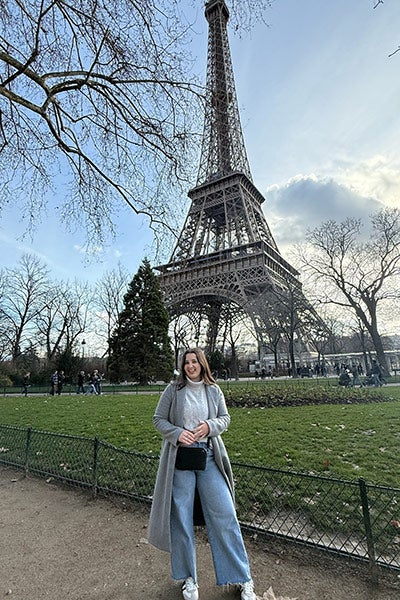
A second-year MNO student, Annie Walsh is the annual fund coordinator at the Cleveland Food Bank, where she manages the direct mail and digital fundraising program. “If you have ever received an email or direct mail piece from the Food Bank, that would be from me,” Walsh said.
What drew you to the Master of Nonprofit Organizations program at CWRU?
I knew I wanted to pursue my Master ofNonprofit Organizations, so it was more about whittling down the programming. I knew some people who were MNOs themselves and had conversations surrounding if this was right for me. After working for the Food Bank, I realized that the path of nonprofit work was for me and the MNO program fit all the criteria to propel my career forward.
Why do you think Nonprofit Awareness Month is important for highlighting the work of the nonprofit sector?
I don't think people realize just how vast the nonprofit sector is in Cleveland. In the city of Cleveland alone, there are over 3,600 nonprofits, all of which range from education institutions, to health and human service organizations and even arts and culture nonprofits. There is such an array of nonprofit work going on in the city of Cleveland all to make the lives of Clevelanders just a little bit better. Additionally, there is a huge philanthropic community. Clevelanders show up for Clevelanders.
How has the MNO program shaped your understanding of leadership, service and community impact?
I think most importantly, what this program has taught me is how to have a voice. This program creates an environment for me in which I am able to speak up. I am encouraged to push back when necessary and make my point of view heard. The nonprofit world is full of people who want to be the loudest person in the room, and this program has taught me that sometimes it's not necessarily about being the loudest person, but ensuring you are the person who encourages conversation and develops relationships. Collaboration is not only an integral part of what the MNO program teaches, but it is a necessary part in forming partnerships that help create meaningful impact in the community.
What’s one thing you wish more people understood about nonprofits and the people who lead them?
I wish more people understood just how versatile nonprofit employees truly are—and I am not just saying that because I work for a nonprofit. Throughout my classes and personal work experience, nonprofit workers are meant to wear many hats and are cross-trained in multiple business areas, especially smaller run nonprofits who may need to raise $600,000 with only one development officer. They also do the work with little pay incentive. They truly believe in the mission of their organization and how the work they are doing is impacting the community for the greater good. If you are looking for a way to support the organizations that support the community, volunteering and donating when you can helps immensely.
How are you hoping to make an impact through your work in the nonprofit field?
I hope through my experience both at the Food Bank and from the MNO, I can be the voice that encourages partnership and collaboration. I want to be able to connect community members with causes that are most important to them. I have seen firsthand how nonprofit work has changed my life and expanded my worldview on issues hurting our community. My hope is that I can not only be that same source of information to help people realize issues affecting them or their community, but encourage them to do something about it.
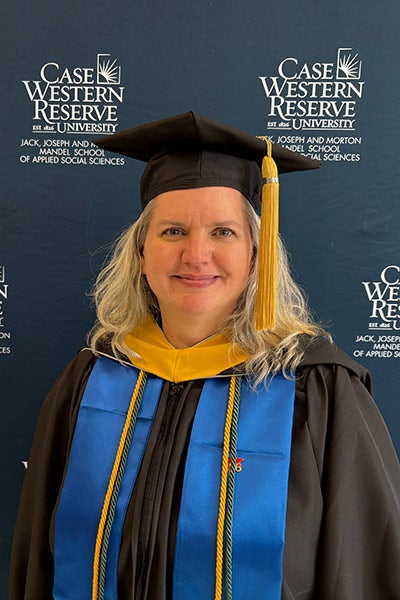
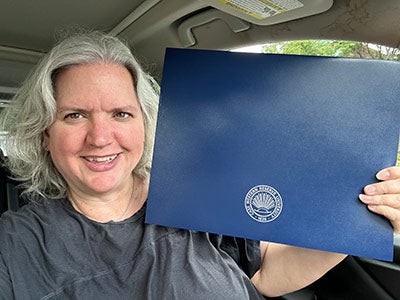
Leslie Szalay
Leslie Szalay, who finished her studies in August, is director of family and community engagement for Plymouth Church in Shaker Heights, where she leads the educational programs and community initiatives. Outside of work, she is a longtime volunteer with the Girl Scouts, serving as a troop leader, troop mentor and archery instructor.
What drew you to the Master of Nonprofit Organizations program at CWRU?
When I was considering how to grow professionally, I wanted to build on my existing experiences and my commitment to creating a positive difference in the world. So, when I discovered the MNO program, it immediately stood out as a fit for me. While comparing various nonprofit leadership degrees, I realized that the MNO program was uniquely positioned in the well-renowned Jack, Joseph and Morton Mandel School of Applied Social Sciences. Unlike traditional programs taught through a business school lens, CWRU approaches nonprofit leadership from a social work perspective, which deeply aligns with my values. It also felt really accessible with evening and weekend classes, allowing me to complete the program within one year while I continued working.
Why do you think Nonprofit Awareness Month is important for highlighting the work of the nonprofit sector?
Nonprofit Awareness Month is vital because it shines a spotlight on the vast network of organizations creating positive change all over the world. Cleveland in particular is fortunate to have a robust nonprofit community dedicated to improving lives, protecting animals and the environment, and lifting up the arts. This month serves as a good reminder of both the ongoing needs in our community and the daily work that's being done to address them. Building awareness also inspires greater community involvement and support, allowing nonprofits to expand their impact.
How has the MNO program shaped your understanding of leadership, service, and community impact?
The MNO program taught me that effective nonprofit leadership is rooted in empathy, equity, good stewardship and ethical problem solving. Framing leadership through a social work lens showed me that true service means empowering the people closest to the issue to help shape the solutions. This perspective shifts focus from short-term fixes to sustainable systemic change, resulting in greater impact and accountability to the communities we serve.
What’s one thing you wish more people understood about nonprofits and the people who lead them?
I wish more people understood that successful nonprofit leadership balances passion for mission with strategic business skills. Running a sustainable organization requires rigorous financial management, data-driven decision making and operational strategy. Nonprofit leaders are tasked with solving complex, systemic community challenges with limited resources, so they must do more with less.
How are you hoping to make an impact through your work in the nonprofit field?
With the skills I’ve gained from the MNO program, I’m excited to build partnerships and sustainable programs that directly impact our community on a larger scale. I have started writing grants and I hope to develop initiatives that create lasting, measurable change for the people and communities that we serve.
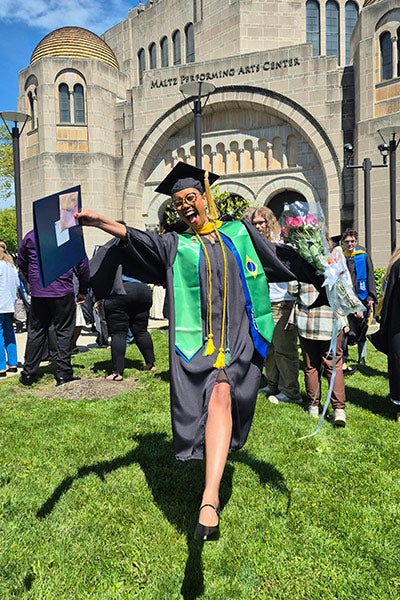
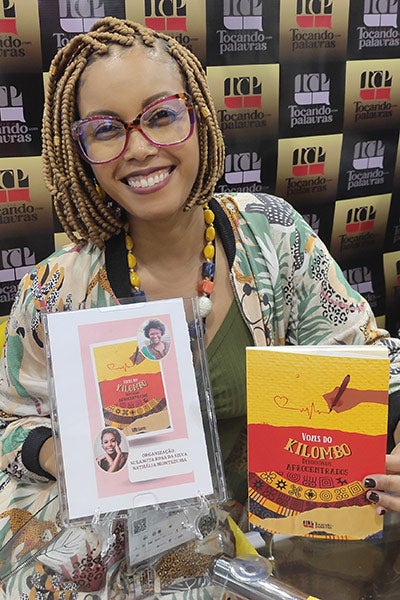
Nathalia Montezuma
Nathalia Montezuma, who completed her MNO coursework in August, works with the Pan African Women’s Ecumenical Empowerment Network, an initiative related to the World Council of Churches and Bread for the World. Her role focuses on expanding Afro-Latina women’s participation in Pan-African ecumenical networks, bringing together individuals, organizations, and existing initiatives to build partnerships in advocacy, theological education and spiritual empowerment.
What drew you to the Master of Nonprofit Organizations program at CWRU?
I was drawn to CWRU's MNO program because it brought together two things I consider essential to nonprofit work: building relationships and managing organizations effectively. What stood out to me was that the program approached nonprofit management through the lens of applied social sciences, rather than simply borrowing management models from the business world. I also appreciated how much we learned from one another. Both faculty and students brought their own nonprofit experiences into the classroom, which made our discussions especially valuable.
Why do you think Nonprofit Awareness Month is important for highlighting the work of the nonprofit sector?
The very idea of an Awareness Month invites us to pay attention to something we may not fully recognize or value as a society. For the nonprofit sector, this means going beyond visibility to recognize its strategic role in advancing systemic change and acknowledge the challenges faced by those who sustain its work. Yet awareness should not be limited to the general public. For those of us within the sector, it is an opportunity to examine whether our organizational practices reflect the values of justice and equity we seek to promote in society.
How has the MNO program shaped your understanding of leadership, service and community impact?
As an immigrant, I inhabit between cultures. I see a parallel in the nonprofit sector, which operates in constant dialogue, and sometimes in tension, with the government and the private sector. The MNO program deepened my understanding of what it means to lead within this space. I came to understand leadership, service, and community impact as interconnected dimensions that require horizontal dialogue, flexibility, and the ability to navigate tensions. The challenge is to fulfill an organization’s mission in ways that strengthen both its own sustainability and the communities it serves.
What’s one thing you wish more people understood about nonprofits and the people who lead them?
I wish more people understood that the social value of nonprofits extends beyond the immediate services they provide. As a sector, we still struggle to communicate that value. In a society that often measures success by financial returns and individual achievement, the role of collective action in addressing social challenges tends to be underestimated. This also shapes how nonprofit leaders are perceived. People sometimes assume that being passionate about a cause is enough to lead an organization. Of course, commitment matters, but this work also requires professional knowledge and the ability to understand complex social realities. Nonprofit leaders need to consider not only the needs of the people they serve, but also the economic, political, and geographic conditions that shape those needs.
How are you hoping to make an impact through your work in the nonprofit field?
I want to help build a nonprofit sector where leadership reflects the diversity of its workforce and the communities it serves, and where those communities have a meaningful voice in decision-making. As an Afro-Latina woman, I see both my work and my presence in these spaces as part of that transformation. My approach draws on the See-Judge-Act method as developed within Latin American theology, connecting observation, reflection, and action. Listening to communities is not enough if their knowledge and perspectives do not inform organizational priorities and practices. Through my work, I seek to strengthen community self-determination and expand leadership opportunities for historically underrepresented groups.