Masters of Connection: How Cleveland, CWRU and community shaped Avengers directors Anthony and Joe Russo’s path to assemble the universe
As Anthony and Joe Russo walk the set of Avengers: Doomsday, history looms large.
There are, of course, the visual reminders that the brothers are shooting this film on the hallowed grounds of Pinewood Studios outside London: The 007 Stage, the birthplace of the iconic James Bond series, is steps away, while a giant banner across the lot promotes a Star Wars spinoff filmed here. (It’s an ever-present nod to the franchise that in 1980 transformed the brothers—then two young Clevelanders—into cinephiles, after they snuck into repeat viewings of The Empire Strikes Back.)
"I wanted the feeling that I got at the end of Empire Strikes Back when Luke found out that Vader [spoiler!]. I wanted it over and over again." —Joe Russo, producer/director
There’s also the precedent that Anthony and Joe, better known globally as simply the Russo brothers, have set as directors and producers of cult television comedies and blockbuster films alike, generating more than $7 billion at box offices worldwide through their work and that of their Oscar-winning independent studio, AGBO.
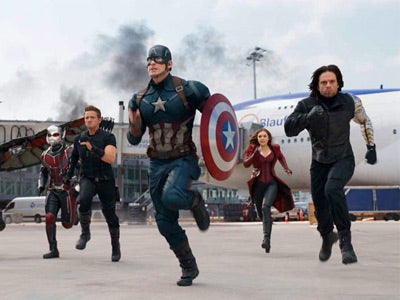
But their focus now is on the action unfolding at Pinewood—a project that could prove as lasting as the iconic lore that surrounds them. They (along with thousands of cast and crew) are developing a fantasy world that unites multiple Marvel franchises for Avengers: Doomsday, which debuts in December, and its sequel, Avengers: Secret Wars, set for December 2027.
To do so, the brothers—Anthony and Joe (GRS ’95, theater)—tap into their greatest strengths: storytelling and community- (or, in this case, universe-) building.
They first developed these skills in Cleveland, over weekly dinners with the extended Russo family and at Case Western Reserve University, where the two pursued graduate degrees, launched an “absurdist” comedy troupe and filmed their first movie.
Case Western Reserve University Magazine caught up with the Russo brothers on set to talk about collaboration, pursuing passions and the little-known CWRU connection to AGBO.
Joe, you earned a Master of Fine Arts (MFA) in Acting at CWRU, and Anthony, you studied law there for a year before pursuing filmmaking instead. Thirty-some years later, we’re on set of one of the biggest, most-anticipated films of the year. Why CWRU, and how did your studies prepare you for all this?
Joe Russo: [CWRU’s] MFA is an amazing program. Training as an actor for three years in that program really helps me talk to actors, understand the language and elicit performances that match the tone of the project we’re working on.
Anthony Russo: It was during my first year of law school, when Joe was in his [MFA] program, that we first started messing around in the arts together. We actually started a sketch comedy troupe at [CWRU].
Talk about that.
JR: Anth and I and a friend of ours, Jake Aust (CWR ’01)—who is still with us at AGBO—we created a sketch troupe. We did two shows over a couple of weeks [at The Spot in Leutner Commons].
The troupe was called No Shame Comedy, and let’s just say our ad campaign certainly had no shame.
AR: Our company’s name actually came from our time at [CWRU]. We were trying to promote No Shame’s first show, so we decided to fabricate this mythic history of our comedy troupe for an interview with The Observer.
We opened up the Cleveland phonebook to just give ourselves some name inspiration for who our fictional founder would be, and we came across somebody named Gozie Agbo. So we created this character [whose “backstory” appeared in The Observer’s February and March 1993 issues], and that became our inspiration years later when we got to name our company.
As a university, we talk a lot about success, but careers are often also built on missteps. Is there a failure—at Case Western Reserve or shortly after—that turned out to be essential?
JR: Our first movie, Pieces, which we filmed as students at CWRU featuring some classmates, was a failure. It didn’t get bought, and more than half of the people walked out of the theater at the premiere. That taught us a lot about inaccessibility in storytelling.
How did growing up and going to graduate school in Cleveland shape your early ambitions for a film career?
JR: Being from Cleveland, being so outside of the business and growing up in the town that is one of the great underdog cities in the States, we had a little bit of a complex about where we were from. But we also had a bit of a chip on our shoulders, you know?
Because of that, I think we had a bit of a riotous attitude about how we perceived the business. We were outsiders. We never felt like we were part of it, nor do I think we ever felt like we wanted to be part of it.
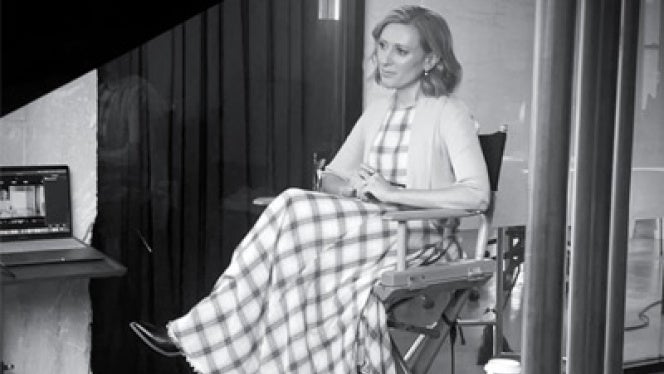
Angela Russo-Otstot was teaching screenwriting at CWRU a decade ago—until she moved back to Los Angeles to lead the story department for the Russo brothers’ independent production company.
[Pieces] was absurdist and nonlinear and crazy—it really grew out of No Shame. Only a guy like Steven [Soderbergh, the acclaimed director who saw the film’s premiere and helped launch their careers] would have responded to it, to its experimental nature. But I remember him saying to us, ‘If you continue to make those kinds of movies, you will not have a career telling stories.’
So we started to prioritize storytelling over filmmaking because the essence of who we are is built around community—in the city we grew up in, at Case Western Reserve and in our family. Every Sunday, our extended Italian family would gather in Cleveland to eat together, laugh together and entertain each other by telling stories. So we really tried to distill down: What is it that we like doing?
And we realized it was sitting in a room, telling a story.
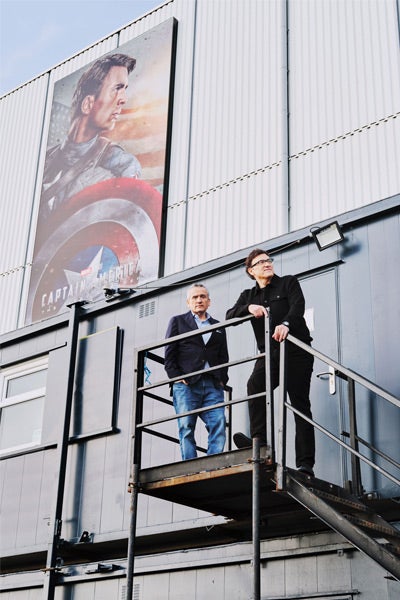
Why does the collaboration between the two of you work?
AR: One time, a director friend of ours sat behind us at the monitors. At the end of the shoot day, he said to us, ‘It’s so weird listening to you two because the conversations you have are like the conversations I have in my own head.’ Joe and I are able to externalize that inner debate that [other directors] have about the hundreds of choices that you have to make throughout a day as you’re executing a film.
We like the ability to work through ideas, heat them up, stretch them, pull them, turn them upside down, throw them out and pick them back up again. We can pass ideas back and forth in a way that we find useful and helpful and fun. We don’t really have that many boundaries; we both float all over the place in terms of what we’re doing.
How do you unite so many people, disciplines and voices on set?
JR: We have to be able to bring dozens of, if not hundreds of or a few thousand, people along with us on a journey together.
Anth and I are collaborators. We can’t function without proper communication, and that’s made us better at communicating with other people. Plus, we don’t sit isolated; we have to talk it out. And we have to make sure everyone is aligned to where we’re going.
How do you balance the immense feelings and expectations people have about the Marvel Cinematic Universe with your desire to surprise them?
JR: If you intellectualize that, it’s impossible. Everyone wants something different. But we grew up collecting comics, so we understand what it is people love about them. We have to make a film that we enjoy and that touches on the things that excite us. A lot of times you dig back into the 12-year-old version of yourself to try to understand what the riseable elements of [your favorite movies] were.
"Film is such a collaborative medium that it is really important to find people you connect with creatively and energetically to try to make movies." —Anthony Russo, producer/director
What draws you to the stories you tell—and is it the same for both of you?
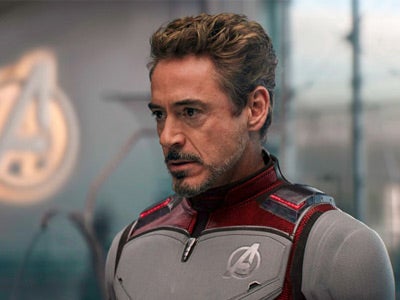
JR: It’s something different every time, but we have to find a common ground to tell the story together. We like thematics that are usually topical and that have a universal humanity to them, so whether you’re growing up in Cleveland or Dubai or New Delhi or Tokyo, you can relate to the story in some way.
AR: The world has become so complicated and so divided. But one of the beautiful things about the fantasy space, which we’ve been working in a lot over the last decade, is it takes you out of real life and puts you into a made-up world where the same ideas, conflicts, anxieties, emotions and psychology that you have in the real world—those all exist in the fantasy world, but they exist in a space that doesn’t trigger you in real life. That allows people to process those ideas and emotions in a space that’s maybe safer or at least different than what they’re struggling with on a day-to-day basis.
JR: What’s great about these Marvel films is they’re optimistic. Hope is a very valuable and dwindling commodity at the moment. But these films are a broad-spectrum dose of hope with positive themes about doing the right thing and seeing results by doing it—I think that’s very important right now. Because what you do does matter.
More to Know
How you know Anthony and Joe Russo: Directors and producers of everything from cult comedy TV shows such as Arrested Development and Community to blockbuster films such as Captain America: Civil War and Avengers: Endgame
Most impactful CWRU faculty member
AR: [Professor Emeritus of English and Film] Louis Giannetti, who was the author of an intro to film textbook.
He wasn’t my professor, but he was very kind and gracious in terms of indulging us. He read drafts of our first movie, Pieces—even incomprehensible ones—and commented on them.
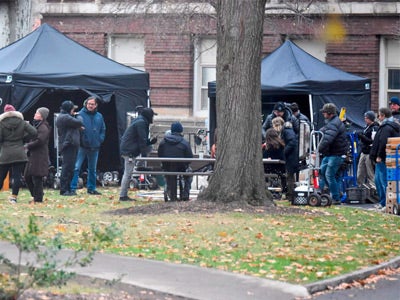
JR: [Professor Emerita of Theater] Beth McGee, who was my voice teacher and who’s done a lot of work with us over the years. You work through emotional blocks in voice class, and a lot of what I was doing in acting was just tearing down pre-built mechanisms about myself. It taught me a lot about life.
Best CWRU memory
AR: I have two: Getting No Shame [a comedy troupe] on its feet—it was my first time staging something. And filming Cherry on the Case Quad; it was a full-circle moment. [The first was in 1993, the second in 2019.]
JR: Some of my favorite moments were being on stage in Eldred. I loved the space; I loved the intimacy; I thought the audiences were great.