Milestones in motion: CWRU dance takes center stage with the Martha Graham Company
Hear from three CWRU dancers about performing with the Martha Graham Company during a year of historic celebrations.
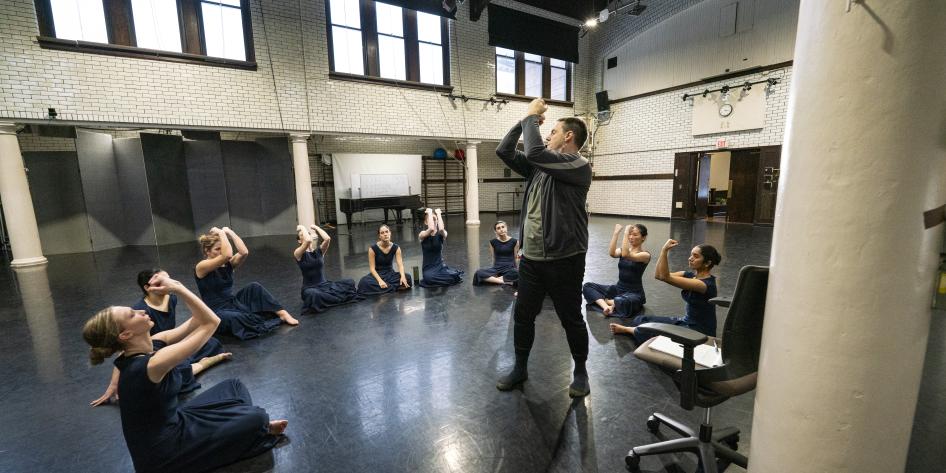
When the Martha Graham Dance Company brings its centennial tour to Cleveland on Jan. 31, at Playhouse Square, Case Western Reserve University students won’t just be in the audience—they’ll be on the stage.
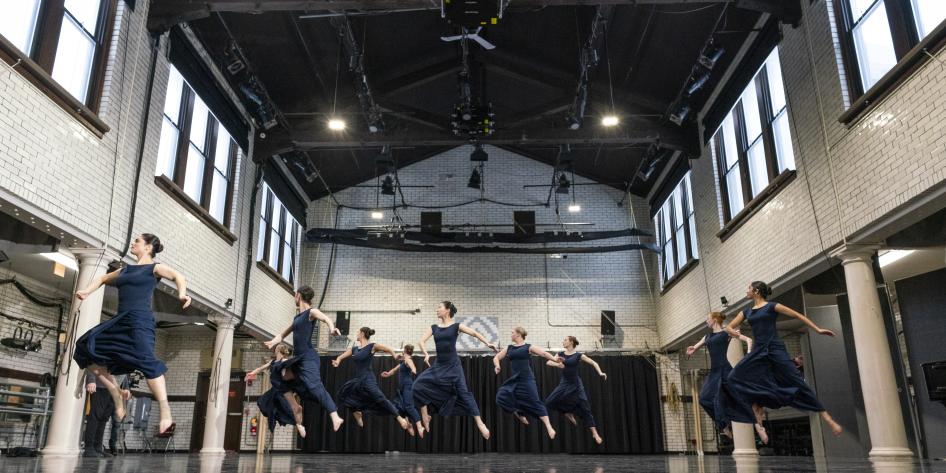
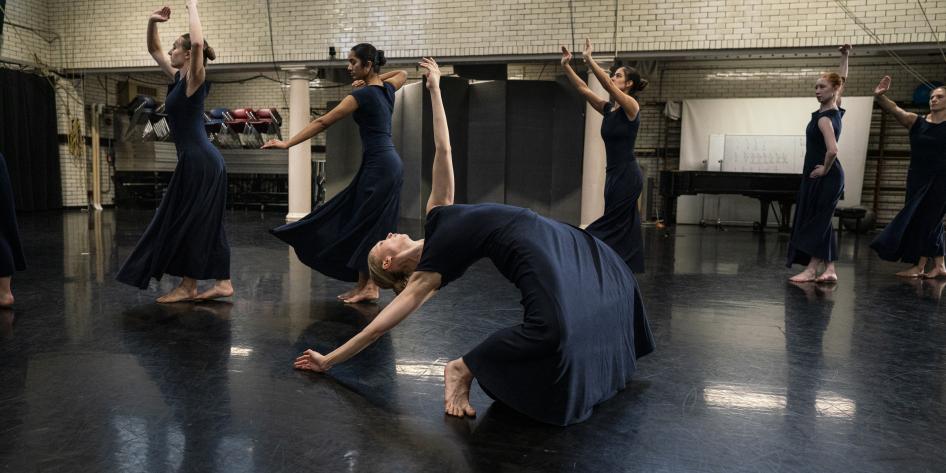
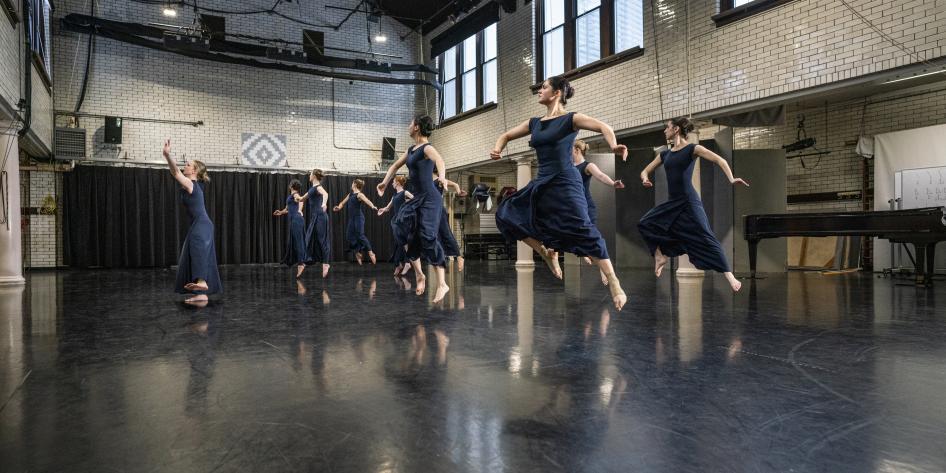
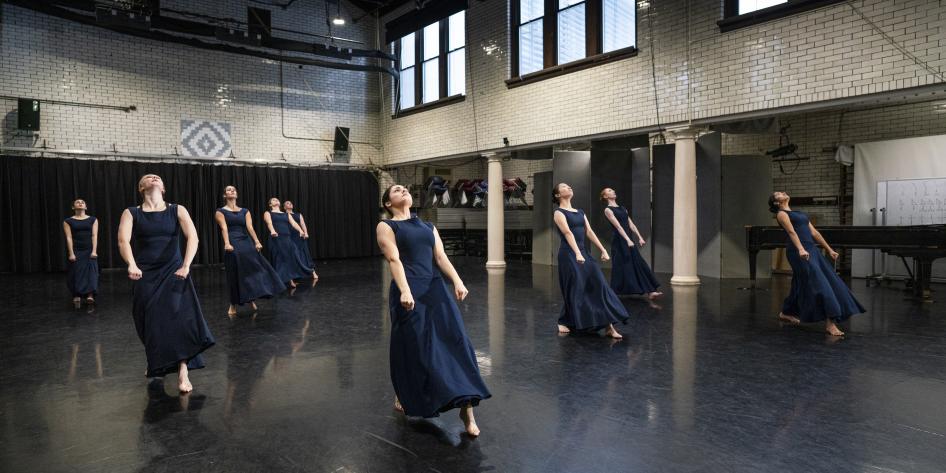
Ten undergraduate and graduate dancers from CWRU’s Department of Dance will perform as part of the program, making the university one of a rare few invited to appear alongside the world-renowned company during its 100th-anniversary season. For many students, it’s a once-in-a-lifetime experience.
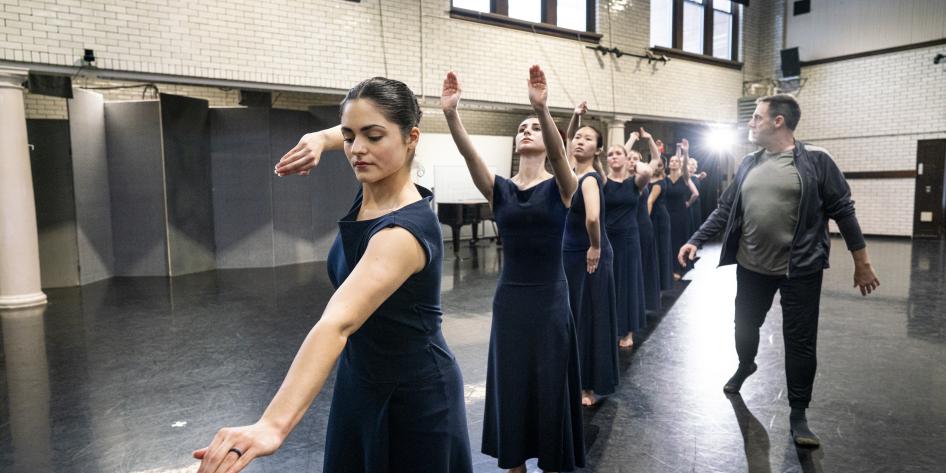
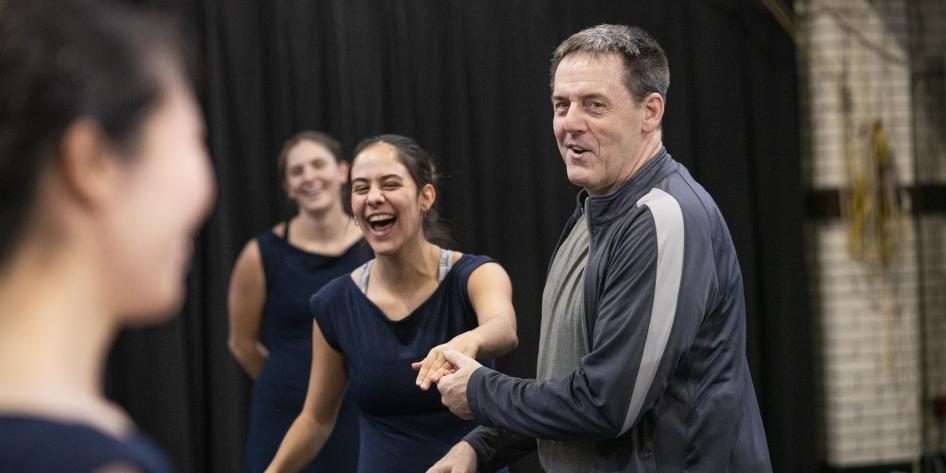
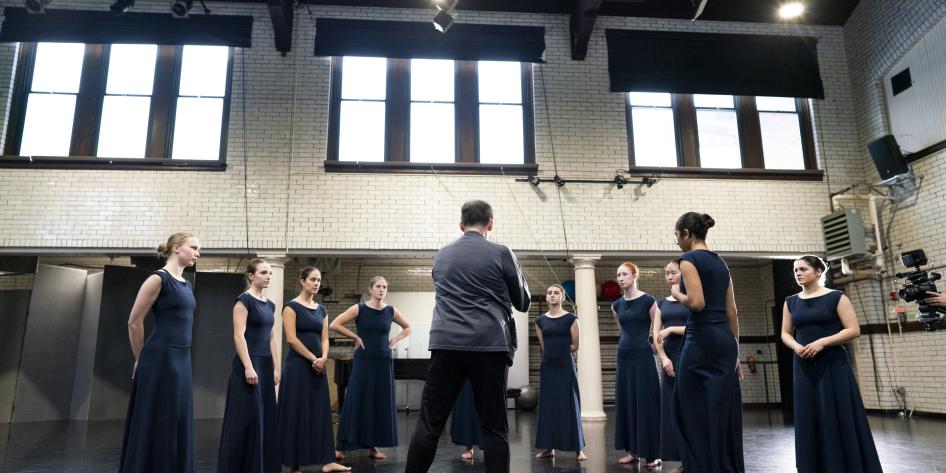
“This is something they’ll probably remember for the rest of their lives,” said Gary Galbraith, CWRU professor of dance and a former principal dancer with the Martha Graham Dance Company. “This is one of the most eminent companies in the world, and they’re sharing the stage with them. That’s going to stick.”
The students will perform Steps in the Street, a segment from a larger Graham work, as part of a program that spans the choreographer’s early, mid-career and contemporary repertoire. Galbraith, who has staged many of Graham’s pieces, worked closely with the company and with DanceCleveland—the presenting organization bringing the Martha Graham Dance Company to Playhouse Square—to make the collaboration possible.
“What’s exciting is that we’re part of their centennial season,” Galbraith said. “We’re one of those rare and fortunate few to be able to do this, and it feels fitting that it’s happening here in Cleveland.”
The collaboration is also rooted in Cleveland’s dance history. DanceCleveland will celebrate its 70th anniversary next season, and its origins trace back to what is now the Mather Dance Center on CWRU’s campus.
The performance also coincides with a major milestone at CWRU: the 50th anniversary of its graduate dance program. The collaboration reflects the department’s long-standing commitment to innovation, experiential learning and artistic leadership.
“We are small, but we are mighty,” said Galbraith, “We’re one of the oldest graduate dance programs in the country, and I’m so proud of the opportunities we’re able to offer our students and all the ways we keep pushing forward.”
For students, Galbraith knows the experience is about more than prestige. “You can’t teach what it feels like to perform for 1,500 people in a space like that,” Galbraith said. “They’ll better understand their responsibility as artists, and their own potential.”
As the Graham centennial, DanceCleveland’s 70th anniversary and CWRU’s graduate milestone converge on one stage, the moment signals both a celebration of history and a statement about the future of dance at Case Western Reserve.
“In a way, it’s all sort of coming back here,” said Galbraith. With DanceCleveland, the Graham Company and CWRU students sharing one stage, the performance becomes a homecoming that connects the university’s past, present and future in dance.
To learn more about the performance and what this opportunity means to the students involved, The Daily pose three questions for three students dancing in Saturday's performance.
Answers have been edited for clarity and length.
Lucia Mancha (CWR ’24)
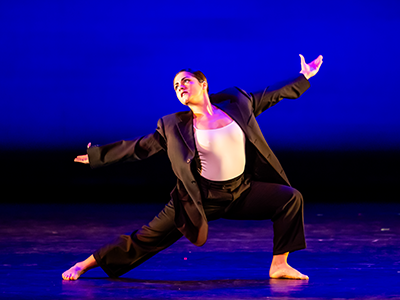
Second-year Master of Arts student
What did it mean to you personally to be chosen for this opportunity with the Martha Graham Dance Company?
It's a great honor. We—as students of Gary Galbraith—are third generation, meaning that Gary himself was trained by the person who originated the style. In other historic forms, such as ballet or cultural forms, you rarely see that anymore. So it's amazing for us to hear firsthand through his instruction what Martha herself was like, and what the process and creation of that company was like. We also get to see how each generation has approached and changed the choreography as dancers and culture changes, as the athletic expectations of dancers and students change.
How does this experience differ from other performances or projects you’ve been part of at CWRU?
As a student at Case Western Reserve, I've been a part of primarily academic projects. I've done other performances not associated with the university, but when we dance, we're being graded—or we're being viewed as students with the constant need to improve, and it's a very self-critical process. This sort of community outreach work where we dance with Graham is a real opportunity to approach dance in a different way, where you're not necessarily being graded, but you're still being viewed. And you want to try your best and showcase that CWRU has a strong dance background and dance program.
What do you hope audiences take away from seeing CWRU students on stage with the Martha Graham Dance Company?
I think that it's important for people in our communities to engage in art. And rarely is art made accessible, either financially or thematically. So much contemporary art or modern art, which is what we do, is seen as commercial or is seen as friendly to wide audiences. But my hope is that people who hear about or see this performance—or read this article—challenge themselves to engage in art that they wouldn't normally see themselves engaging in. Just because it's not on your TV, or you don't see it on social media or online, doesn't mean it's not as valuable.
Rafaella Ortiz Cardenas
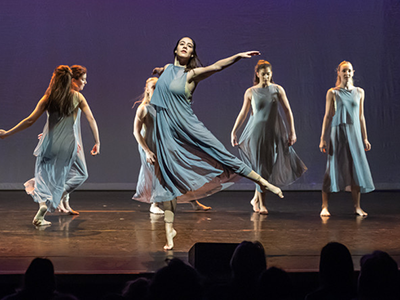
Third-year dance, astronomy and physics student
What did it mean to you personally to be chosen for this opportunity with the Martha Graham Dance Company?
I was the most excited person in the whole world. Martha Graham is the pioneer in modern dance and we study what she did every day during technique classes. It meant so much to me to have been considered for this and that they trusted me to be ready for this opportunity. It’s not only the fact that we are going to perform on a huge stage downtown, but that the Martha Graham Dance Company dancers and directors are going to be there watching us as well. They are professionals and it is a really big responsibility and honor to be able to do this. For me, it also represents an opportunity to challenge myself and step out of my comfort zone. This is an opportunity to grow as a dancer and performer.
How does this experience differ from other performances or projects you’ve been part of at CWRU?
This project is different in so many ways. First of all, this is not a new piece—we are staging a piece that premiered in 1936. Steps in the Street is very famous choreography that has been performed many times. This is why it was really interesting to see how the piece evolved through the years and the different versions that exist in terms of steps, technique and movement dynamics. This is a different experience than having a choreographer creating their own piece. Here, a lot of the time, we had to figure things out by watching the video repeatedly till we all agreed on the tempo or on the exact step—this is something that I had not experienced in other projects at CWRU. However, this is how it’s done for many of the repertoire that dancers in professional companies have to learn.
What do you hope audiences take away from seeing CWRU students on stage with the Martha Graham Dance Company?
I hope the audience can appreciate the legacy of Martha Graham and how her work is still impactful to the world up to this day. I also hope that they appreciate the level of discipline, dedication and commitment that CWRU students bring to performing this historic and meaningful work. Performing alongside the Martha Graham Dance Company is not only an honor, but also a huge responsibility that shows the rigor of our training and the seriousness with which we approach what we do. Most importantly, I hope that the audience feels something while watching us perform. I hope they can sense our collective energy and teamwork that has been a major focus through our process. I hope this makes them feel moved, connected or inspired to go and work on achieving their dreams.
Maizy Windham
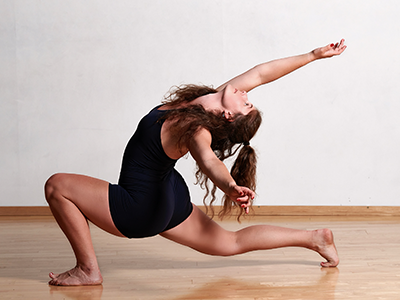
Third-year Master of Fine Arts student
What did it mean to you personally to be chosen for this opportunity with the Martha Graham Dance Company?
It felt kind of like reaching the pinnacle of a long journey because I was exposed to the Graham technique a little bit growing up, but then really started to dive in and learn more in classes here at CWRU. The technique was created as a means to provide dancers with a toolkit so that they could perform the material. So even though it's incredibly fulfilling to learn the technique alone in a classroom setting, it's been really exciting and provided a new challenge to learn it within the context of performance. And to have spent so much time improving on a very specific form, it's really gratifying and exciting to get to showcase and to get to apply all of the skills in my toolkit that I've acquired in my classes and experiences here.
How does this experience differ from other performances or projects you’ve been part of at CWRU?
It feels exciting in a unique way, because it is more in collaboration with Cleveland as a whole. I have done many performances on campus, but I think performing for Cleveland is really special because it allows us to connect our campus to the broader community—even nationally, because the Graham Company has been performing all over the country. It feels like the stakes are higher, but that’s because it is allowing for a greater circle of connection. So it's really special to be working with both the Graham Company and also with dance Cleveland.
What do you hope audiences take away from seeing CWRU students on stage with the Martha Graham Dance Company?
I hope audiences take away the fact that dance exists everywhere—that really technical, really exciting, good dance exists everywhere. I think often, when people think about these professional artistic spheres, they think about New York, Chicago—the bigger cities like that. But there's so much beautiful art everywhere. I think this is our opportunity as Case Western Reserve students to show that this technique—and company that's celebrating 100 years—has permeated all across the country and the world. Good art exists everywhere, and art in one location isn't inherently superior to another location.