The NP will see you now
Why you might see a nurse practitioner instead of a doctor at your next appointment
When you go to your doctor’s appointment, you may end up not seeing a physician at all, but a nurse practitioner—or NP—instead. Why is that, and what do they do?
To recognize National Nurse Practitioner Week (Nov. 8–14), The Daily talked with a few NPs at Case Western Reserve University’s Frances Payne Bolton School of Nursing about the role they play in healthcare.
According to the American Association of Nurse Practitioners, with more than 461,000 NPs in the U.S., more people are relying on them as their primary care providers.
The reason: NPs are licensed healthcare providers who can do many of the same things a physician can do.
For example, NPs can perform physical exams, prescribe medication, and diagnose and treat diseases and other health conditions. They are also highly credentialed with either a Master of Science in Nursing or Doctor of Nursing Practice (DNP), a registered nurse (RN) license and advanced clinical training.
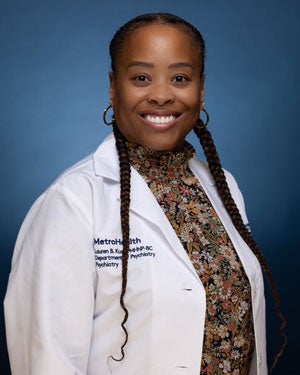
“I explain it this way,” said Lauren Kusi (NUR ’20), psychiatric NP at The MetroHealth System and DNP student at Frances Payne Bolton School of Nursing. “As an RN, care was often task by task. Now, as an NP, I own the full picture from assessment, diagnosis, prescribing and follow-through.”
NPs can specialize in different areas, such as pediatrics, psychiatry, family practice or women’s health. They also advise patients on how to manage healthy lifestyles and treat chronic conditions. Maria Molnar, RN (NUR ’20), said this is exactly why she decided to become an NP.
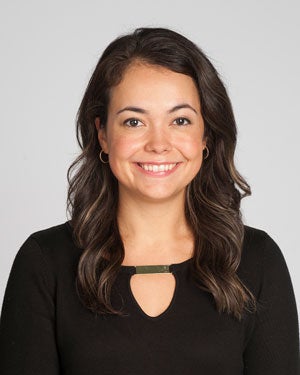
“I wanted to make a broader impact by reaching more people through disease prevention, health promotion and early intervention,” said Molnar, who is also a DNP student at the nursing school. “I recognized that preventive medicine was often overlooked within our healthcare system, and I wanted to help change that.”
As an RN, Molnar focused primarily on providing patient care; as an NP, she now draws up orders, makes decisions about medications and treatment plans, and gives direction to an interdisciplinary team.
Assistant Professor Hannoud Al Moghrabi, DNP, RN (NUR ’12, ’18), a women’s health NP, described the shift from RN to NP as “advocate of a plan to owner of a plan”—and that can be a challenging transition.
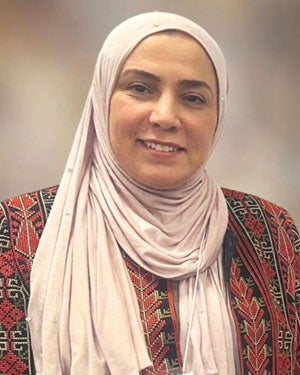
“New NPs often experience professional identity confusion, balancing the nursing professional self—how we feel, think and act like a nurse—with the medical provider role,” she explained. “The RN role is emotionally intense because of constant bedside presence. The NP role is less constant proximity but more accountability: You diagnose, decide, prescribe and stand behind the plan.”
Her advice for new NPs: Stay grounded in your nursing roots.
Treating a patient from a whole-person nursing perspective is what makes the NP unique. “The key to surviving is carrying it forward with the heart and mind of a nurse,” Moghrabi said.
It’s also what Molnar keeps in mind as she navigates her daily work as a family practice NP at Cleveland Clinic. “Although my scope of practice and level of responsibility have evolved, my commitment to patient safety, comfort and advocacy remains at the center of my approach to patient care.”
So the next time you go for a checkup and see the NP instead of the physician, take a deep breath—you’re in excellent hands.