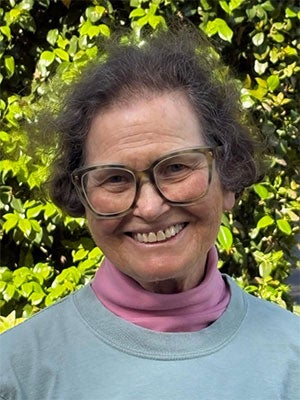
For Rebecca Barchas, MD (MED ‘75), determination and persistence have been defining qualities of her life. After deciding at age 6 to become a psychiatrist, she eventually went on to study at Case Western Reserve University School of Medicine, complete her residency at University Hospitals (UH) in Cleveland, and practice for 3 ½ decades in Virginia Beach, Virginia.
These qualities continue to fuel her devotion to her field. Four years ago, her $3.5 million gift established the Rebecca E. Barchas, MD, Professorship in Translational Psychiatry and The Rebecca E. Barchas Professorship Support Fund at Case Western Reserve University School of Medicine. Recently, she enhanced that dedication to psychiatry research by committing her intent for new funding, via her estate, to the professorship support fund, which provides the chairholder with additional support for laboratory and research efforts.
“Medical research requires funding, and I thought it would be a wonderful thing for me to put my money into something far bigger than myself—something with an impact that could make the world a better place,” Barchas said. “Hopefully the result of what they learn from the test tube will have a positive effect when it’s ultimately applied to people.”
Barchas hopes the fund will help researchers discover new ways to treat head trauma, Alzheimer’s disease and other neuropsychiatric challenges.
“Rebecca’s commitment to expanding psychiatry research into the fundamental pathways affecting the brain that yield psychiatric and neurodegenerative disorders will have exceptional impact across disciplines at Case Western Reserve,” said School of Medicine Dean Stanton Gerson, MD, “and improve health for society as a whole.”
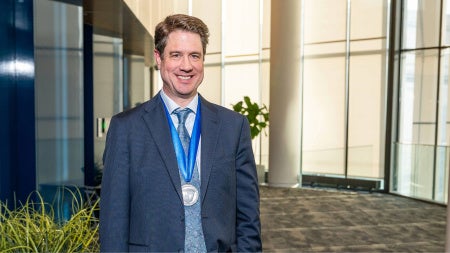
Today, Barchas’ mission continues under the guidance of the inaugural endowed professor, Andrew A. Pieper, MD, PhD, a board-certified psychiatrist and neuroscientist in the School of Medicine who investigates human neuropsychiatric disease and develops neuroprotective strategies to support brain health as individuals age.
“It is the honor of a lifetime to have received this support,” Pieper said. “Dr. Barchas’ extraordinary generosity, vision for improving the world around her and steadfast dedication to lifelong learning is an amazing inspiration to us all.”
Though retired, Barchas remains engaged with her field, participating in virtual UH Psychiatry Grand Rounds weekly and traveling from Virginia Beach to Cleveland annually for the translational psychiatry lecture named in her honor.
“Rebecca readily speaks about the thrill of seeing her gift facilitate discovery,” said Jeanne Lackamp, MD, associate professor of psychiatry at CWRU and chair of the Department of Psychiatry at UH Cleveland Medical Center. “Her passion for the field, and contributions to its growth, are inspiring.”
Now, Barchas is spending retirement determined to reduce medical stigma and give back to areas that mean the most to her: social justice, the environment and, of course, medical research.
“Any of us can have more impact than we might ever have imagined,” Barchas said. “We should always follow our passions and not be afraid to speak out and support causes that matter to us.”