Preparing students for the future of law with AI
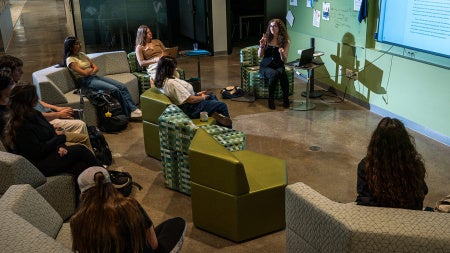
At Case Western Reserve University School of Law, students are using AI-powered “vibe coding” to prototype legal solutions and rethink what it means to practice law in a digital age.
Last year, Case Western Reserve School of Law became the first law school in the nation to require all first-year students to complete a certification program in legal artificial intelligence (AI) education. Developed in partnership with Wickard.ai, “Introduction to AI and the Law” immerses students in the fundamentals of AI and its impact on the legal world and ensures students gain early, practical exposure to AI, ethical obligations, emerging regulatory issues and new legal technology tools.
One of those tools, known as vibe coding, played a central role in this year’s curriculum.
Vibe coding started out as slang, but has gained prominence as a way of using AI to write web code based on intuition and flow rather than strict planning or formal structure. Much like cooking without a recipe, the vibe coder asks AI to write code to create a product, giving it feedback along the way. The coder is guided by their own instincts—or vibes—until they feel the project is complete.
The practice has myriad applications, including in the legal field. Keeping pace with its first-in-the-nation momentum, the School of Law this year introduced a Vibe Coding Competition for its students. They identified real practice problems that attorneys face in their day-to-day work and, using vibe coding, built functional prototype tools grounded in professional judgment and realistic workflows.

The winning submission was developed by first-year law student Jamie Werner, who created a platform that enables lawyers to track local court rules and judges’ standing orders while also providing background information about judges, including recent opinions and professional biographies. He got the idea from his legal writing professor and former Assistant United States Attorney Stacey Bergstrom, who always emphasized the importance of complying with standing orders and how it can make or break a case.
“The competition provided a useful opportunity to explore how far generative AI models have advanced in a relatively short period of time,” Werner said. “I wouldn’t have imagined it would be this simple to build an advanced app even a year or two ago. At the same time, encountering issues with the model ignoring instructions or hallucinating information was a reminder that significant limitations remain.”
Other notable projects included timekeeping and billing automation tools, citation-checking and validation systems, AI-assisted jury selection tools, and judge analytics platforms. First-year student Sophie Kwiatkowski earned an honorable mention with her submission, which she created to track local courts' rules and opinions on AI usage in the legal field.

“I have never coded in my life, not even one line,” said Kwiatkowski. “As a literature major in undergrad, I always saw coding as something abstract and wholly unnecessary for me to even explore. After vibe coding in this course, coding is a lot less intimidating, and now something I can view as possible and useful in a matter of a few prompts and clicks.”
As a leader in innovative legal education, the competition is one more way CWRU School of Law is setting itself apart from other law schools.
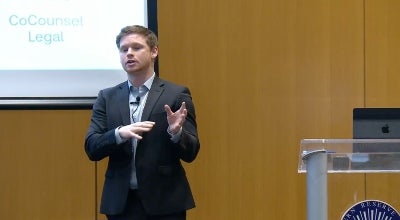
“Case Western Reserve continues to lead nationally in legal AI education,” said Oliver Roberts, CEO of Wickard.ai and the adjunct professor who leads the program. “Incorporating hands-on vibe coding into the first-year curriculum is a meaningful innovation, and the student projects demonstrated impressive creativity, practical judgment and real-world relevance,”
Most importantly though, these first-year students are now equipped with a new cutting edge skill that will set them apart from other new attorneys when they graduate.
“I have now been exposed to differing takes on working with AI, rather than against it,” Kwiatkowski explained. “I think this training's optimism on the future of AI—while taking into account the realities of its effects—is much-needed for law students like myself to lend a positive hand in honing the legal field's relationship with AI usage.”