From the tennis court to the classroom: CWRU medical students balance academics with collegiate athletics
Hannah Kassaie and Ansh Shah earned accolades for tennis while completing their first year at CWRU School of Medicine
Time management and commitment are requisite skills for all collegiate student-athletes, especially at universities with such a strong emphasis on academics as Case Western Reserve. Two medical students at CWRU took that to new levels as they completed their first year of medical school while competing—and excelling—in tennis.
Hannah Kassaie and Ansh Shah not only successfully balanced both their academic and athletic responsibilities during the tennis season—they also competed in the Division III national tournament for the women’s and men’s tennis teams, respectively. At their tournaments, they were met with prestigious accolades: NCAA Postgraduate Scholarships and Elite Scholar-Athlete for Division III honors, two awards that recognize a student-athlete’s academic excellence and commitment to their sport.
While both Kassaie and Shah came into the season with a track record of success, they also did so under different circumstances than previous seasons. Both almost didn’t even compete at all over concern they couldn’t balance everything.
Undergrad excellence
Case Western Reserve offers students like Kassaie and Shah the opportunity to continue their athletic careers without sacrificing their education. Though they come from different backgrounds, Kassaie and Shah were both drawn to CWRU for the Pre-Professional Scholars Program (PPSP), which grants conditional acceptance to the university’s medical or dental schools.
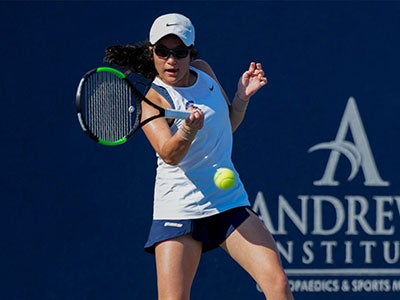
Though Shah, who is from Chicago, knew athletics would play a major role in his collegiate career, Kassaie, a Cleveland-area native, was less certain.
“I was really focused on my academics, so I just wanted to go somewhere I knew would be best for me to become a physician and was also close to home. Once I got accepted into PPSP, it all ended up falling into place,” she said. “And that’s when I knew I was going to play college tennis.”
Over the next three seasons, both Kassaie and Shah would become integral to their respective programs’ success, with the women’s and men’s squads perennial contenders in national championships runs.
Kassaie completed her undergraduate studies in nutrition in just three years and took a gap year before returning to CWRU for medical school in fall 2025. Shah’s path was different. While studying biology and healthcare management in his fourth year of undergrad, he suffered a season-ending wrist injury during the fall portion of the schedule, seemingly ending his tennis career.
Returning to the court
After having each competed for three full seasons, they began medical school in the fall with one year of athletic eligibility remaining. Neither took the decision to return to the court lightly.
Kassaie had played recreationally during her gap year, which she spent in Thailand doing research. She’d considered taking on a coaching role. A heartfelt conversation with Coach Kirsten (Gambrell) McMahon at the start of the team’s spring season changed her mind.
Shah had been in touch with Coach Todd Wojtkowski but was concerned that he wouldn’t be able to return to pre-injury form. When deciding to go for it, it was about proving something to himself.
“The main thing for me was that I just didn't want my last match to be tearing my wrist and have that be how everything ended after a 12- to 13-year journey,” he said. “I wanted to confront one of the most difficult situations I'd faced and rise past it while helping the team fight for a national title.”
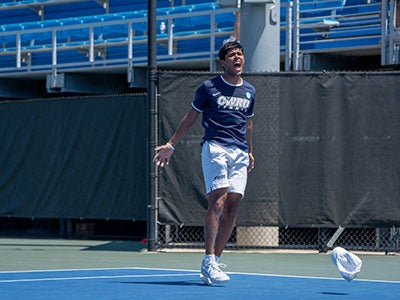
For both to compete, it required flexibility in their academics and athletics. They often could not make it to practices or travel with their teams, which they say required immense trust from their teammates and coaches. Transparent communication with their respective Society Deans at the School of Medicine also was a crucial component of their success.
Missing so many matches and needing ranked wins, Kassaie didn’t expect to be eligible to compete in the tournament, but after a few scheduling adjustments and crucial wins and good results, she was able to qualify for the individual singles and doubles championships. Alongside doubles partner Katalina Wang, she reached the quarterfinals. In the singles draw, she made it to the round of 16—earning her seventh and eighth All American honors.
Shah appeared in the team tournament, where the Spartans ended their season in the semifinals after beating Denison University in the NCAA quarterfinals—the same team the Spartans had lost to in the finals the prior year.
While the strong finishes were a bonus, the athletes found the season meant something more this year.
“Being able to juggle [medical school and tennis]—I think both of us can say that's probably already an achievement in itself,” said Kassaie, who had remained close with many of her teammates even during her gap year. “After having gone through all of it, that's already something to look back on and feel really happy about.”
Shah also found that tennis prepared him for medical school.
“This program really pushed me in a way that set me up for success in medical school as well,” he said. “I think more than anything, I'll just remember all the practices, the tough moments, and making probably some of my best friends that I'll have for the rest of my life.”