

Time Travels
Two centuries of defining milestones, notable moments and sometimes quirky traditions
1826–1846
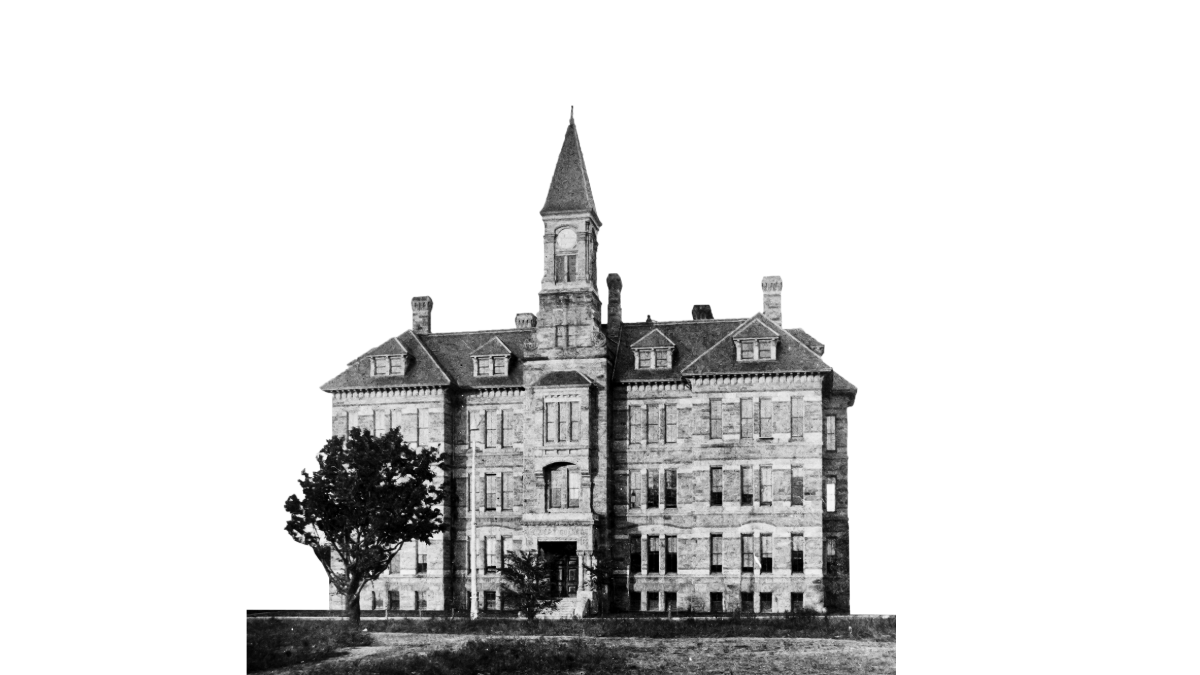
1826 Western Reserve College (WRC) began with three students, all men. It organized into five areas: classical; mathematical and physical; English and rhetorical; intellectual, moral, and politi- cal; and biblical and religious. A secular institution, WRC nevertheless required students to attend twice-daily prayers.
1831 The faculty adopted Rules of Order, including: “All scribbling, hacking, defacing of walls and doors, athletic exercises, hallooing, loud talking, whistling and other unnecessary and ungentlemanly noise in either the public rooms or entrance at whatever time, are prohibited ...”
1838 While athletic exercises were not beloved (see above), students were expected to do two hours of manual labor daily, except on Sundays, in the college’s cabinet-, wagon- or barrel- making shops or on the farm.
1820s–40s WRC students created a Philozetian Society, a literary organization with activities that included orations, compositions, debates and disputes, a college choir, and the college’s first fraternity, Alpha Delta Phi.
1837 Amid a financial panic, Ohioan Rebecca Perkins Kinsman told her brother, Simon Perkins, Akron’s co-founder: “We must not let that college down.” They gave $6,000, equal to the college’s annual budget. The Perkins Professorship of Physics still exists.
1829 In the early years, WRC had three professors in mathematics and natural philosophy, theology, and ancient languages, which was considered a complete faculty in those years—and something quite unusual.
1847–1866
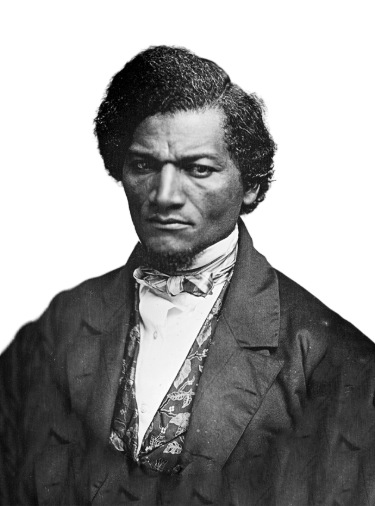
1854 Famed abolitionist Frederick Douglass, who had escaped from slavery, spoke at WRC during commencement week, invited by students. “The relation subsisting between the white and Black people of this country is the vital question of the age,” he said.
1857 After Harvard, Yale and other eastern schools began offering a Bachelor of Science degree, WRC followed suit and conferred its first BS degree.
1860s–1890s Baseball was the most popular sport across American college campuses. It was so big at WRC that the school implemented an annual 50-cent student fee due to an increase in broken windows.
1858 The Collegiate Record, the first student magazine, launched. Sold for $1/year subscriptions, it published essays, book reviews and poetry.
1862 After the Civil War began, about one-quarter of WRC’s undergraduates joined Company B of the 85th Ohio Volunteer Infantry with faculty. Their captain was Charles Young, who taught mathematics and natural philosophy. Students primarily guarded Confederate prisoners near Columbus, Ohio.
1850s WRC’s medical department defied norms, graduating six women, starting with Nancy Elizabeth Talbot Clark. They were the second through seventh women in the nation to graduate from regular medical schools.
1867–1886
1880 Leonard Case Jr. and his brother led The Ark, a social club for naturalists with informal teaching. But he envisioned more: a professional school to impart technical know-how. So he created a trust to establish what, in 1880, became Case School of Applied Science.
1872 In his inaugural address, WRC President Carroll Cutler announced that women would be admitted and have the same privileges and conditions as men—a decision that put him at odds with trustees and faculty. Co-education ended in 1888 after 19 women graduated.
1876 Clarence Emir Allen (WRC 1877) is credited with being the first to throw a curveball in a college baseball game.
1885 The first five graduates of Case School of Applied Science founded the Case Alumni Association, now the nation’s oldest independent alumni association for engineering and applied science graduates.
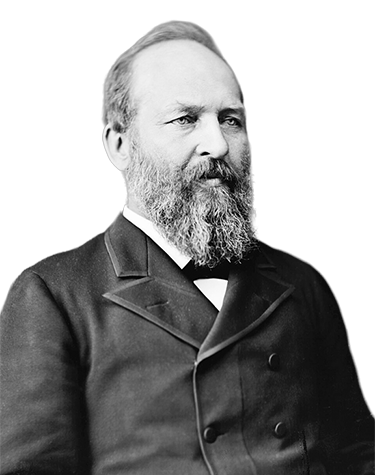
1881 When U.S. President James A. Garfield was assassinated, the Ohio native was also a Western Reserve College trustee.
1881 Cleveland became a regional higher-education center after a public subscription drive raised money to buy 43 acres of farmland and orchards in what’s now University Circle. The land was later split about evenly between Western Reserve and Case.
1887-1906
1888–1903 WRC had become Adelbert College of Western Reserve University (WRU) and moved to Cleveland, meeting the needs of a new era. It had a medical department, but added the College for Women, Graduate School and professional schools in law, dentistry and library science.
1890s–early 1900s Students at Case and other schools annually played the often violent game of “Cane Rush,” a mix of football, rugby and wrestling. First- and second-year students battled to seize their opponent’s walking cane and get it across their goal line.
1899–1900 Football began to dominate campuses and both Case’s and WRU’s teams were matched against what today would be unlikely opponents. Case tied The Ohio State University (5–5) and lost to University of Michigan 6–28 during the 1899–1900 season.
1898 The earliest documented campus production of a play by William Shakespeare was Love’s Labour’s Lost, performed by the College for Women’s Dramatic Club. The group had organized four years earlier and mounted at least one play annually, initially only at Guilford House.
1898 In response to the Spanish- American War, the Voluntary Case Corps of Cadets was organized for military drill exercises at Case School of Applied Science.
1887 Case physicist Albert Michelson, and WRU chemist Edward Morley, began a collaboration that ultimately disproved the existence of the “luminiferous aether,” the substance through which scientists previously believed light moved. Their finding was validated in Albert Einstein’s Special Theory of Relativity. (1905)
1907-1926
1915-24 As Cleveland grappled with a surging population, WRU established pioneering schools for social work and nursing. Its medical school moved to what was considered the best- equipped preclinical science building in the country.
1914 Stunt Night, a yearly variety show, began. Students at Flora Stone Mather College for Women would parody current events, their school and, very often, the men of Adelbert College in skits, songs and dances. Life Magazine even wrote about it.
1910 The Hudson Relays began, consisting of a relay race among the four undergraduate classes. Initially, it was run from the original Western Reserve campus in Hudson to the Cleveland campus.
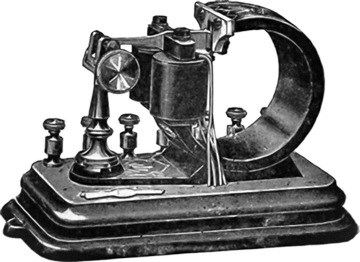
1912 Students established the Case Wireless Club, according to the Case newspaper, Case Tech, to “construct a wireless telegraph station for the study and practice of wireless telegraphy.”
1917 Lakeside Base Hospital Number Four, composed of 256 men and women, including School of Medicine faculty, set sail for Europe one month after the United States entered World War I.
1919 Emile de Sauze, founder of WRU’s School of French, published what became known as the “Cleveland Plan,” which emphasized learning languages through immersion by speaking, writing and reading the language. It replaced the prior method focusing on grammar and memorization.
1927–1946
1938 The WRU School of Pharmacy cultivated a drug garden at Squire Valleevue Farm, now part of the University Farm in Hunting Valley. The garden had earlier been on campus in Cleveland.
1936 Class-year rivalries were common. At Adelbert College, first-year students had to retrieve a flag from a greased pole guarded by second-years and deliver it to a predetermined place. A short film captured the action.
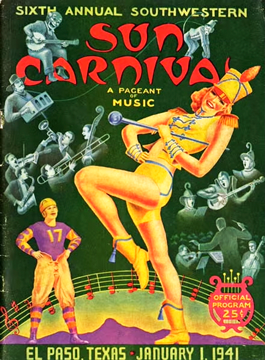
1941 WRU defeated Arizona State Teachers College at the Sun Bowl, the only college football bowl game appearance by any CWRU school.
1946 The Flora Stone Mather Radio Club founded WFSM, using a public address system. It later evolved into WRAR, an AM carrier-current station, and then, in 1967, into WRUW 91.1 FM, the station it is today serving a broad region.
Post 1941 After the U.S. entered World War II, Case and Western Reserve hosted programs to prepare future officers for the armed services. Case also ran instructional programs to prepare civilians for jobs in defense-related industries.
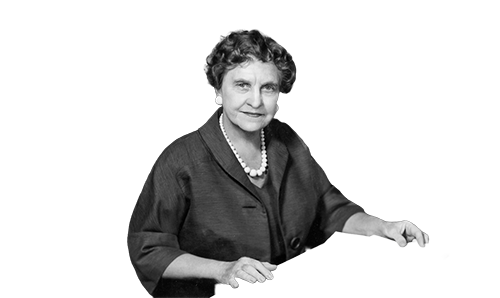
1935 The School of Nursing was renamed in honor of Frances Payne Bolton. She endowed the school in 1923 and, in 1940, was the first woman elected from Ohio to the U.S. House of Representatives.
1947-1966
1947 Case took on a new name, Case Institute of Technology (CIT), and later vastly increased its faculty and graduate students, and campus footprint. With housing available in Yost Hall starting in 1951, it was no longer a “streetcar” school.
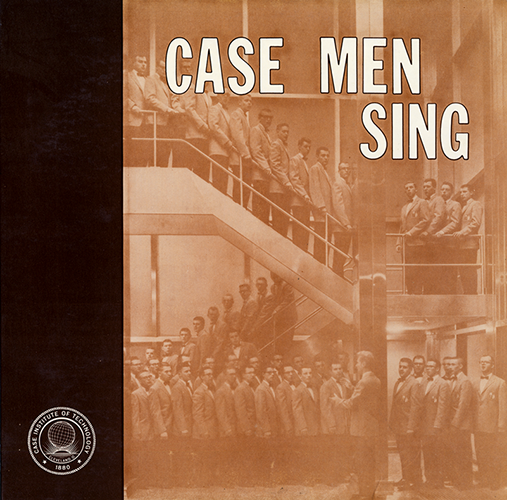
1960 CIT’s Men’s Glee Club released its first album, Case Men Sing. It featured school songs including “Carmen Case,” “Alma Mater” and the “Fight Song.” The first edition sold out within a week.
1947 At the first college sporting event televised in Cleveland, WRU’s basketball team defeated Fenn College in Adelbert Gym, 63–26.
1955 Zeta Beta Tau was the first WRU fraternity to install a rotary telephone system. The number was SWeetbriar 1-1790. (Rotary numbers often began with two capital letters.)
1957 The Soviet Union’s launch of Sputnik sent U.S. officials racing. NASA was established in 1958 with CIT’s nationally respected president, T. Keith Glennan, at the helm. (He took a leave from CIT from 1958 to 1961.)
1947 Professor Claude Beck performed the first successful human- heart defibrillation. He and colleagues also developed CPR techniques, providing instruction for professionals. In less than 20 years, they trained 3,000+ physicians and nurses, and later added lay people.
1967-1986
1967 CIT and WRU federated to create CWRU (July 1). The event and following decades-long integration constituted what the 1965 Heald Commission—which had studied the schools’ closer cooperation— education without precedent.”
1960s-70 Campus concerts included: Sly and the Family Stone (1968), Judy Collins (1969), James Taylor (1970), Laura Nyro (1970), Pink Floyd (1971), The Allman Brothers Band (1971), The Kinks (1972), Genesis (1973), and Fleetwood Mac (1973).
1970 John Nadas (ADL ’70) became CWRU’s first NCAA Champion, winning the title in fencing.
1968 Students—including future U.S. Rep. Stephanie Tubbs Jones (FSM ’71, LAW ’74)—founded the campus Afro-American Society, now the African American Society. Its members provide community, engage in activism and develop campus leaders.
1970 In May, college protests against the Vietnam War escalated after the U.S. invasion into Cambodia and the May 4 killing of four students and wounding of nine others at Kent State University. At CWRU, students blocked the intersection of Euclid Avenue and Adelbert Road.
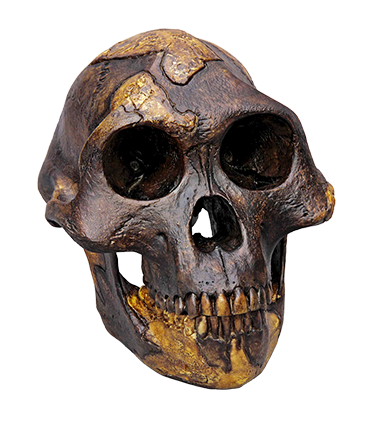
1974 Donald Johanson, then an associate professor of anthropology, discovered the remains of “Lucy,” who at 3.2 million years old was considered among the oldest human ancestors.
1987–2006
1987 After Agnar Pytte took the helm of the university, he moved the CWRU president’s residence from Squire Valleevue Farm to Harcourt House near campus. Then he led a master plan and charted $325 million in campus improvements, including eight new buildings.
2005 Undergraduates got their first new housing in more than 35 years when the Village at 115 opened amid CWRU’s athletic fields.
2001 The softball team qualified for the NCAA Tournament, becoming the first CWRU squad to reach the postseason in a team sport.
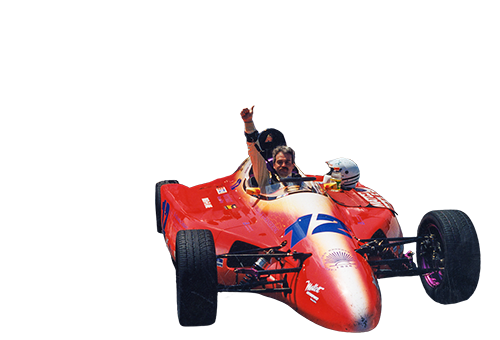
1995 The CWRU race team finished first in the EV Grand Prix at Richmond International Raceway in Richmond, Virginia. Students from 12 schools across the nation had designed high-performance electric-powered cars for the competition.
2004 CWRU hosted a nationally televised vice presidential debate between John Edwards and Dick Cheney. About 1,500 members of the media covered the “Race at Case,” which was seen by about 64 million TV viewers.
1987 The Encyclopedia of Cleveland History was published. The first modern encyclopedia of a major U.S. city, it was produced by CWRU and later editions were co-created with Western Reserve Historical Society. It still tells Cleveland stories online and has nearly 4,700 entries..
2007–2026
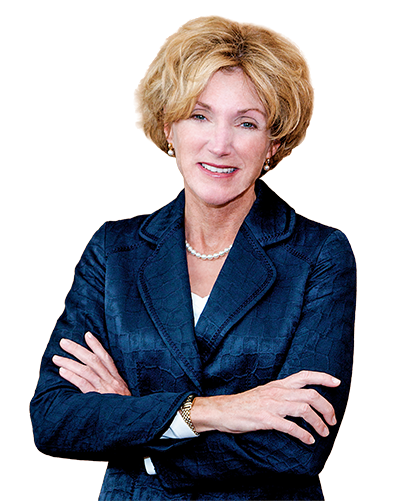
2007 Barbara R. Snyder was CWRU’s first woman president, serving from 2007 to 2020. She guided the university out of an approximately $20 million deficit, oversaw major expansion projects for health education and performing arts, and led the last capital campaign.
2024–25 During the school year, 1,450 students participated in programming through CWRU’s Center for Civic Engagement and Learning, serving more than 17,000 hours with nearly 60 community partners. Activities included voter registration, blood drives, tutoring and assisting food pantries.
2023 Men’s tennis won CWRU’s first NCAA national team championship. Ten CWRU teams placed at NCAA championships that school year, then the most ever. That includes women’s soccer, which finished second after reaching its title match undefeated.
2013 CWRU was the first university to have student entrepreneurs at CES, the world’s largest consumer electronics show. Annual treks are now a tradition. CWRU had 14 startups at CES in 2026, a mix of student, faculty and alumni ventures.
2021 As COVID-19 remained at pandemic levels, CWRU provided more than 11,000 vaccine doses to students, faculty and staff. It also worked with the City of Cleveland, providing campus volunteers to administer more than 10,000 vaccines to local residents.
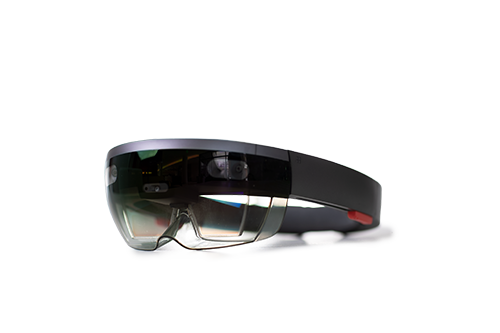
2014 CWRU’s Interactive Commons pioneered the education application of Microsoft HoloLens mixed-reality headsets, initially to teach anatomy to medical students but now used to educate students across campus.