

Tracking our progress
The latest updates on the forthcoming Interdisciplinary Science and Engineering Building
A year after its ceremonial groundbreaking and with less than a year until its planned opening, construction on Case Western Reserve University’s Interdisciplinary Science and Engineering Building (ISEB) continues to advance, with the project nearly 40% complete as of early October. The new facility represents the university’s commitment to fostering innovation and collaboration across disciplines.
The spring and summer months brought significant progress on both the building’s exterior and interior as it evolves from a steel skeleton into a more defined structure. The fall 2023 demolition of Yost Hall and completion of foundational work—including caissons and structural steel—set the stage for the construction now underway. Teams are focused on exterior framing, masonry and curtain wall installation, while inside, work proceeds on metal studs and rough-ins for mechanical, plumbing and electrical systems.
“We’re making steady progress toward our goal of enclosing the building by the first of the year,” said Dean Tufts, vice president for campus planning and facilities management. “That will allow us to move forward with interior finishes as we stay on schedule for an October 2026 completion.”
The five-story, 189,000-square-foot research facility will be home to approximately 500 occupants. ISEB will feature a mix of wet, damp and dry labs; offices; and collaboration spaces. Common areas—including a Caribou Coffee café— will serve the campus community and provide informal meeting and gathering spots for faculty, staff and students.
The building was envisioned in Case Western Reserve’s 2015 Campus Master Plan and approved by university leadership in 2022. Its interdisciplinary design will bring together researchers in fields ranging from engineering to medicine, sciences to the humanities, and beyond. By creating spaces where multiple focus areas can overlap, ISEB will nurture connections and spark ideas that might not emerge in more traditional academic settings.
With an overall cost of $300 million, the ISEB represents the university’s largest-ever Case Quad project. Century bonds issued by the university will fund $150 million of the building’s cost, with the other half covered by philanthropy. Already, donors have contributed $117.5 million toward that goal.
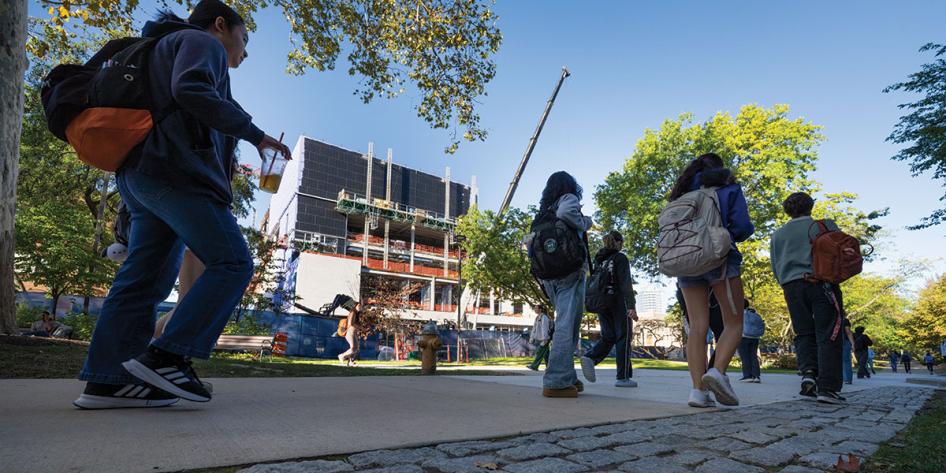
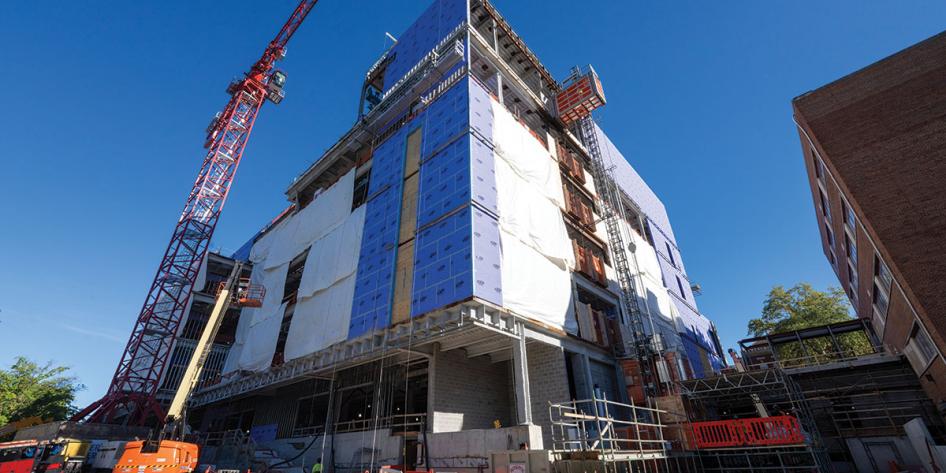
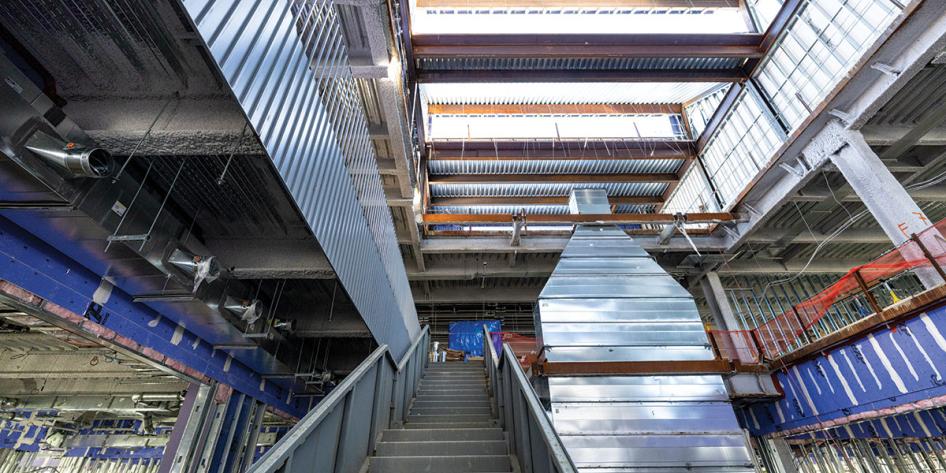
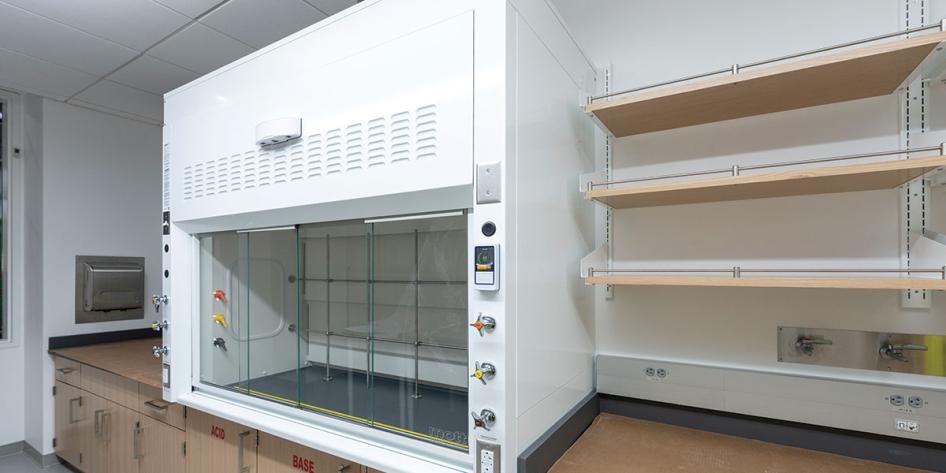
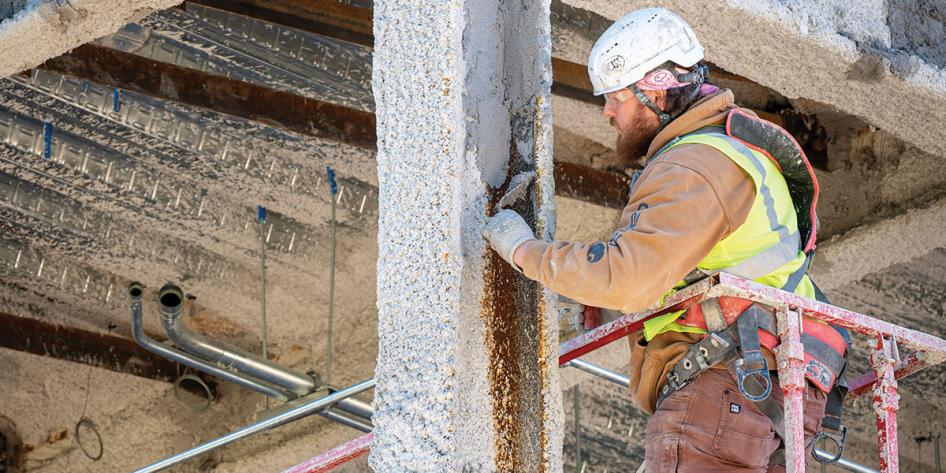
The Interdisciplinary Science and Engineering Building will be the largest building on Case Quad, uniting those studying science, engineering, medicine and the humanities, while also offering a welcoming façade to passersby on Martin Luther King Jr. Boulevard—a visual reminder of the university’s commitment to community engagement and external partnerships. (Photos by Nancy Andrews)


