From the U.S. Forest Service to field work: How a rising 2L is finding her seat at the table
Fueled by a passion for environmental law, Meg Corley’s externship shows that real-world experience is found wherever you can make an impact.
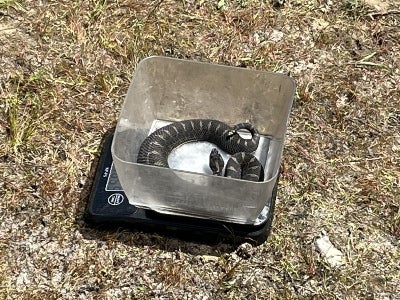
Meg Corley linked arms with her colleagues as they all stepped forward together into the Ashtabula County field where they’d spend the next several hours looking for one thing: rattlesnakes.
It’s not what she expected at her first round of practical training for law school.
It is, however, part of the field work that makes up her law externship at the Western Reserve Land Conservancy this summer.
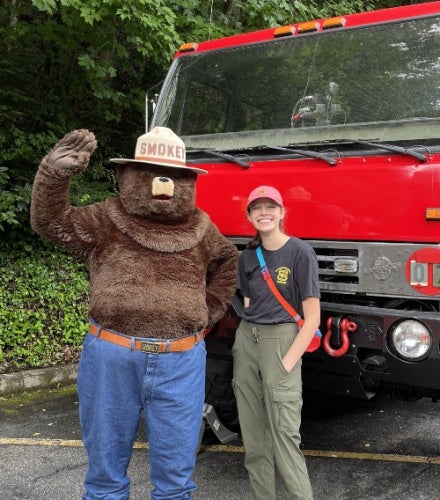
A rising 2L at Case Western Reserve University School of Law, Corley came to law school after working for the U.S. Forest Service for a decade. She began as an AmeriCorps VISTA coordinator in Georgia and South Carolina, which earned her direct-hire authority to become a full-time district partnership coordinator for the Francis Marion National Forest near Charleston.
Her pivot to law school came after a revelation she had while working with environmental lawyers and conservationists.
“I was noticing that environmental lawyers and conservationists have the same desire. But there are structural hurdles,” Corley explained. “And the way we get rid of those hurdles is through the court system. I was sitting in the wrong chair at the table, and the way that I can get into the right seat is by getting the toolbox from law school so I can come back and do that work.”
Corley spent her first year in law school adjusting to academic life, and starting to think like an attorney, which, she said, has completely changed her perspective on everything. She landed her externship with the help of the school’s Career Development Office.
“I actually interviewed 27 minutes after I finished my civil procedure midterm—I took the exam in a suit,” she said. “I sprinted out of that room and I got [to the conservancy] and it was the most incredible environment. The office—the main headquarters—is in a refinished, century house directly across the street from the South Chagrin Metropark. It's got trails wrapping all around it, and it's just beautiful.”
Needless to say, it felt like home to Corley.
She works with a small, in-house nonprofit legal team of two attorneys and a paralegal. She spends most of her time at the office—drafting purchase and sale agreements, charitable pledge agreements and conservation easement documents, alongside performing first-round title reviews and researching non-profit IRS doctrines.
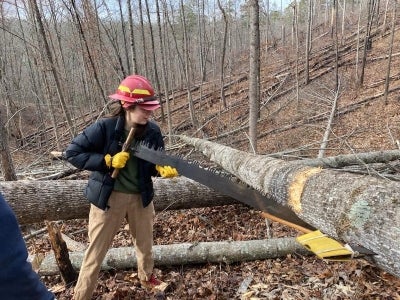
But the Conservancy also encourages its team to get out in the field. When she’s not searching for Massasauga Rattlesnakes to measure the ecological health of properties where the Conservancy holds conservation easements, Corley can be found participating in other environmental projects, such as watering trees in Cleveland’s Kinsman neighborhood—an effort to reforest the area.
“It’s a little like drinking from a firehose, but in the best way,” she said. “It’s the kind of experience you walk away from knowing a completely new skill set.”
As Corley approaches the end of her externship, she’s thinking ahead to fall semester, when she will serve as a 2L senator for the law school’s Student Bar Association and president of Law for the Environment, Animals and Food, an organization for students who advocate for policies regarding sustainability, environmental protection, animal rights and food systems justice. While she hasn’t completely ruled out working for the federal government again one day, for now, she’s considering transactional real estate law, at least in the short term.
With her first legal externship under her belt, Corley has advice for other students seeking the right fit for their own practical work experience.
“Find the positions that feed your goals and what you want, and an environment that you feel like you can be successful in,” she said, encouraging her peers to think outside the box. “There's a lot of value in gaining experience outside of more traditional routes.”