In the pilot of The West Wing television drama series, President Jed Bartlet concludes the episode by famously asking his staff, "What's next?"
Nicole Nason (LAW ’95) has lived her professional life by asking that exact same question.
Nason did not come to Case Western Reserve University School of Law because of any Ohio roots. She came with ambition, curiosity and a growing sense that law could open doors far beyond the courtroom.
While pursuing a congressional internship, former U.S. Rep. Mary Rose Okar (who at the time represented Ohio’s 20th district) encouraged her to explore a state she hadn’t considered for law school. “Ohio,” she had said, “has some of the country’s best-kept secrets in education, and you should be looking at Case Western Reserve University.”
Skeptical but intrigued, Nason traveled to Cleveland. What she found at Case Western Reserve changed everything.
On her visit, she encountered a law school full of energy, a commitment to learning and genuine warmth. The students she met were enthusiastic. The city felt full of possibility. And the school offered something she still believes sets it apart: rigor without ego.
“The best part about Case Western Reserve is that it is a top-notch education without any pretension,” Nason said. “It’s not about anything but the students; it’s about you.”
That culture shaped not only her legal education, but the way she has approached every role since. Over the course of a career that has spanned Congress, federal policy, transportation, private industry and now the unusually complex legal and regulatory environment surrounding TikTok’s U.S. operations, Nason has returned again and again to the same foundation: learn quickly, work the problem and stay open to unexpected opportunities.
Her résumé, she says with candor, is “eclectic.” But that is precisely her point.
For Nason, a law degree is not a narrow credential. It is a toolkit for leadership. Whether advising in government, navigating policy, launching a business or helping steer a company through legal uncertainty, she has found her legal training indispensable.
“I’ve used my legal education in every single job I’ve had,” she said. “And I’ve leaned on my law degree every time.”
She credits Case Western Reserve faculty for making that possible. Her professors were accomplished scholars and practitioners, but what stayed with her most was their humility and investment in students. They wanted the school to succeed by helping students succeed.
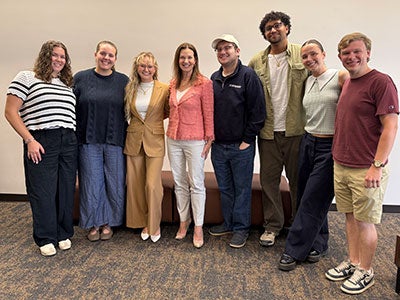
That memory now informs her own commitment as an alumna and donor. Nason believes deeply that those who benefited from a legal education have a responsibility to help make that same opportunity possible for others. Through an endowed scholarship, serving on the law school’s Visiting Committee and mentorship, she is focused on lifting the next generation of Case Western Reserve lawyers.
“I think it’s incumbent upon all of us to make sure that we are helping to lift not just our alma mater, but the individual students who come behind us,” she said.
Nason’s career may not follow a traditional script, but that is exactly what makes her story so resonant. It reflects the enduring strength of a Case Western Reserve legal education that prepares graduates not simply for one profession, but for a lifetime of meaningful work wherever the next challenge calls.
“What’s next?”