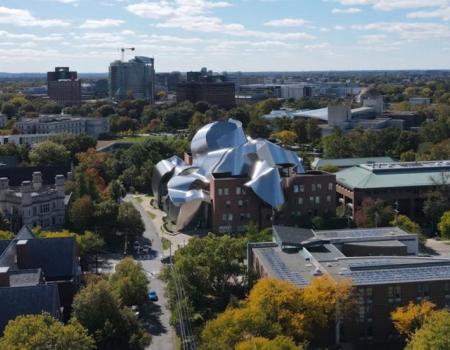
A $25 million gift honors a decades-long investment in shaping leaders at CWRU
A $25 million gift from the Weatherhead Foundation creates a new, university-wide institute
More than 45 years ago, Albert J. Weatherhead III and the Weatherhead Foundation gave a $3 million gift that strengthened Case Western Reserve University’s management school—investing in an academic destination they believed could shape principled, capable leaders.
Their commitment to what became the Weatherhead School of Management remained deep and consistent through the decades.
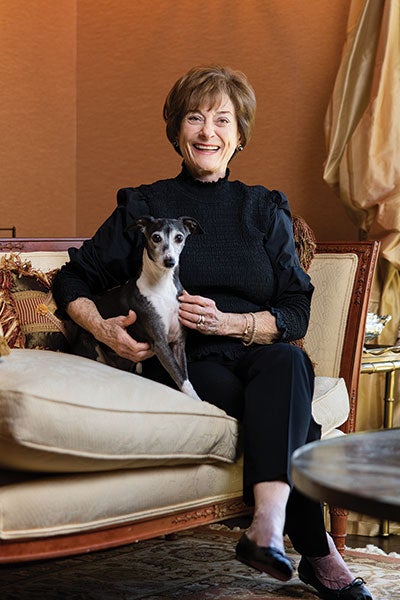
Now the Weatherhead Foundation—led by Celia Scott Weatherhead, the wife of the late Albert—is extending its generosity with a $25 million gift to the university to launch the Celia Scott Weatherhead Leadership Institute, housed, fittingly, at the Weatherhead School.
The institute makes leadership an integral and lasting part of the CWRU educational experience for every student—whether in undergraduate, graduate or professional programs.
Its first and flagship program will be a four-year pathway for undergraduates from across the university that blends the study of leadership with hands-on experiences working with companies, nonprofits and community organizations to solve problems. Mentorship is designed in layers—with alumni, faculty and peers—while fourth-year undergrads eventually coach first-year students.
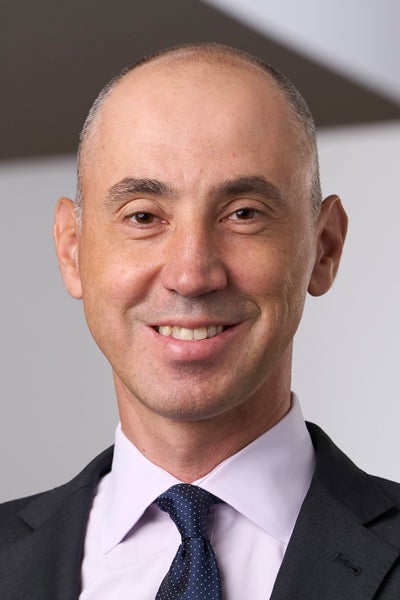
“The world doesn’t lack information,” said Andrew Medvedev (CWR ’97), dean of the Weatherhead School and the Albert J. Weatherhead III Professor of Management. “It lacks people who can take responsibility, navigate complexity and move others to act. This investment lays the foundation for leadership as an enduring part of a CWRU education.”
Celia Scott Weatherhead, an emerita university trustee, has described the gift as a continuation of her family’s decades-long investment in CWRU.
“Over more than 40 years, it has been extraordinary to see how the university—and the Weatherhead School in particular—has evolved into a center for leadership and innovation,” she said. “This gift reflects our continued belief in the university’s mission and in the importance of preparing leaders who will create lasting impact in their organizations, their communities and beyond.”
Coming full circle
The Weatherhead family’s relationship with the management school dates to the 1970s, when Albert—an entrepreneurial industrialist—began working with its faculty and became a CWRU trustee in 1977.
The Weatherheads’ gift in 1979 and the school’s renaming in their honor the following year helped establish the school’s identity, and, under their influence, it became known for an entrepreneurial culture that produced pioneering programs—including early executive MBA and executive doctoral offerings for practicing senior leaders.
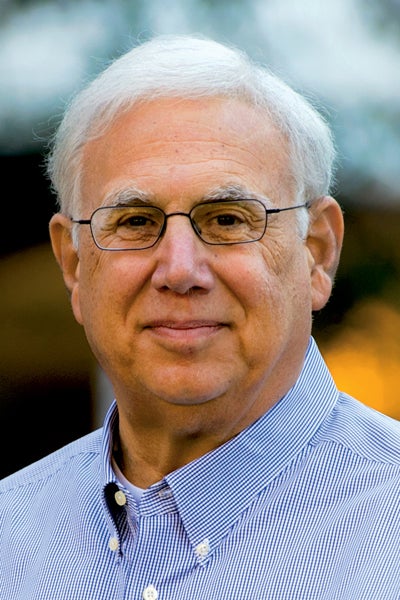
Among the faculty members Albert Weatherhead took under his wing was Scott Cowen, DBA (HON ’11), who joined the school in 1976 as an assistant professor of accounting. What followed was a career shaped by the support and guidance of the Weatherheads—and a model for the deliberate leadership education the institute now hopes to offer its students.
In those years, Cowen said, Albert Weatherhead was generous in the way that matters most to young leaders: He opened doors, made introductions and spent extended time mentoring and offering advice.
As Cowen prepared to become dean of the school in 1984, Weatherhead arranged for him to spend several days at Harvard—his alma mater—meeting with its president.
“I said, ‘Al, I don’t know any of these people,’” Cowen recalled. “He said, ‘I know—that’s the point.’”
Cowen served as dean of the Weatherhead School until 1998, when Celia Weatherhead—a Tulane University alumna—encouraged him to pursue the presidency there. He went on to lead Tulane for 16 years, including through Hurricane Katrina, when he was one of the most visible leaders in the city’s recovery—guiding the university’s rebuilding and helping drive New Orleans’ broader educational and civic rebound.
Along the way, the Weatherhead family’s giving to CWRU continued. When then-President Barbara R. Snyder launched the university’s last capital campaign in October 2011, it was just months after Albert had died. But Celia Weatherhead stood beside Snyder on stage to announce the foundation’s gift that was the campaign’s lead commitment.
Four years later, Cowen returned to CWRU as a trustee, and then, in fall 2020 became the university’s interim president, serving until President Eric W. Kaler arrived the following year. Cowen later led a leadership course at the Weatherhead School featuring weekly outside speakers and drawing more than 100 students a semester.
The course’s popularity reinforced a conviction Cowen and Medvedev shared: that the university could do something more ambitious around leadership.
Carol Moss, senior vice president for University Relations and Development, sees the new institute as the latest chapter in a history rooted in deep personal and academic bonds.
“Al mentors Scott,” she said. “Scott becomes the dean of the Weatherhead School. Scott goes on to become the president of Tulane. Comes back after Al has passed away. And Celia makes a $25 million gift to the school that she and her husband named to honor the career of [Cowen], her longtime friend. It brings the whole story full circle.”
Cowen is now the institute’s inaugural board chair and is helping to guide its rollout.
Building the pathway
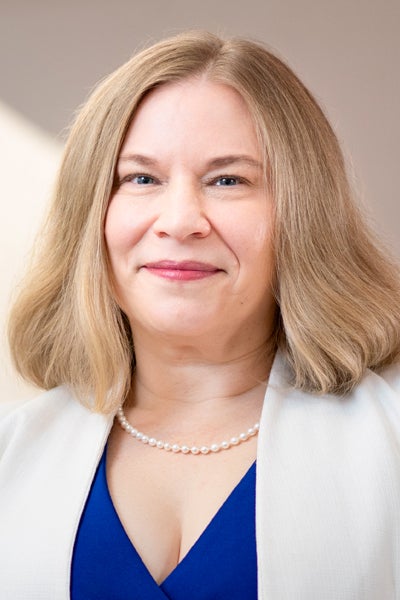
Jen Halliday joined the Weatherhead School earlier this year as the leadership institute’s executive director. A longtime educator and nonprofit leader, she is also a doctoral candidate in leadership at Vanderbilt University.
Halliday’s first priority has been practical: map what CWRU already does well in leadership—then build a coherent pathway that connects those strengths. Programming is expected to begin this fall, with the first student cohort starting in fall 2027.
“Whatever your career is, whatever your professional path, you can and should be a leader coming out of CWRU,” Halliday said.
The model builds on the President’s Leadership Development Program—a pilot that President Kaler launched—but expands it into a formal academic pathway, with coursework running alongside co-curricular experiences.
Learning by doing
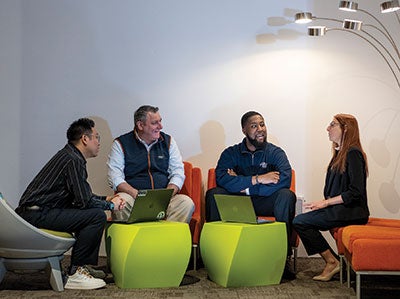
In the institute’s four-year pathway, leadership will be treated as a practiced skill. Students will move from structured exercises to projects with community partners and companies, with coaching and reflection built into each step.
Students “really have to get in the ring,” Halliday said. They will “learn and potentially fail and learn some more,” then reflect and try again. The work will be designed to stretch them through the complexity of real situations.
“Our best learning happens when we’re slightly uncomfortable,” she said. “We want our students engaging with the world—and learning how they can be a part of solutions.”
Part of the institute’s programming will reflect a distinction: knowing something is not the same as making it happen.
“The device in your pocket already has more information than you’ll ever memorize,” Medvedev said. “What it can’t do is walk into a room, earn trust and move people toward a shared outcome.”
New technologies—including artificial-intelligence tools—can be powerful instruments for improving efficiency, Halliday said, but they have limits when it comes to leadership.
“What [AI] cannot replace is critical thinking,” she said, “It cannot replace interpersonal communication. It cannot, ultimately, replace relationships.”
For Cowen, the institute offers young people something he wishes he had: a deliberate education in leadership, earlier in life.
“I’m worried about the quality of leadership around the world,” he said. “The more intentionally we develop young leaders, the more hopeful I am for their future.”
Open to all
By design, the institute will serve students in every discipline across the university.
That scope reflects a broader university focus on a more interdisciplinary approach to academics and research. A student can graduate as an engineer, a nurse, a scientist, an artist—and leave CWRU with a practiced ability to lead, make decisions under uncertainty and carry good ideas into the world.
“Cleveland offers the perfect mix of real-world experiences, with its complex industries and civic systems in motion.” Medvedev said. “If you can learn to lead here, you can lead anywhere.”