Case Western Reserve University to lead U.S. Department of Energy project to enhance domestic production of rare-earth elements critical to energy, defense industries
CWRU team will apply its patented electrochemistry process for the first time to extract ‘heavy’ rare-earth metals
Case Western Reserve University will lead a U.S. Department of Energy (DOE) project aimed at advancing the United States’ ability to produce key rare-earth metals used in magnets that help power everything from military drones to electric vehicles.
The project is one of seven that the DOE’s Office of Critical Minerals and Energy Innovation awarded a combined $10 million to this week. Administered by the Critical Materials Innovation Hub, the CWRU project aims to develop breakthrough energy-efficient and low-cost technologies to enable domestic ‘heavy’ rare-earth metals production, safeguarding US national security.
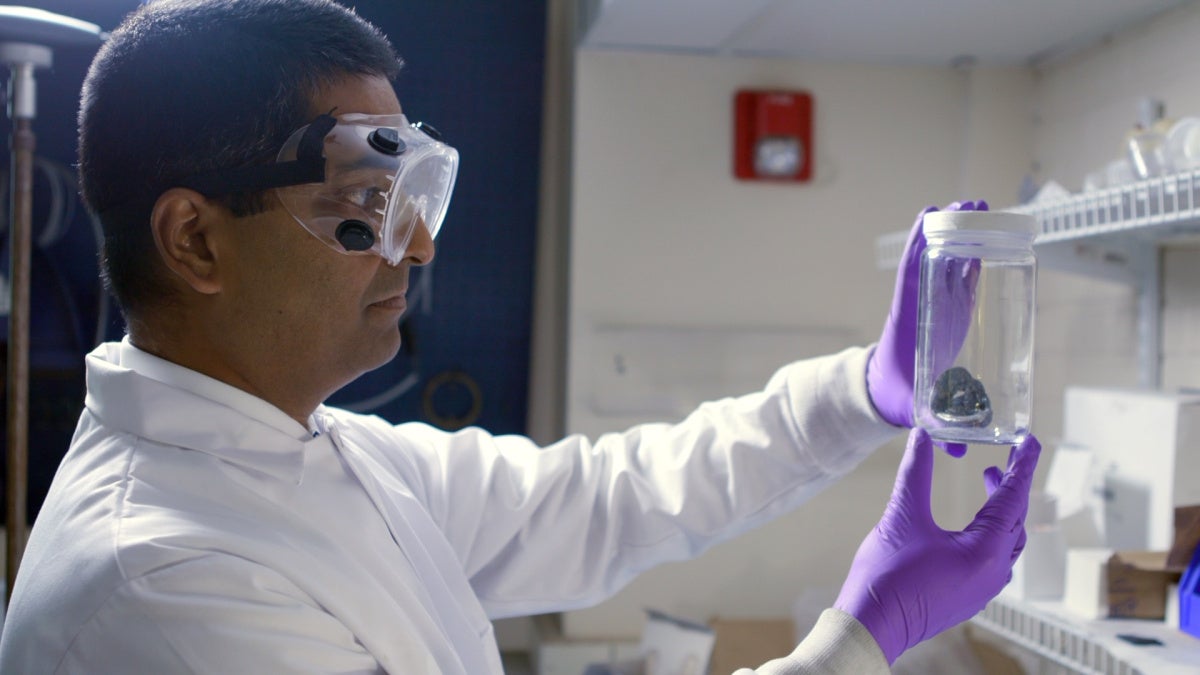
Case Western Reserve’s team is led by Rohan Akolkar, the Milton and Tamar Maltz Professor of Energy Innovation in the Department of Chemical and Biomolecular Engineering at the Case School of Engineering. His team will leverage the university’s patented technology of molten salt electrolysis that he and his students invented a few years ago. In this process, they zap specimens with current to separate out precious ingredients like heavy rare-earth metals.
The team is tasked with taking specimens from domestically found minerals that contain small quantities of heavy rare-earth metals—and finding ways to extract dysprosium and terbium. These metals, in particular, are indispensable for making some of the strongest permanent magnets used in defense applications.
“This class of critical metals, called ‘heavy’ rare-earths, is presently produced overseas using rather antiquated chemical operations that are inefficient and hazardous,” Akolkar said. “We want to change that completely, and establish new domestic manufacturing paradigms by harnessing the power of electrochemistry.”
The project will bring together a team of university, national laboratory, and industry partners, including University of Arizona, Lawrence Livermore National Lab, Ames National Lab, AML, Energy Fuels, MP Materials and Current Chemicals.
Rare-earth metals, such as neodymium, praseodymium, dysprosium and terbium, are currently not produced in the United States. The conventional process to do so is extremely expensive and produces a large amount of waste, so the U.S. relies heavily on foreign suppliers. The resulting supply chain risk the U.S. faces is a national security threat due to the materials’ importance to energy and defense applications.
"Prof. Akolkar's multi-sector team is leading the way in pioneering a highly efficient solution that will ultimately establish a secure supply chain for critical rare earth metals,” Susan Hagness, Charles H. Phipps Dean of the Case School of Engineering, said. “This is one of the most pressing challenges today for manufacturing the energy technologies of tomorrow."
The project leverages strategic partnerships with industries across the supply chain—mining companies, metals manufacturers and downstream magnet manufacturers. This integration with industry is vital to the project's long-term success and its potential to directly impact U.S.’s critical metals manufacturing sector.
“These seven projects will leverage the Critical Materials Innovation Hub’s strong foundation of expertise to address key technical challenges involving heavy rare earth elements, gallium, copper and other critical materials,” U.S. DOE Assistant Secretary of Energy Audrey Robertson said in a DOE release. “This work will unlock new production methods that strengthen domestic supply chains and ensure American manufacturers have access to the materials they need to compete and lead.”