

Seven Case Western Reserve University researchers from four schools have been named the university’s newest Veale Faculty Fellows. Their projects range from an app that helps dental students avoid treating the wrong tooth to a worm-like robot that crawls through underground electrical conduits.
Now in its fifth year, the fellowship helps researchers answer questions lab work alone can’t: Who would use their work? What problem would it solve? Would anyone pay for it? The answers help them decide whether starting a company, licensing a technology or pursuing another route to commercialization makes sense.
Jointly run by the CWRU Veale Institute for Entrepreneurship and the university’s Technology Transfer Office (TTO), the yearlong program helps fellows explain the value of their research to potential customers. It offers workshops with entrepreneurs on customer discovery and funding, student interns to help with market research and up to $10,000 in seed funds.
Each fellow also works with the program leaders and an entrepreneur-in-residence to develop a personalized plan for further training, funding and other resources to explore, including startup incubator space at Sears think[box] or the 11000 Cedar Startup Incubator.
Some fellows also travel to the CES technology show in Las Vegas and South by Southwest in Austin to test their ideas with potential customers.
“We want our talented faculty to understand the entrepreneurial journey and the resources required to successfully launch a startup. Not every fellow is going to start a company, and that’s OK,” said Mindy Baierl, senior director of the Veale Institute, who co-leads the program with Ramya Srinivasan, a licensing manager with TTO.
“What we see is a ripple effect,” added Baierl. “Fellows learn to make the case for their research, focusing on the problem to solve and the customer who cares enough to pay for it, and that carries over into their grant proposals, their labs and their classrooms. Having a cohort that spans multiple schools also encourages cross-collaborations.”
Following in the footsteps of fellow fellows
The program’s 26 earlier fellows have pursued ideas ranging from crab-like amphibious robots to software that uses geographic data to help rural clinicians treat chronic obstructive pulmonary disease.
Anna Samia, chair of the Department of Chemistry in the College of Arts and Sciences, used her fellowship funding to build a prototype for testing. The 2024-25 fellow is working with Cleveland Clinic researchers on an experimental gel to help remove bacterial films from infected artificial joints.
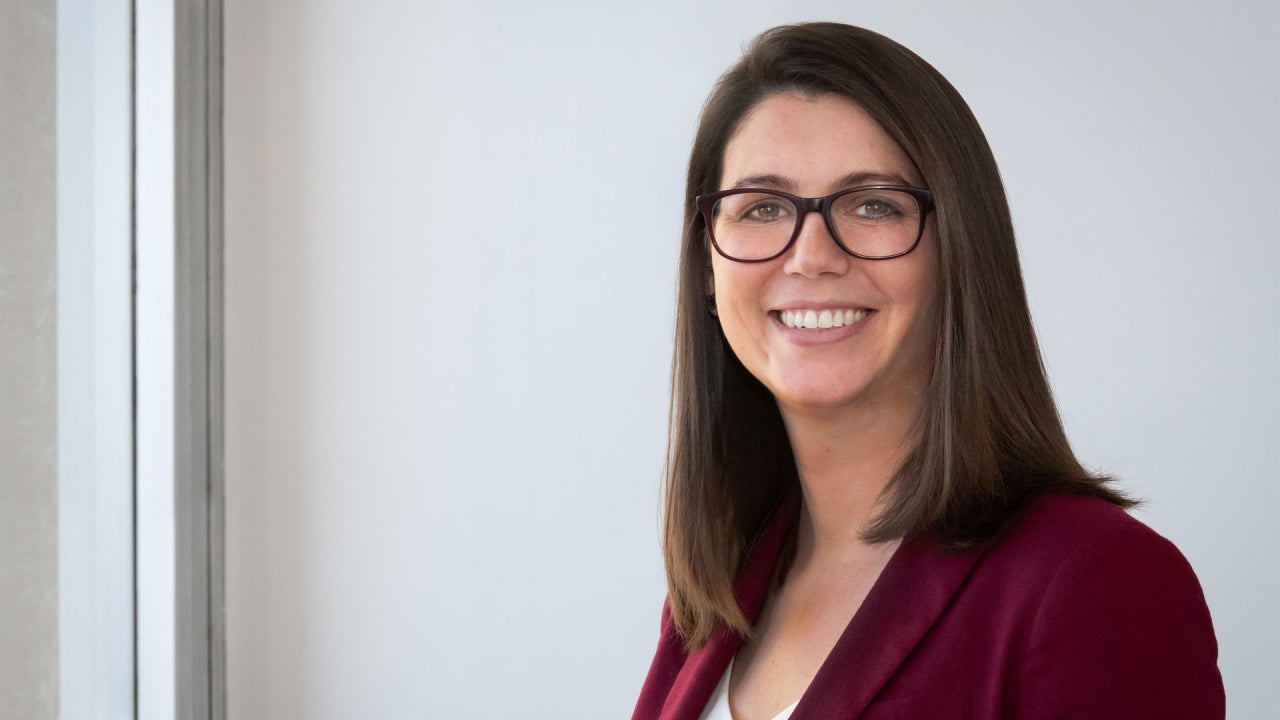
“They don’t sugarcoat the challenges,” Samia said of the program’s leaders in a 2025 CWRU Newsroom profile. “That balance helps you make informed decisions about how to move your research forward.”
Christine Duval, an associate professor of chemical engineering and a 2023-24 fellow, used displays and a video created through the fellowship to explain her technology for recycling nuclear fuel at the U.S. Department of Energy’s ARPA-E Energy Innovation Summit.
“I feel much stronger describing and communicating our technology to people who might not be experts,” Duval told CWRU’s THINK magazine in 2024.
Meet the 2026-27 fellows
Philip A. Cola
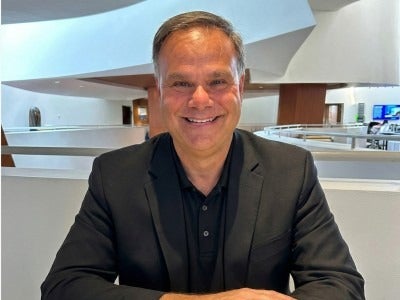
John R. Mannix Medical Mutual of Ohio Professor of Healthcare Management, Weatherhead School of Management; professor, School of Medicine
Cola is exploring augmented and mixed reality tools that let founders practice investor pitches and students rehearse job interviews, with instant feedback on what they say and how they say it. He hopes to move the idea from concept to a tested product.
Chirag Kharangate
Associate professor of mechanical and aerospace engineering, Case School of Engineering
Kharangate’s lab has built machine-learning tools that predict how highly efficient cooling systems, in which liquid boils as it absorbs heat, will perform. He hopes to start a company offering an app for engineers designing cooling systems for data centers, electronics and vehicles.
Stephanie Langel
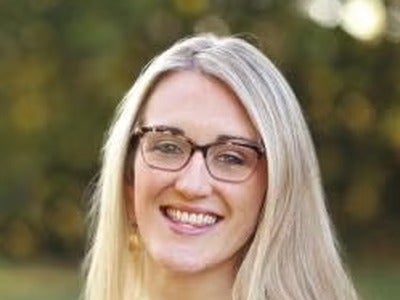
Assistant professor of pathology, School of Medicine
Langel’s lab engineers IgA, an antibody found at the linings of the airways, gut and reproductive tract, for therapies targeting respiratory and gut viruses and ovarian cancer. She wants to learn how startups form around university discoveries.
Jing Ma
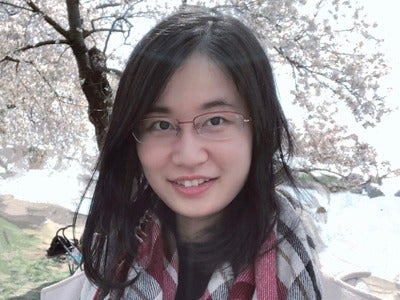
Timothy E. and Allison L. Schroeder Assistant Professor in Computer Science & Engineering, Case School of Engineering
Ma is developing artificial intelligence (AI) that reasons about cause and effect in medical data, not just patterns, to guide treatment decisions and drug discovery. She hopes to learn more about potential customers, including health systems and drug companies.
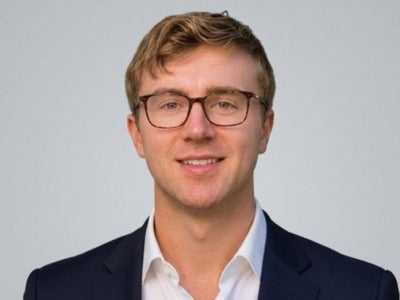
Austin Mills
Postdoctoral researcher, Case School of Engineering
Mills is working on a soft, worm-like robot that moves through underground conduits and sends back video and mapping data to help utilities locate damage. He hopes to learn how to move it from the lab to industry.
Ali Z. Syed
Associate professor of oral and maxillofacial medicine and diagnostic sciences, School of Dental Medicine
Placing dental X-rays in the wrong position can lead to treating the wrong tooth. Syed has built a prototype of RadReady, an AI-powered app that lets students practice arranging X-rays and explains each mistake. He wants to learn more about customer discovery and identify those customers willing to pay for it.
Mei Zhang
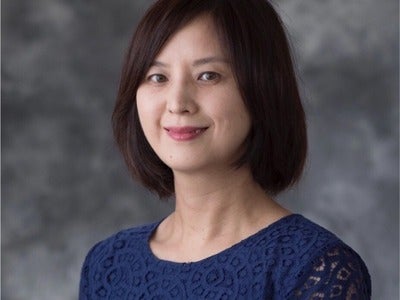
Assistant professor of biomedical engineering, School of Medicine
Zhang is developing BG34-200—an experimental immunotherapy for cancers that have spread. It is designed to reprogram immune cells to strengthen the body’s response against tumors. Zhang hopes to lay the groundwork for a company.