

Science + Tech
October 20, 2017
Dear Cancer Center community: It is always good, if not satisfying, to recognize that every hour and ounce of effort was worth it in any endeavor. The 18-month effort of the renewal of the Case Comprehensive Cancer Center concluded around 3:30 on Wednesday afternoon in Tinkham Veale. The…
October 17, 2017
Bottom Line: A team of neuroscientists has uncovered a neural network that can restore diaphragm function after spinal cord injury. The network allows the diaphragm to contract without input from the brain, which could help paralyzed spinal cord injury patients breathe without a…
October 16, 2017
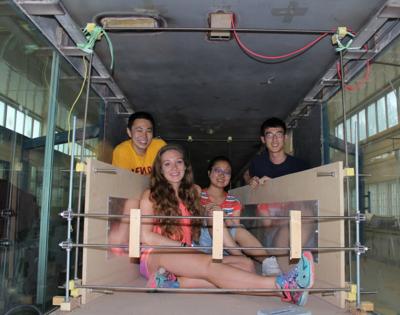
CWRU chemical engineering students conduct electrostatic experiments, experience Asian culture for summer project A trio of Case Western Reserve University students this summer began a three-year research project in a western China wind tunnel that could play a role in advancing our understanding…
October 16, 2017
Case Western Reserve University School of Medicine, in partnership with the Case Comprehensive Cancer Center, was awarded a five-year grant, totaling $2.5 million to engage underrepresented minorities in Cleveland-area schools in cancer research. The Youth Enjoy Science (YES) Program, supported by…
October 16, 2017
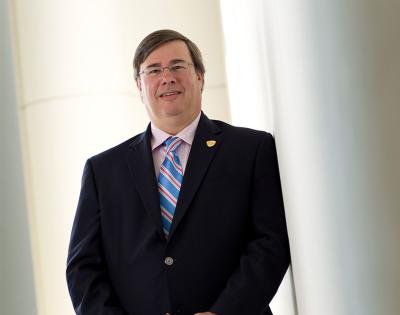
CWRU’s Mark Chance, director, to lead webinar today describing the project The Case Center for Synchrotron Biosciences has been awarded second prize in the 2017 Sharing Research Resources Award by the American Association of Medical Colleges (AAMC). According to the AAMC, “award winners…
October 13, 2017
Investigators at Case Western Reserve University School of Medicine and University Hospitals Health System have identified a new molecular pathway that controls lifespan and healthspan in worms and mammals. In a Nature Communications study published today, researchers showed that worms with excess…
October 13, 2017
The Case Center for Synchrotron Biosciences has been awarded second prize in the 2017 Sharing Research Resources Award by the American Association of Medical Colleges. According to the AAMC, “award winners demonstrate successful sharing of research resources between institutions and campuses,…
October 10, 2017
Case Western Reserve University School of Medicine and The Young Scientist Foundation will present an exciting evening of gourmet dishes and wine pairings to benefit their joint program enabling underserved Cleveland-area high school students to participate in cancer and other vital research in…
October 10, 2017
The alumni were here! This past weekend we welcomed the largest number of School of Medicine alumni ever. They toured the Health Education Campus, partied at the Global Center for Health Innovation, cheered our students and alumni award winners, mingled with one another, and exchanged memories and…
October 04, 2017
Transmission electron microscopy (TEM) showing the bacteria E. coli and S. marcescens surrounding the fungus Candida tropicalis. Scientists have determined that fungus may play a key role in chronic intestinal inflammation disorders. They found that patients with Crohn’s disease tend to…