

Science + Tech
April 15, 2024
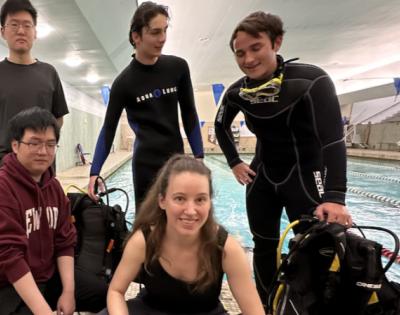
Earlier this year, the Veale Convocation, Recreation and Athletic Center swimming pool was a testing site for Kathryn ‘Kati’ Daltorio’s Crab Lab thanks to a collaboration with the Motley Scuba Diving Club. Supported by the Department of Defense, researchers in the Crab Lab, including PhD students…
April 15, 2024
During its annual convention, members of the National Student Nurses Association (NSNA) elected Ethan Slocum, a bachelor of science (BSN) student at Frances Payne Bolton School of Nursing, as president of the Board of Directors. "Nurses today wear many hats. Beyond being caretakers, we often…
April 12, 2024
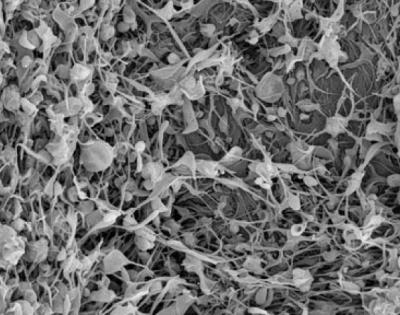
The U.S. Department of Defense (DoD) has awarded a team of researchers led by Case Western Reserve University a four-year, $2.75 million grant to explore new technology to generate and stabilize a protein called fibrin that is essential to maintain protective blood clots in an injured body. “The…
April 11, 2024
A recent study by Case Western Reserve University used national data from U.S. military veterans with diabetes to validate and modify a widely accepted model used to predict the risk of heart failure in diabetic patients. The model, called the WATCH-DM score, is used to predict the likelihood of…

April 11, 2024
A recent study by Case Western Reserve University used national data from U.S. military veterans with diabetes to validate and modify a widely accepted model used to predict the risk of heart failure in diabetic patients. The model, called the WATCH-DM score, is used to predict the likelihood of…

April 10, 2024
Major: Electrical Engineering What made you choose this area of study? I chose this area because electrical engineering has a lot of room for individual design and ideas once you understand the fundamentals. I also made traffic lights with an Arduino first in ninth grade so that helped. What is…
April 10, 2024
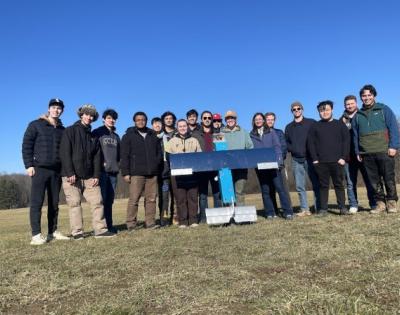
Major: Aerospace and Mechanical Engineering What made you choose this area of study? The dream is to be a design engineer in F1. Since F1 is like aerospace on the ground it was the best way to take a step towards this dream. What is your favorite thing about engineering? Being able to look at…
April 10, 2024
Degree: PhD in Mechanical Engineering What made you choose this area of study? I just love tinkering with things. I thrived on building Lego sets when I was a kid and I still love using my hands to build structures and machines. As you might imagine based on that information, mechanical…
April 10, 2024
Major: Chemical Engineering
Minor: Sociology What made you choose this area of study? I wanted to apply chemistry concepts to large-scale problems in food production and sustainability. What is your favorite thing about engineering? The continuous problem-solving mindset. Why did you choose…
April 10, 2024
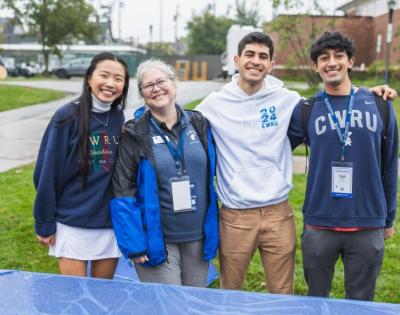
Majors: Religious Studies and Chemical Engineering What made you choose these areas of study? I was very interested in the intersection between humanities and engineering. Why did you choose CWRU? CWRU was the perfect institution. It was close to home and provided ample opportunities to excel…