Connecting the dots: How integrating cardiovascular and metabolic health leads to better patient care
For decades, evidence has been piling up that links heart disease, chronic kidney disease, and metabolic diseases such as type 2 diabetes and obesity.
People with diabetes are twice as likely to experience heart disease or stroke. Being overweight and obese increases the risk of high blood pressure and diabetes—and diabetes, in turn, is linked with chronic kidney disease. Today in the United States, the percentage of the population that is overweight or obese is considered at epidemic levels—with the prevalence higher than 80% among adult men in some states. Moreover, some 38.1 million adults have diabetes, 127.9 million have cardiovascular disease and 35.5 million have chronic kidney disease—and a good portion have more than one of these conditions.
Yet, despite promising new treatments, the prevalence of these diseases, collectively known as “cardiovascular-kidney-metabolic syndrome,” continues to rise.
To help turn the tide, Case Western Reserve University School of Medicine faculty and staff—both physicians and researchers—are breaking down the siloes that have traditionally isolated cardiovascular and metabolic care, examining them using the unified and interdisciplinary lens of “cardiometabolic health.” Through innovative collaborations that leverage the medical school’s relationships with its four partner hospitals and other regional hospital systems, they are delivering holistic care that respects patients’ practical needs for convenience, education and accessibility—and even builds community.
Integrating cardiovascular and metabolic care
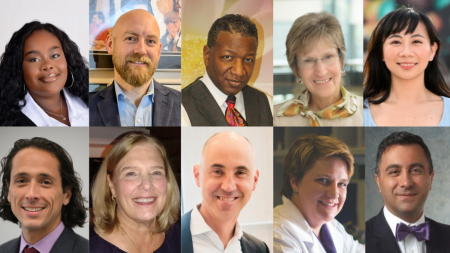
“Cardiovascular-kidney-metabolic syndrome is perhaps the largest health pandemic in the world right now,” said Sanjay Rajagopalan, MD, a professor of medicine at the medical school, director of its Cardiovascular Research Institute and division chief of cardiovascular medicine at University Hospitals (UH) Cleveland Medical Center. In 2019, Rajagopalan became founding director of an innovative new initiative at UH called CINEMA (Center for Integrated and Novel Approaches in Vascular-Metabolic Disease). “We needed integrated approaches to solve a very complex problem,” he said. Today, CINEMA is led by Ian Neeland, MD, an associate professor at the medical school and director of preventive cardiology for UH Harrington Heart and Vascular Institute.
The CINEMA system is designed to break down the silos that traditionally isolate care for cardiovascular, kidney and metabolic diseases. Instead of shuttling from appointment to appointment with different specialists, CINEMA patients meet their whole care team at one initial visit, and up to four times a year after that. That team, which includes cardiologists, type 2 diabetes experts, nurse navigators, certified diabetic educators, registered dietitians and pharmacists, works together to create personalized treatment plans, which often include a combination of drug therapies and lifestyle changes, and then arms each patient with education and peer support to help them stay on track.
“It’s more of a holistic approach,” said David Tschantz (MGT ’96), a Cleveland Heights resident who joined CINEMA as a patient after being diagnosed with congestive heart failure and diabetes. Through a combination of medication, glucose monitoring, diet and exercise, Tschantz now has his diabetes and weight under control. His results are echoed by CINEMA data showing that participating patients, on average, have seen improvements in body weight, body mass index, systolic and diastolic blood pressure, blood glucose, and cholesterol levels.
“Our CINEMA program is unique and unlike any other program in Ohio,” Neeland said. “We offer high-value care that is centrally focused on the patient’s health and well-being. Our approach is proven to lower heart disease and diabetes risk, improve quality of life and do it in a cost-effective and holistic manner.”
Tschantz particularly values CINEMA’s lineup of check-ins and learning opportunities, including everything from weekly question-and-answer sessions with nurses to healthy cooking and shopping demonstrations, presentations from medical specialists, and talks with pharmacists about prescription coverage. On top of that, CINEMA’s weekly virtual yoga and armchair exercise classes have helped him establish a fitness routine. It all adds up to something more than healthcare, Tschantz said: By connecting patients with shared experiences, CINEMA creates community.
“To have 20 or 25 other people going through some of the same things that you are, and be able to ask them questions directly, has been very helpful,” Tschantz said. “It feels more like a family.”
Because cardiometabolic diseases are so complex, fully engaging patients also requires meeting them where they are—figuratively and literally. That’s why a UH Diabetes Center offering holistic and state-of-the-art care opened last year in Cleveland’s MidTown neighborhood. It’s “right in the middle of a community that has one of the highest numbers of diabetes in Cuyahoga County and in Northeast Ohio,” said Betul Hatipoglu, MD, a professor of medicine at the medical school and medical director of the UH Diabetes and Metabolic Care Center, which runs three facilities, including the MidTown location.
That facility is in the new Warren E. Anderson MidTown Collaboration Center. There, it shares space with the medical school’s new Institute for Population and Community Health, cancer education counselors and students taking classes—as well as arts organizations, tech startups and restaurants.
“Cardiometabolic health is teamwork,” said Hatipoglu, noting the center staff includes an education specialist and nutritionist in addition to an endocrinologist and nurse practitioner.
The center launched last April and already has served more than 1,000 patients. In addition, it hosts free monthly Diabetes Wellness Retreats where anyone, patient or not, can learn about the basics of diabetes, medication, diet, and exercise. One recent retreat attracted about 100 attendees, Hatipoglu said.
Improving primary care and outcomes
In a more perfect world, primary care doctors would be able to intervene in the progression of cardiometabolic disease long before patients need help from specialists. But keeping up with best practices in cardiometabolic health and making sure at-risk patients don’t fall through the cracks is a tall order for time-strapped practices.
That’s why the Ohio Cardiovascular and Diabetes Health Collaborative—known as Cardi-OH—is so valuable. Launched nearly a decade ago by Ohio’s medical schools and led by the CWRU School of Medicine, the initiative provides primary care teams with resources and education to improve patient outcomes.
“Cardi-OH’s collaboration stands out as a model to drive improvements in prevalent health conditions affecting Ohioans and our nation,” said Michael Konstan, MD (WRC ’78, MED ’82), professor of pediatrics, who leads the School of Medicine’s Community Health Programs and is principal investigator of Cardi-OH. “Cardi-OH’s key to success is its extensive network of leading experts—100 primary care physicians and staff from Ohio’s seven medical schools—along with state and national partners, who work together to identify, produce and share leading-edge evidence-based practices for practitioners.”
Physicians, pharmacists, nurses, dietitians, social workers and other professionals across Ohio can access the library of free resources at Cardi-OH.org, receive monthly newsletters, articles, and podcasts, and register for webinars and virtual Project ECHO Clinics, which offer collaborative learning and mentoring sessions.
A recent clinic, for example, focused on quality improvement, bringing primary care practices together to design, implement, and evaluate new projects focused on cardiovascular prevention and management. “It’s a learning community,” said Goutham Rao, MD, the Jack H. Medalie Professor in Home-Centered Health Care at CWRU medical school and facilitator of the Cardi-OH ECHO Clinics.
“Personally, I learn a tremendous amount from being part of the collaborative—it makes me a better physician and a better leader,” said Christopher Bernheisel, MD, who is the associate chair in the Department of Family and Community Medicine at the University of Cincinnati College of Medicine, provides care at urban and rural community health clinics and co-leads Cardi-OH’s Team Best Practices.
Together, Cardi-OH resources have garnered more than 65,000 views and downloads.
“When practices have access to practical, evidence-based tools and peer support, they can deliver more consistent, high-quality cardiovascular and diabetes care,” Bernheisel said. “That translates into better blood pressure and glucose control, fewer complications, and ultimately healthier lives.
Patients may never know Cardi-OH exists,” he added, “but they feel the impact when their primary care team is better resourced, better informed, and better connected.”
From lab bench to bedside
The cardiometabolic paradigm is also changing the way researchers collaborate. One prime example: the Blood, Heart, Lung and Immunology Research Center (BHLI), which launched in 2023 with Kenneth Remy, MD, an associate professor at the medical school, as director.
The BHLI is devoted to discovering how the immune, cardiovascular, pulmonary and hematologic systems interact. “We can develop not only a robust infrastructure for research purposes, but then reflect that into clinical opportunities,” said Remy, also a fellow of the American College of Critical Care Medicine.
As a critical care physician, Remy is accustomed to a systems-based approach to treating patients. “By design, ICU [intensive care unit] doctors have to marry lots of different things, including organ interactions and physiology with disease understanding, ethics and a whole host of related fields,” he said.
This ethos of integration is part of the foundation of the BHLI. Often, researchers in different disciplines are disconnected from each other and from physicians caring for patients. The BHLI brings them together.
“You don’t actually improve how you conduct science at the bench if you don’t talk to clinicians,” Remy said. The BHLI already includes more than 200 physicians and researchers with diverse expertise at every career stage, from undergraduates to senior faculty.
Among them is heart-failure researcher Julian Stelzer, PhD, a professor of physiology and biophysics at the medical school. Stelzer is also on the senior leadership team of the BHLI.
In the United States, an estimated 6.7 million adults suffer from heart failure, which occurs when the heart can’t pump enough blood to keep up with the body’s needs. It is linked with a constellation of cardiometabolic conditions including type 2 diabetes and coronary artery disease. The standard drugs for heart failure have advanced little for decades, and they only treat symptoms, not the underlying causes of the disease, Stelzer said.
On the path to a drug that could one day help the millions experiencing heart failure, Stelzer is examining a condition that affects only a few: a catastrophic genetic mutation that results in the complete absence of a critical protein called cardiac myosin binding protein C (cMyBP-C), which tells the heart how hard and fast to pump. Without a heart transplant, babies with this mutation typically die before their first birthday.
In 2008, inspired by a UH pediatric cardiologist caring for young patients with this devastating condition, Stelzer had an idea: Could gene therapy fix the faulty gene and restore heart function? After years of laboratory research, Stelzer’s lab showed that—in a mouse model, at least—it could.
Now, that approach is being tested in humans. A clinical trial is underway to treat adult patients with gene-replacement therapy.
Separately, Stelzer has embarked on a new related line of research seeking to identify candidate drugs that bind to cMyBP-C and change how it interacts with other proteins that drive heart function. He hopes these molecules could one day offer a new way to treat the more common types of heart failure that affect millions by manipulating how the heart contracts and relaxes.
For Stelzer, it all goes back to that moment of connection with a cardiologist and his patients, which closed the distance between bedside and lab bench, inspiring new avenues for treatment. And the medical school is investing in initiatives such as the BHLI to make sure that connections like that one keep multiplying.