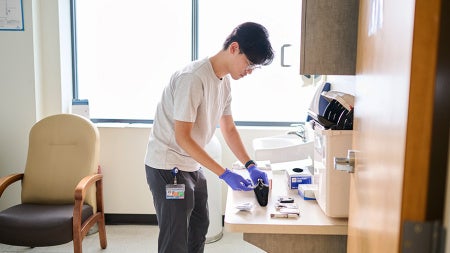
CWRU dental faculty explore links between the mouth and the rest of the body
The work expands our understanding of oral health as essential to overall health
Your mouth is home to a complex community of bacteria, fungi and immune cells that can offer important clues about your overall health. Increasingly, researchers are finding that what happens in the mouth may influence—or be influenced by—conditions throughout the body.
At Case Western Reserve University School of Dental Medicine, faculty members are investigating these relationships from multiple angles and seeking to distinguish association from cause and effect. Their work is expanding our understanding of oral health as essential to whole-body health.
“There’s no question the mouth offers a window into our overall health,” said Interim Dean Dale Baur, DDS (DEN ’80). “Our faculty are reveal- ing the clues therein and translating them into knowledge that can improve health far beyond the dental chair.”
What follows are five areas in which CWRU faculty are advancing that understanding.
THE HEART
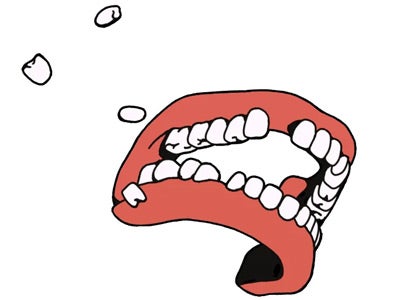
The loss of a tooth can signify an issue far beyond a gap in the mouth. Anita Aminoshariae, DDS (DEN ’99), a professor of endodontics, did a systematic review—and found “significant” evidence linking the phenomenon with an increased risk of death from cardiovascular disease. The more teeth are lost, the higher the risk. While tooth loss itself isn’t believed to cause heart disease, the findings reinforce growing evidence that oral health and cardiovascular health are closely connected and underscore the importance of regular dental exams.
THE GUT
Andre Paes, DDS, PhD, an associate professor of periodontics, is studying how dysbiosis—an imbalance of bacteria in the gut—may present similar imbalances in the mouth, offering clues into possible connections between conditions such as inflammatory bowel disease and periodontal disease. While still working to understand how the oral and gastrointestinal systems influence one another, scientists’ findings could shape new approaches to treating diseases in both.
CANCERS
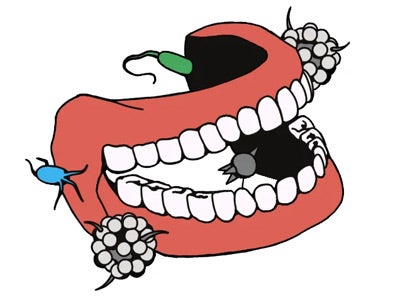
The soft wet tissue lining the mouth houses peptides, short chains of amino acids that are part of the immune system and may allow for earlier detection and treatment of conditions from HIV to oral cancer and other solid tumors. Aaron Weinberg, DMD, PhD, a professor and chair of the Department of Biological Sciences and member of the Case Comprehensive Cancer Center, has helped uncover a subset of these naturally occurring molecules, which help defend against infection while regulating immune responses.His team is investigating how these mechanisms may influence the development and progression of oral and other cancers.
THE BLOOD
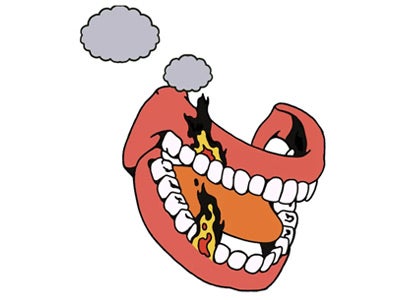
Through his research, Gian Pietro Schincaglia, DDS, PhD, professor and chair of the Department of Periodontics, is demonstrating how type 2 diabetes and periodontal disease can fuel one another in a cycle that’s difficult to break. A bidirectional relationship between uncontrolled type 2 diabetes and severe periodontitis shows poor blood sugar control can worsen gum disease, while chronic gum inflammation can make diabetes more difficult to manage. He seeks to highlight the importance of coordinating medical and dental care for people living with type 2 diabetes.
THE IMMUNE SYSTEM
Organisms living in the mouth don’t just affect oral health—they can shape the body’s immune response. Pushpa Pandiyan, PhD, an associate professor of biological sciences and member of the Case Comprehensive Cancer Center, studies how the oral microbiome, particularly the fungus Candida, contributes to chronic, low-grade inflammation. Her research has shown that older adults often have higher levels of Candida in their mouths, accompanied by changes in regulatory T cells—immune cells that normally help prevent excessive inflammation. Understanding these interactions could help explain how aging influences immune health.