A CWRU entrepreneur studied invisibility cloaks. Now he’s working to cut AI’s energy use
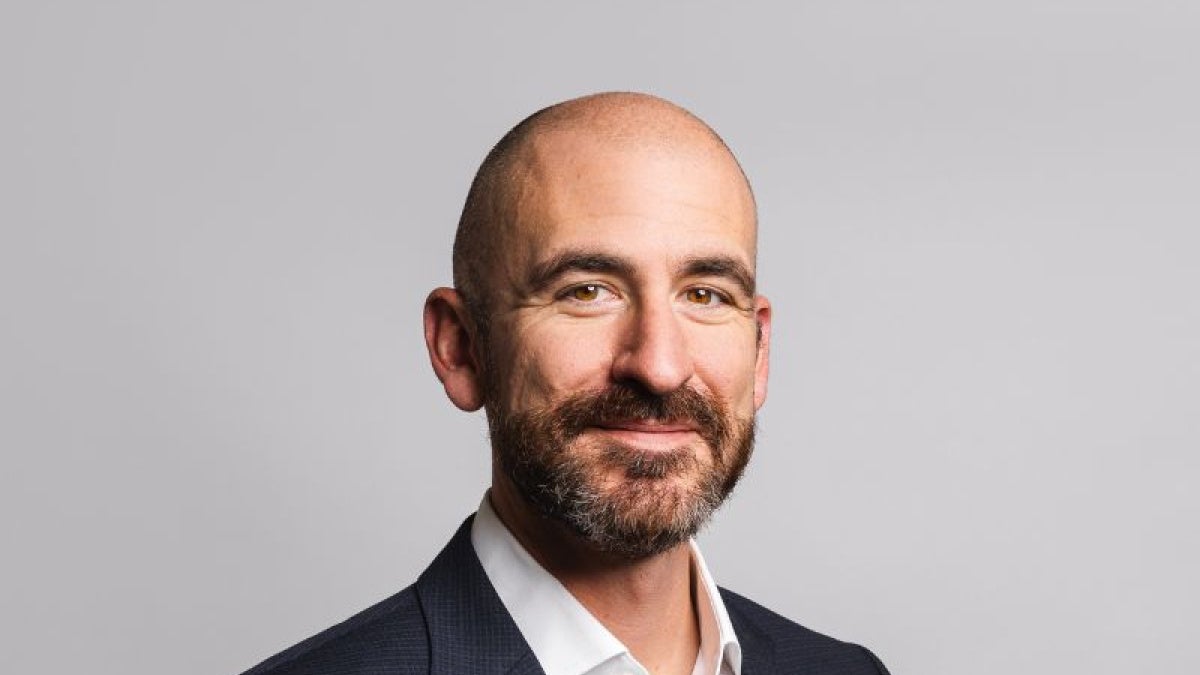
A conversation with entrepreneur Nathan Kundtz, PhD (CWR ’04), chief technology officer of Neurophos
Every answer an artificial intelligence model gives uses electricity. Nathan Kundtz, PhD (CWR ’04), is trying to cut that cost with light.
Kundtz is chief technology officer (CTO) of Neurophos—an Austin, Texas-based startup developing optical chips for AI. The chips target pre-fill the calculations a model makes as it processes information, before it begins to answer. In its chips, beams of light pass through microscopic structures to perform some of the calculations now handled by electronic circuits.
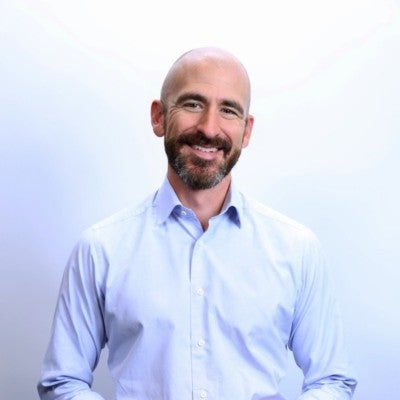
In January, the company raised $110 million in a Series A funding round led by Gates Frontier—Bill Gates’ venture investment firm. Neurophos expects to ship its first chips in 2028.
At CWRU, Kundtz studied engineering physics at the Case School of Engineering, ran cross-country and directed a musical for Footlighters—the student-run theater company. He says those experiences taught him to organize and lead people, skills he later used in his startups.
At Duke University, he switched from quantum computing to a lab studying metamaterials—engineered structures that can redirect electromagnetic waves. There, he also helped test experimental “invisibility cloaks” designed to steer microwaves around an object, making it harder to detect. He later co-founded and led Kymeta, a satellite antenna company that grew from that research.
Then, Kundtz worked in venture capital before joining Neurophos.
He spoke with CWRU’s Veale Institute for Entrepreneurship about turning research into a company—and why a good leader should sometimes be lazy.
This conversation has been edited and condensed for length and clarity.
What led you from CWRU to a PhD at Duke?
At CWRU, I studied engineering physics. I went to Duke to learn more. I was really interested in semiconductors, and I found a professor doing quantum computing who seemed like a perfect fit.
When I got there, the lab was struggling. The program had moved from another school and was still getting established, and I felt I was at risk of spending seven years without publishing a paper.
I was earning a master’s in electrical engineering in parallel, so I asked the director of graduate studies what I should do. He was looking for someone trained in both general relativity and electrical engineering to work on invisibility cloak research, which had a lot of buzz at the time.
We made progress quickly, he suggested I finish my PhD in his lab, and I ended up doing some of the first quantitative experiments on metamaterial cloaks.
How did that research become a company?
Intellectual Ventures was investing in the lab’s intellectual property, which was my first exposure to venture capital and entrepreneurship. They wanted someone to commercialize the work, and David [Smith, Kundtz’s doctoral advisor] suggested me.
I did an internship with them and recommended they pursue electronic beam forming—steering a signal without moving parts. They essentially said, “Prove it!” and gave me a research team.
Eventually I spun that work out and formed Kymeta. We built a satellite antenna using a process similar to the way television screens are made, and as CEO I led the company through its first product delivery.

As the company grew, I felt it needed someone more adept at running a larger organization. I was a technical researcher at heart, and I wanted to get back to what I loved.
What brought you to Neurophos?
After Kymeta, I became an operating partner at two venture capital firms and started another company, Rendered.ai.
Patrick Bowen [Neurophos’ co-founder and CEO], a friend of mine, was building Neurophos, and it was beginning to take off. He asked me to jump in and help, so I joined as CTO. It was a return to my technical roots.
What is Neurophos working to solve?
We’re building an optical computer to reduce the power consumption of AI.
If you look at where the energy goes, about 90% is consumed by a compute-intensive part of the process called pre-fill. We found a way to handle that most expensive part with light instead of electronics.
Our solution brings power consumption down by a factor of 35. Not 35%—whatever your current consumption is, divided by 35.
How did your time at CWRU prepare you for this career?
CWRU was a stepping stone for the rest of my life. I learned a lot in class, but the relationships and skills I built outside class were just as valuable.
Running cross-country and directing a Footlighters musical taught me how to organize and lead people. That helped me later, in the lab and in my startups.
You still run, and you sail. What has sailing taught you about leadership?

I’m training for my first marathon, in Napa Valley, and I also play jazz piano and sail. Sailing is one of my favorite comparisons to entrepreneurship.
There are days when you’re wet and cold from the waves and wind, and you still think, “Let’s go faster.” That’s what a startup feels like: You’re working with a team to go as fast as you can while bracing against waves of uncertainty.
Sailing also taught me the importance of being lazy. There are times to just get things done. But the more people you manage, the more you need to step back and make space for them to contribute, be creative and learn. It also keeps you from burning out on the details.
There’s the lazy skipper who lets the crew run the boat and steps in only during the storm, and there’s the exhausted skipper who tries to do the work of the whole ship and misses the important things.
What advice would you give CWRU students interested in entrepreneurship?
When I was getting my degree, entrepreneurship was a much rarer career path. Now every university has a tech transfer office, a network of founders and, hopefully, programs for founders. You don’t need to do anything exceptional to get exposure to that.
It’s all about meeting people early and building your network. Make friends, and start noticing how investors think. Even if you don’t go into venture capital, almost every large company has a corporate venture arm.
I’d also pass along a lesson from Matthew Rhodes-Kropf [a managing partner at Tectonic Ventures and a senior lecturer in finance at the MIT Sloan School of Management], who studies the game theory of investment. Look at a portfolio of investments and ask which ones paid off. The winners tend to be the ones that came to you in the most unusual ways.
So when opportunities arrive—investments or jobs—work to weed out the lemons. Pay attention to why you’re the one getting the opportunity, instead of assuming everyone got it.
Katie Critchett is a fellow with the CWRU Alumni Venture Fund at the CWRU Veale Institute for Entrepreneurship.