
CWRU law students find their footing—and success—in the courtroom
Students turn courtroom competitions into national wins
Whether it’s a grueling objection battle in a local mock trial or a complex debate over international humanitarian law, the students at Case Western Reserve University School of Law are increasingly finding their voices—and their trophies—in the courtroom simulation.
Led by veteran practitioners, CWRU law students are turning practice into national titles. For these budding advocates, the moot court and mock trial programs are more than just extracurriculars; they are the high-octane laboratories where future lawyers are forged.
From rookie to captain
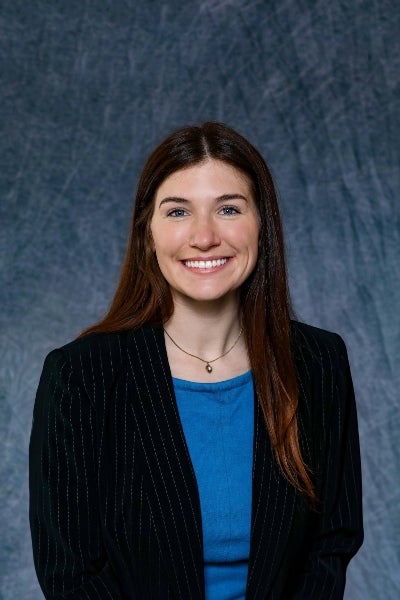
When 3L Kaylara Benfield joined the International Criminal Court (ICC) Moot Court team during her first semester of law school, she was a self-described rookie with no debate experience and a lingering anxiety about public speaking.
She came to CWRU School of Law from University of Utah, where she studied psychology and political science with the intention of studying international law. Under the leadership of moot court coaches Michael Benza (WRC ’86, LAW ’92), professor of practice at the School of Law, and attorney Caroline Ford (LAW ’21), Benfield learned how to solve legal problems both new and unique, and how to develop and defend well-reasoned arguments in court.
“Our philosophy for coaching moot court and mock trial is to help students develop their skills in putting together a case, preparing the case for court and practicing their presentations so that they learn how to do that for their real clients,” said Benza. “Part of this learning process involves discovering what does—and equally important does not—work in a case. Helping students to learn that no case is the same as any other, and each requires a process of preparation is the best part of coaching.”
Along the way, she picked up awards for best prosecution oralist and best prosecutorial memorandum. This year, she stepped into a new role as team captain. In her leadership role, she has challenged and supported her team, provoking the passion and excitement required to win.
“Moot court is more than just the competition; it is an experience that teaches you so much about your capacity to address complex systems,” she explained. “My goal was to help facilitate that professional development as best as I could.”
In March, three years after her first practice, Benfield led her ICC team through its first-ever national victory. Next up: the international competition in The Hague, the Netherlands, in June where they’ll compete against teams from across the globe.
“We’ve had an amazingly accomplished group of students this year. I cannot wait to see how they fare at internationals,” said Benfield, who is joining the business litigation practice group at UB Greensfelder LLP in Cleveland after graduating this month. “Being able to lead them and see each of them succeed and grow individually was the best part about being team captain.”
Preparing and pivoting
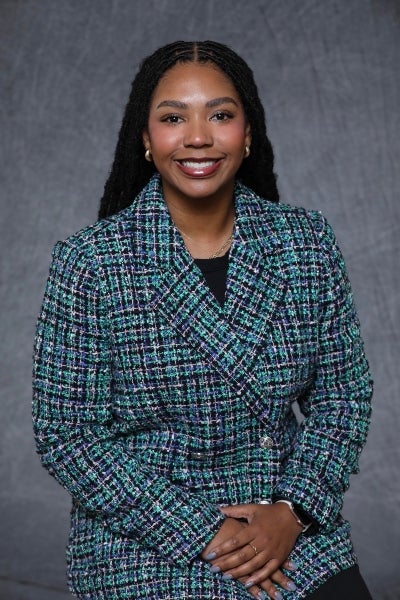
Third-year student Jordyn Dawson—who came to CWRU School of Law from Mercer University with a bachelor’s degree in law, public policy and Africana studies—joined the Black Student Law Association’s mock trial team during her first year at the recommendation of her peer mentors. Mock trial, they promised, was the closest thing to real courtroom litigation she’d find.
It was Dawson’s first mock trial practice where everything clicked into place. She’d always been destined to perform inside a courtroom—and she had found her training ground. Dawson quickly rose to the role of captain, a position she’s held for the last two years.
Together, she and her team have honed their skills in oral argument, legal writing and preparation. But the experience has been about more than building legal expertise, said Dawson.
“Mock trial gave me a space to grow as an advocate, challenge myself and learn from an incredibly supportive team,” she said. “Over time, my teammates became like family, and the program became a place where I could refine my craft while turning hard work into competitive success.”
That “success” took the form of two national championships in three years: one in 2024 and again in 2026.
“It’s where preparation meets performance,” Dawson reflected, “and where the team’s dedication truly comes to life.”
It was under the guidance of her coaches, who together boasted more than 50 years of combined experience, that she learned the mantra that defines the program: Prepare, prepare, prepare—and then, prepare to pivot.
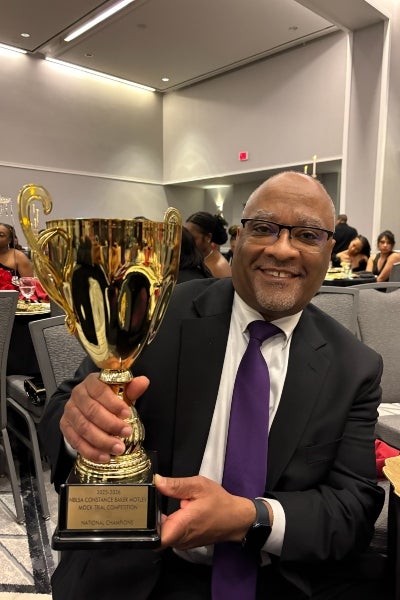
It’s a philosophy held by her coaches: Russ Tye, chief trial counsel for the Cuyahoga County Office of the Public Defender, and Diane Russell, first assistant prosecutor for Cuyahoga County prosecutor’s office. Together, they have coached their students through cross-examining witnesses and triumphing over their opponents in objection battles.
Dawson graduates this month, and will be joining Squire Patton Boggs as an associate in Cleveland.
Tye, who joined as a coach after proudly watching his own daughter compete at the high school level, acknowledged how far they’ve come since their first semester of law school.
“Their overall eagerness to learn and challenge themselves, embrace the family dynamic, and help one another develop arguments, has been incredibly impressive,” he said. “Seeing them develop the knowledge and confidence not only to compete, but to compete and win, is a reminder that we as coaches have equipped them with the tools needed to build the championship they deserve.”