CWRU researcher J. Alan Diehl gains insights into how cancer adapts and grows
Cancer begins when cells break their own proliferation and survival rules. In those moments, they adapt to stress, bypass stop signals and keep dividing—even in environments that should result in their destruction.
For more than three decades, J. Alan Diehl, PhD, chair of the Department of Biochemistry at Case Western Reserve University School of Medicine, has investigated how that adaptation works—and how to stop it. His research focuses on the cellular signaling pathways that control normal cell division, growth, and stress responses—and how cancers hijack them.
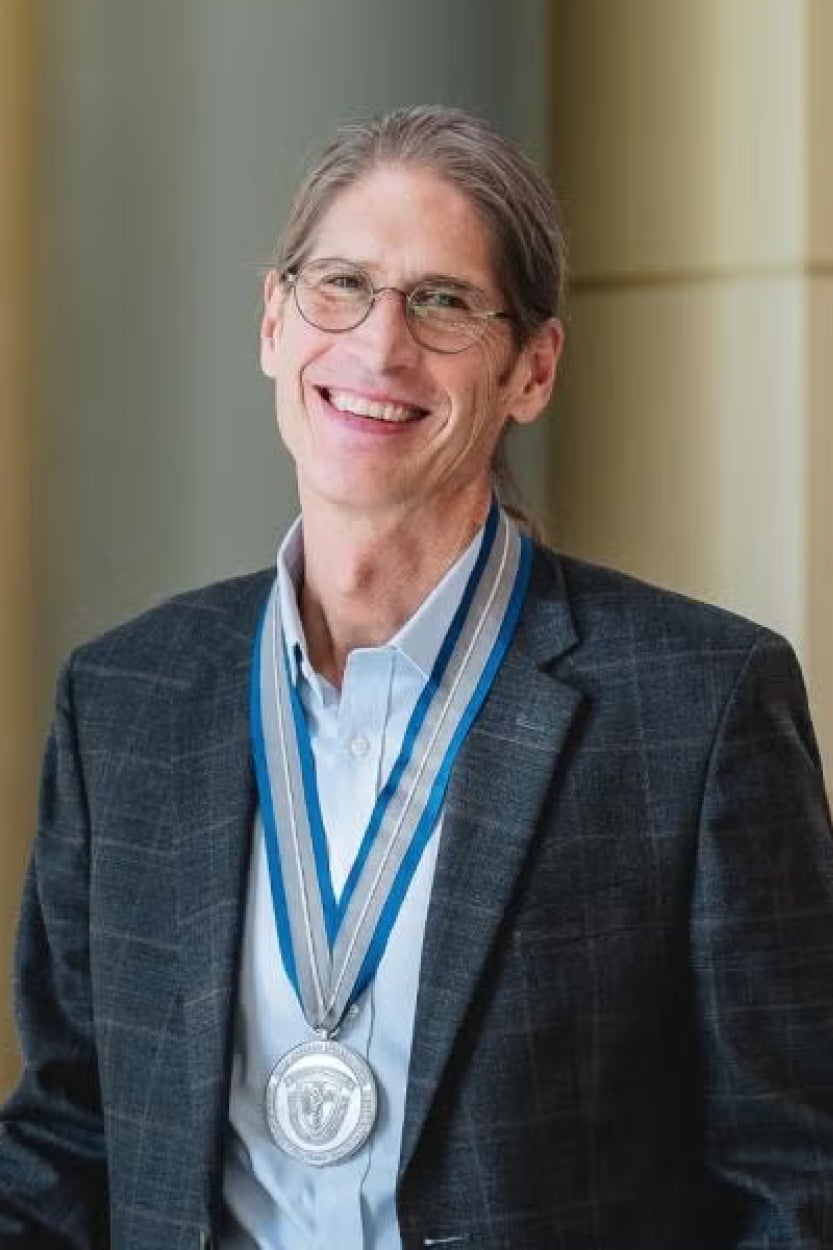
“We try to understand how basic pathways are disrupted in cancer,” said Diehl, the Leonard and Jean Skeggs Professor. “And from there, where the therapeutic opportunities are.”
That process-focused approach makes his research relevant across many cancer types. As a result, Diehl’s work has informed studies of gastrointestinal, head and neck, and esophageal cancers, among others.
Last fall, Diehl received the Case Medal for Excellence in Health Science Innovation, the medical school’s highest honor, not only for his scientific achievements but for the major advances he has made to strategically lead and expand the biochemistry department since arriving on campus in 2019.
“Alan has brought forward a vision and priorities that have resulted in rapid changes and successes—he is remarkably clear about what is important and how to get there,” said Stan Gerson, MD, dean of the medical school.
As a researcher, Diehl has been prolific. His early work helped define a key internal signaling pathway: the cyclin D–CDK4/6 axis, a control system that tells a cell when to divide. His research team was among the first to show how it responds to outside signals—and can fuel tumor growth when thrown off balance. That insight helped lay the groundwork for today’s CDK4/6 inhibitors, now widely used to treat hormone receptor-positive breast cancer.
Translating stress into strategy
Last year alone, he co-authored four papers, all part of a body of work that includes more than 170 peer-reviewed publications and continuous funding from the National Institutes of Health.
Diehl’s recent papers have examined how tumors rewire internal systems to survive stress—even the kind that would normally trigger cell death—and resist treatment. In previous, widely cited studies, his lab was the first to connect such survival responses to NRF2, a transcription factor controlling when and how genes are turned on and off.
His team is currently focused on stress-adaptation circuits, molecular networks that help tumors survive under various kinds of pressure.
“These circuits are often activated early in tumor development,” Diehl said. “We want to know how that influences progression—and how it affects a tumor’s ability to respond to therapy.”
In addition to chairing the biochemistry department, Diehl is one of three deputy directors at Case Comprehensive Cancer Center. He helps align research strategy across the consortium’s partners: Case Western Reserve, University Hospitals and Cleveland Clinic. That integrated structure, he said, “lets us take observations from the lab and get feedback from clinicians much faster than in a siloed setting.”
His leadership was instrumental in securing the cancer center’s recent $25.5 million grant renewal from the National Cancer Institute, which gave the center an “outstanding” score and extended its funding for the maximum seven-year term.
That success, said Gary K. Schwartz, MD, the center’s director, reflects both Diehl’s scientific clarity and his ability to shape strategy across teams and institutions.

When J. Alan Diehl arrived at Case Western Reserve University in 2019, the Department of Biochemistry in the School of Medicine was at a crossroads—ready for a renewed sense of purpose and direction.
With Diehl at the helm during the past six years, the department has achieved striking growth:
- 12 new faculty recruited
- 13 undergraduate courses introduced
- 130% increase in undergraduate enrollment
- A climb in 2024 to No. 12 for National Institutes of Health funding, up from No. 33 in 2020, according to the Blue Ridge Institute for Medical Research
- Integration of the previously free-standing school Center for RNA Science and Therapeutics into the department—bringing nationally recognized RNA biology expertise directly into biochemistry research and training
“Alan has a rare ability to connect molecular insight to patient impact,” said Schwartz, also the vice dean for oncology at the medical school and the Peter and Laurie Weinberger Professor in Cancer Research. “He understands how to move ideas from basic science into the clinic—and helps lead a research enterprise that spans institutions, tumor types and therapeutic strategies. He’s indispensable to this center and to the field.”
After spending much of his career uncovering how tumors proliferate and survive under pressure, Diehl believes the next frontier involves disrupting that resilience by disabling stress-response circuits and anticipating resistance before it takes hold.
“We already understand a great deal about how cancers adapt to stress,” he said. “The next step is using that knowledge to take away their advantage.” —Daniel Robison