During a once-in-centuries eclipse, CWRU radio club ran a cross-country experiment—and found a surprise overhead
Study coauthored by students from high school to grad school finds the moon’s shadow took a different path overhead than on the ground
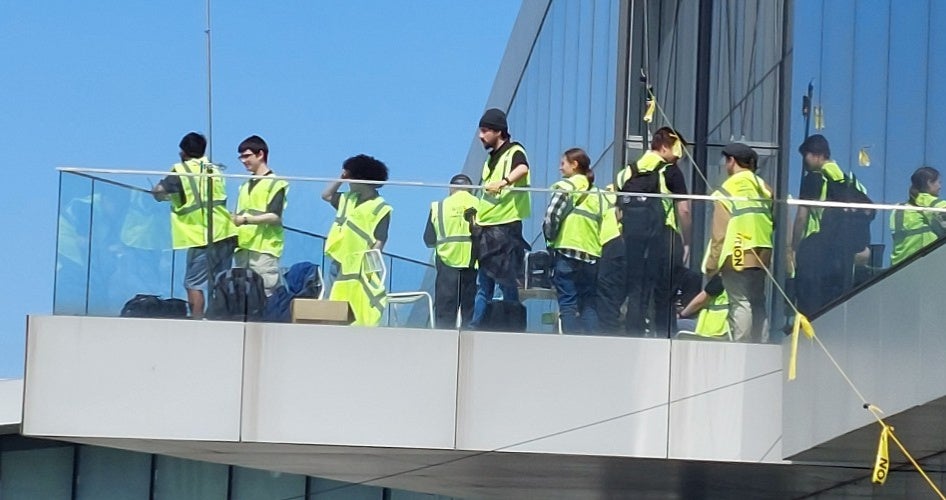
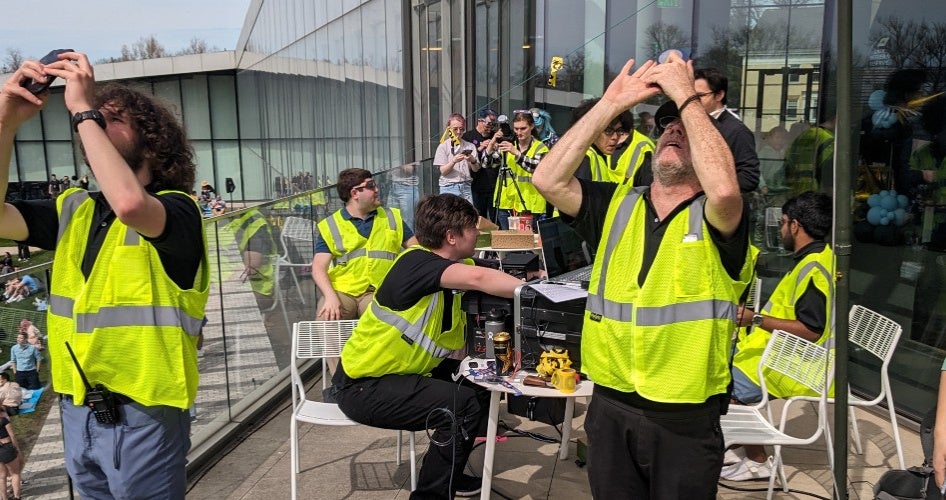
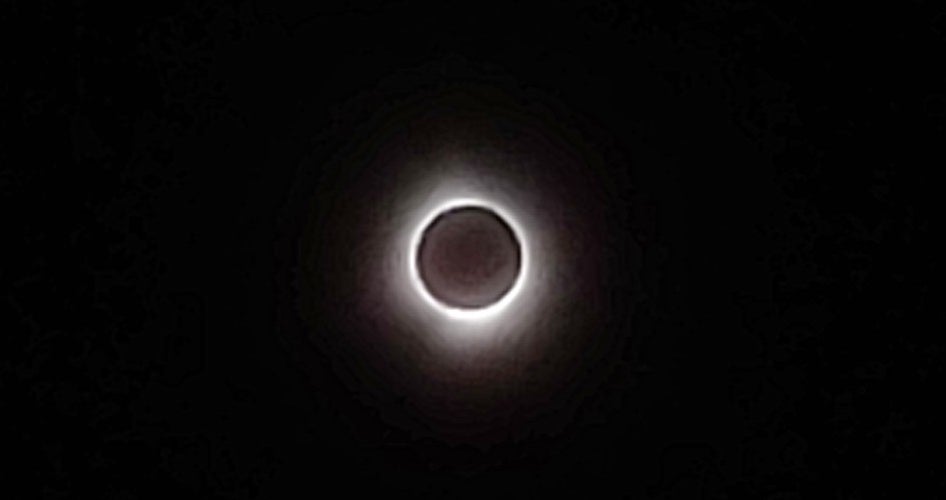
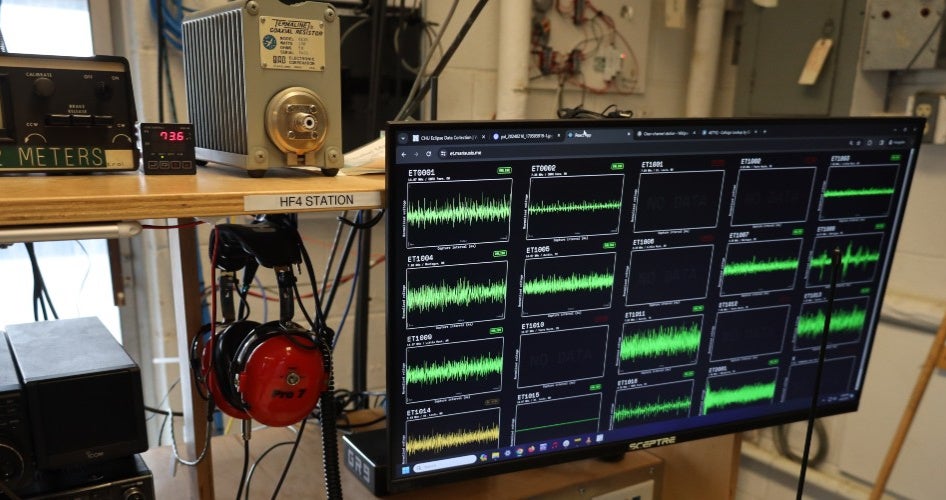
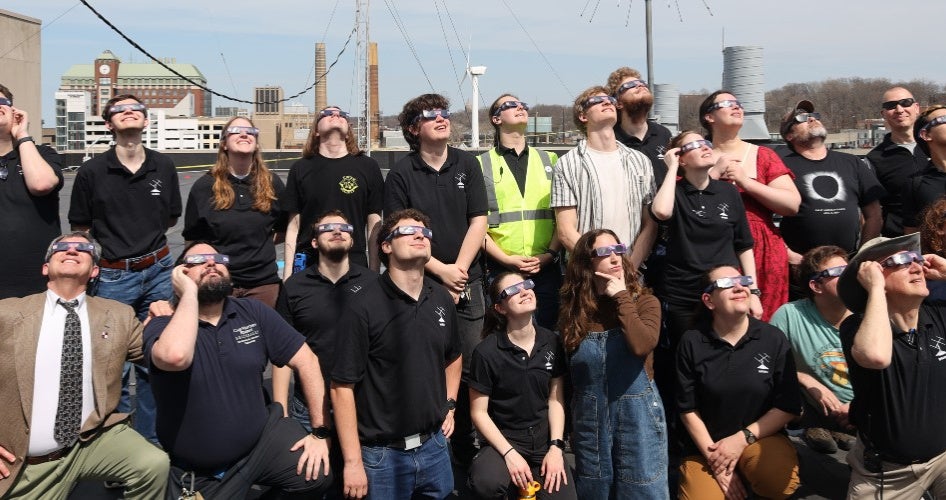
Minutes after totality swept past Cleveland on April 8, 2024, Laura Schwartz and Maris Usis leaned over a laptop on the roof of Case Western Reserve University’s Glennan Building. Data from receivers hundreds of miles away were streaming in.
Then a small change appeared in the recorded radio signal.
“It was very exciting,” recalled Usis (CWR ’24; GRS ’25, electrical engineering). “At the very least, it was an early indication that our experiment may have worked.”
Nearby, David Kazdan, MD, PhD (GRS ’92, biomedical engineering), watched the graphs take shape.
“It really was just a magic moment,” said Kazdan, an adjunct professor at the Case School of Engineering and faculty advisor to the Case Amateur Radio Club, W8EDU.
Their experiment had indeed worked. Last year, that small change became part of the scientific record: A peer-reviewed study led by Usis and published in Frontiers in Astronomy and Space Sciences reveals a surprise about where such experiments belong. Coauthors include CWRU students, alumni, staff and faculty—and every volunteer who ran a receiving station, high schoolers among them.
“[The students] found one really fascinating result that I don’t think has been published in the 100-year publication record of radio and eclipses,” Kazdan said. “It’s one of the really great success stories of amateur science and citizen science.”
Sounding the sky
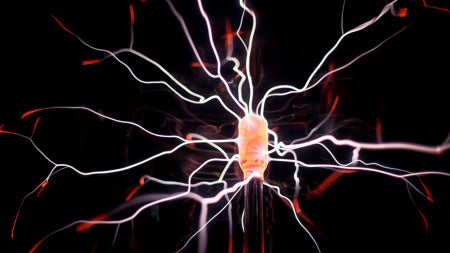
The team’s target was the ionosphere, a layer of charged particles high above Earth that lets shortwave signals bounce over the horizon. Solar storms can scramble it, disrupting the electric power grid, telecommunications, and GPS.
“It’s too high to study with aircraft. It’s too low to study with satellites,” said Kazdan.
An eclipse as studied through shortwave radio offers a workaround, briefly turning day into night.
“We get to separate out the sun’s extra ultraviolet radiation for a short period of time,” Schwartz (CWR ’24) said in the Case Alumni Association’s coverage of the eclipse. She’s now pursuing a doctorate in engineering science at the University of Oxford.
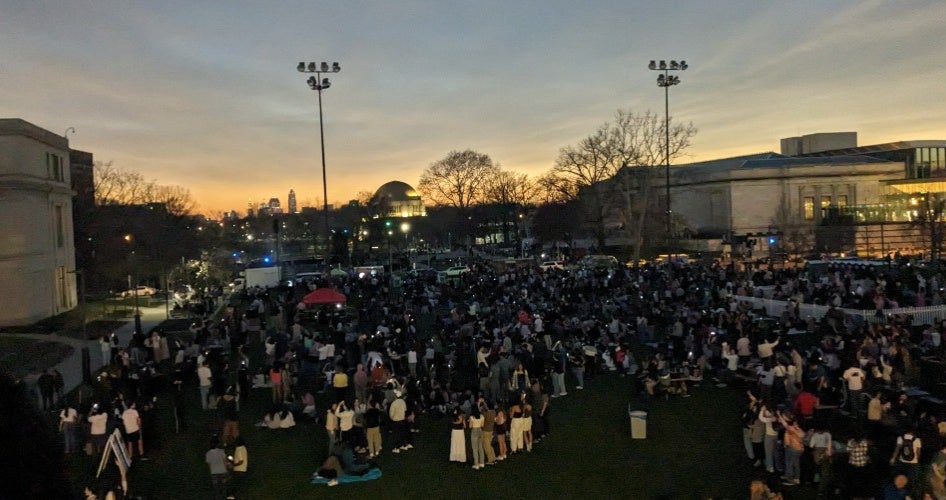
The chance to do this on location at CWRU was rare. After April 8, 2024, totality won’t return to Cleveland until 2444.
While the club joined related experiments using U.S. time stations run by the National Institute of Standards and Technology, Kazdan noticed that part of the eclipse’s path lined up with CHU, a century-old time station near Ottawa. Canada’s National Research Council shut the station down in June 2026, so this was a lucky opportunity.
CHU’s signal—a precise tick every second—would travel roughly along the shadow’s route, revealing changes in its strength and travel time.
“I noticed this about a year ahead of time, and that’s not a lot of time to plan a good experiment,” Kazdan said.
Racing the moon
Schwartz, Usis and club president Adam Goodman (CWR ’24) took it on as their senior project. They started in December 2023, four months before the eclipse.
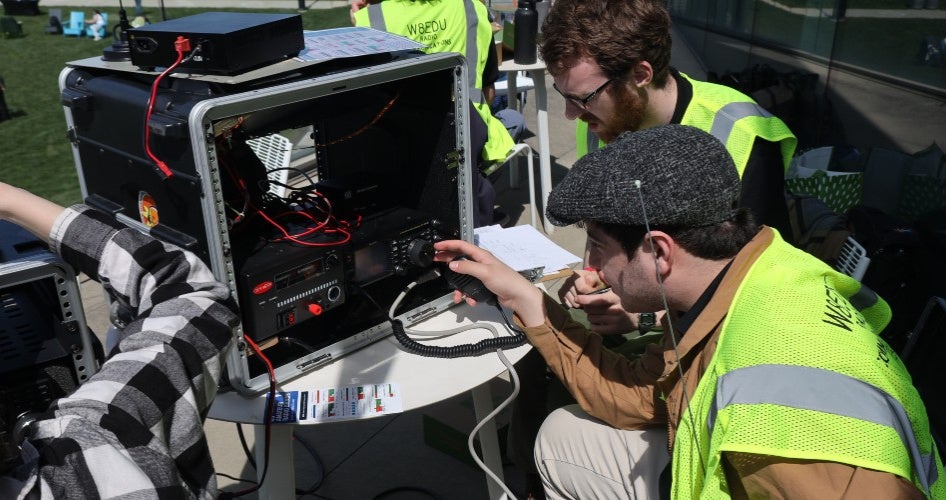
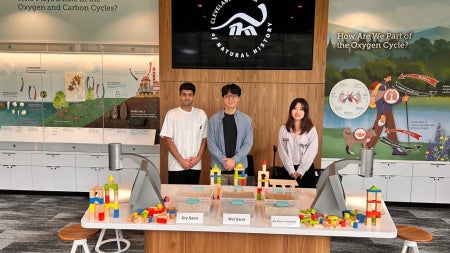
In the Sears Undergraduate Design Lab and Larry and Sally Zlotnick Sears think[box], they built roughly $100 data-recording receivers simple enough for volunteers to set up. Schwartz led hardware validation; Usis wrote software that would post the data online.
When then-first-year Shashank Sastry soldered a part on upside down, lab director John Gibbons (CIT ’81; GRS ’83, electrical engineering), a technical advisor of the radio club) walked him through the fix.
“It took a lot of courage to ask for help,” Sastry said. “Yet John framed the situation as a learning experience to help me build something I could be proud of.”
Goodman recruited three university radio clubs, two high school clubs and volunteers from the Radio Amateurs of Canada, thanking them with homemade plaques and candy from Mitchell’s Fine Chocolates. The six stations, including one CWRU’s University Farm, stretched from Austin, Texas to Ottawa, Ontario.
“You have to be a certain type of crazy to put an antenna in your backyard and then listen to noises out of the static,” said Goodman. “But people do it. People enjoy it.”
The network ran several dress rehearsals before eclipse day.
“I had a nervous couple of months watching them,” Kazdan said. “But they managed to pull the rabbit out of the hat.”
Following the shadow
After the eclipse, Space Science Institute research scientist Kristina Collins (CWR ’16; GRS ’16, ’19, ’22, electrical engineering) helped the students curate their data and prepare the paper for a collection she co-edited for NASA’s Heliophysics Big Year. The National Science Foundation and the Amateur Radio Digital Communications Foundation also helped fund the work.
The clearest result came from a collegiate prep school in Little Rock, Arkansas, where the signal grew roughly tenfold during the eclipse.
There was also a twist.
“We realized afterwards that we had the radio equipment in the wrong place,” Kazdan said.
Because the moon’s shadow strikes Earth at an angle, its path through the ionosphere isn’t directly over its path on the ground—“sometimes hundreds of miles apart,” said Usis, who expanded the work into his master’s thesis and is now a firmware engineer.
Receivers farther west could have captured a stronger response from the part of the ionosphere experiencing totality. Moving them, though, would have come at a cost.
“If we had [set up farther west], then the people involved wouldn’t have been able to see the eclipse,” Kazdan said. “They would have seen a partial eclipse. They wouldn’t have seen totality.”
Still listening
Back on campus, Sastry, now a fourth-year biomedical engineering student and radio club president, steers newer members toward the ionosphere.
For Goodman, who now works on power systems for electric tugboats in California, the experiment was never only about the data.
“Our data could have come back complete trash—it didn’t, but it could have,” he said. “As long as people were able to learn something from it, I still would have considered that a success.”
Usis recorded another eclipse from Iceland this past August; Kazdan set up recording equipment in northern Spain, and the amateur radio club of the Technical University of Valencia transmitted the signal that they received. And Kazdan, who got his first amateur radio license 56 years ago, is already planning for one that crosses Australia and New Zealand in 2028.
Kazdan is already exploring whether a CWRU team could study the July 2028 eclipse across Australia and New Zealand.
If they go, they’ll bring a lesson from the 2024 analysis: The best place to watch an eclipse isn’t necessarily the best place to measure its effects on radio.
“I joke with the students that I keep waiting for it to get boring so I can quit,” he said. “It hasn’t yet.”