From a family farm to an AI startup: A CWRU alumni entrepreneur’s path
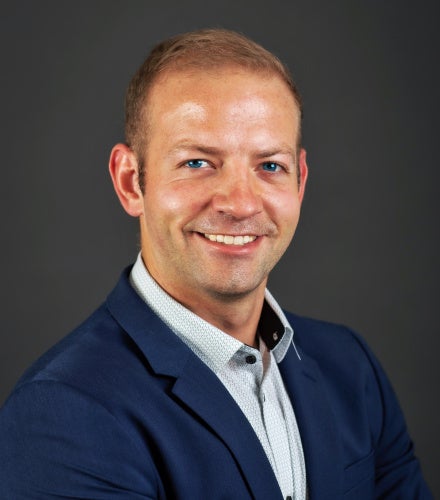
A conversation with Ethan Pickering (CWR ’15; GRS ’16, mechanical and aerospace engineering), co-founder of Prophet AI
Raised on a Northeast Ohio family farm, Ethan Pickering (CWR ’15; GRS ’16, mechanical and aerospace engineering) came to Case Western Reserve University to become a rocket scientist.
As his engineering studies progressed, he became fascinated by the mathematics governing how complex systems move. That interest led him from aerospace into fundamental research in computational fluid mechanics at CWRU, Caltech and MIT—where he studied how particles move through complex flows.
Every year, over 600 million chickens die prematurely in the U.S. alone. The 2024 bird flu brought this front and center, killing 40 million laying hens, sending egg prices skyrocketing and leaving grocery-store shelves bare. The crisis exposed a problem farther up the supply chain: Poultry producers have no practical way to continuously monitor the health of millions of birds at once.
At first glance, tracking chickens may seem far removed from fluid mechanics. But Pickering and fellow Caltech aerospace engineer Jean-Sebastien Spratt recognized a similar mathematical challenge: following many nearly identical entities through a dense, constantly moving system.
They launched Prophet AI, a startup that uses cameras and computer vision to track individual birds, count their steps and measure activity across a barn—giving researchers and producers information about animal health and performance.
A wearable monitor may make sense for a cow. It is far less practical for each of the billions of chickens raised in the United States. Prophet AI instead monitors the entire barn, collecting information about individual birds without attaching a device to each one.
The company is operating a 4,000-bird pilot with Cobb-Vantress, a poultry genetics company owned by Tyson Foods, and monitoring 20,000 birds with welfare brand Vital Farms.
The path to Prophet AI
Pickering traces his entrepreneurial streak to his dad, who built a thriving farmer's market from what was a hobbyist’s roadside stand, but his AI path started at CWRU, where he earned bachelor’s and master’s degrees from the Case School of Engineering. As a research assistant at the university’s Great Lakes Energy Institute, he used large datasets and early versions of AI to study how buildings consume, and can save, energy—early work at the intersection of complex systems, computation and entrepreneurship.

Outside the lab, Pickering played baseball and held leadership roles in Sigma Chi and the Interfraternity Congress—experiences he credits with teaching him how to motivate people and build teams.
After CWRU, he earned a PhD at Caltech, studied AI at MIT and helped build an AI team at Bayer Crop Science.
Prophet AI draws on that path: his farm background, CWRU engineering and data work, and particle-tracking research at Caltech.
Today, Pickering works in both research and entrepreneurship.
At the University of Georgia, as an associate professor, he leads the Computational Agriculture Lab, which develops AI tools for plant biology and crop design. Through Prophet AI, he is trying to turn related methods into a product livestock companies can use.
In the conversation below, Pickering discusses why Prophet AI changed direction, how mathematics led him back to agriculture and what his experiences at CWRU taught him about leadership and entrepreneurship.
Answers have been edited for length and clarity.
Prophet AI began with a different idea. Why did you pivot?
The original idea behind Prophet AI was to discover rare events in pharmaceutical research. Once we heard about the problems in animal production, we pivoted.
We worked backward from the problem to our technical capabilities while listening to potential customers. If you want to be an entrepreneur—especially coming from the technical side—you have to be willing to listen and work from the customer’s side.
What problem is Prophet AI trying to solve?
We’re looking to digitize as much of livestock production as possible.
Animal mortality accounts for hundreds of billions of dollars in losses globally. We’re starting with poultry, where mortality has roughly doubled over the past decade and contributes about $4.5 billion in U.S. economic losses.
There is a substantial financial impact, but also a carbon impact. Feed, energy and other resources have already gone into raising an animal that does not survive.
How did you identify poultry as the place to begin?
I was introduced to the problem through individuals recruiting for new digital phenotyping roles in the industry. They wanted to better understand the health continuum of animals, particularly stress, utilizing the newest advancements in digital tools.
Poultry breeding operates through a pyramid of multiplication. A relatively small number of birds produce the generations that eventually become commercial flocks, so a health or hatchability problem near the top can create massive downstream losses.
Many advances come from measuring something that was previously unmeasurable. One of the most basic signals we can examine is activity—essentially, how many steps the birds take. Health is correlated with movement.
Other companies are developing livestock-monitoring technology. What sets Prophet AI apart?
Some companies produce wearables for cattle, but the economics are different in poultry. A chicken generates about $6 in revenue. No one is going to put an expensive wearable on each of the roughly 9 billion broiler chickens raised in the United States.
Our system monitors the complete facility. It is based on square footage, allowing us to track large numbers of animals at the same time.
How did your background in agriculture, engineering and AI come together in Prophet AI?
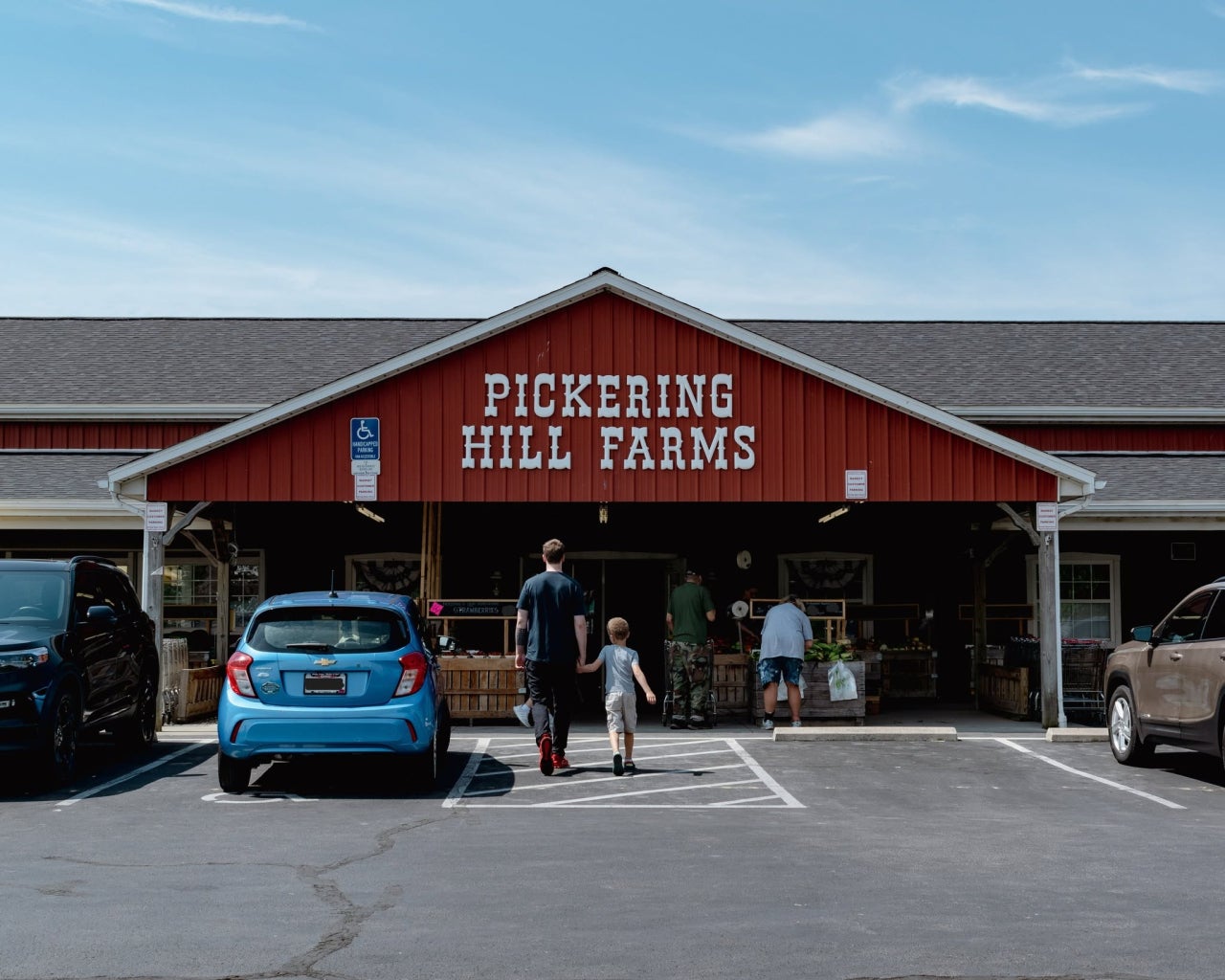
I grew up on a farm [Pickering Hill Farm] outside Cleveland, in Avon and Grafton, Ohio, that is still operating today. I was always interested in agriculture and math, so my original plan at Case was to study mechanical and aerospace engineering, get a job at NASA Glenn and continue helping on the farm.
Then I got a little too interested in math and ended up earning a PhD at Caltech in fluid mechanics. That work uses algorithms to track particles, and some of that thinking now applies to how my co-founder and I track chickens. In that sense, the chickens are like particles themselves—just much more complicated ones.
My postdoctoral work at MIT introduced me more formally to AI. I then joined Bayer Crop Science to build and head a 28-PhD AI research team developing an AI digital twin of global crops.
To solve a problem in AgTech, you really have to make a point to dive into the front lines of agriculture and get your hands dirty early. It is an incredibly difficult profession with infinite nuances. Too often, AgTech startups are designed behind a screen, simplifying a problem that is not simple and failing to make an impact in the field. Getting dirty has taught us so much about the poultry industry. Growing up on a farm taught me that nothing is easy or simple in agriculture.
What first drew you to entrepreneurship?
Part of it was watching my dad expand a hobbyist’s roadside market of 600 square feet into a 6,000-square-foot business that now supports several full-time employees.
We were constantly trying new crops and different ways of doing things. By 12, I was already directing and managing high school students helping in the fields.
I also watched how customers valued our small farm and how personal their experiences were with our produce. This seeded my passion and obsession for building something that transforms how we interact with and become closer to agriculture. A healthier, happier and more transparent livestock system is our ultimate goal.
What experiences at CWRU helped prepare you to lead a company?
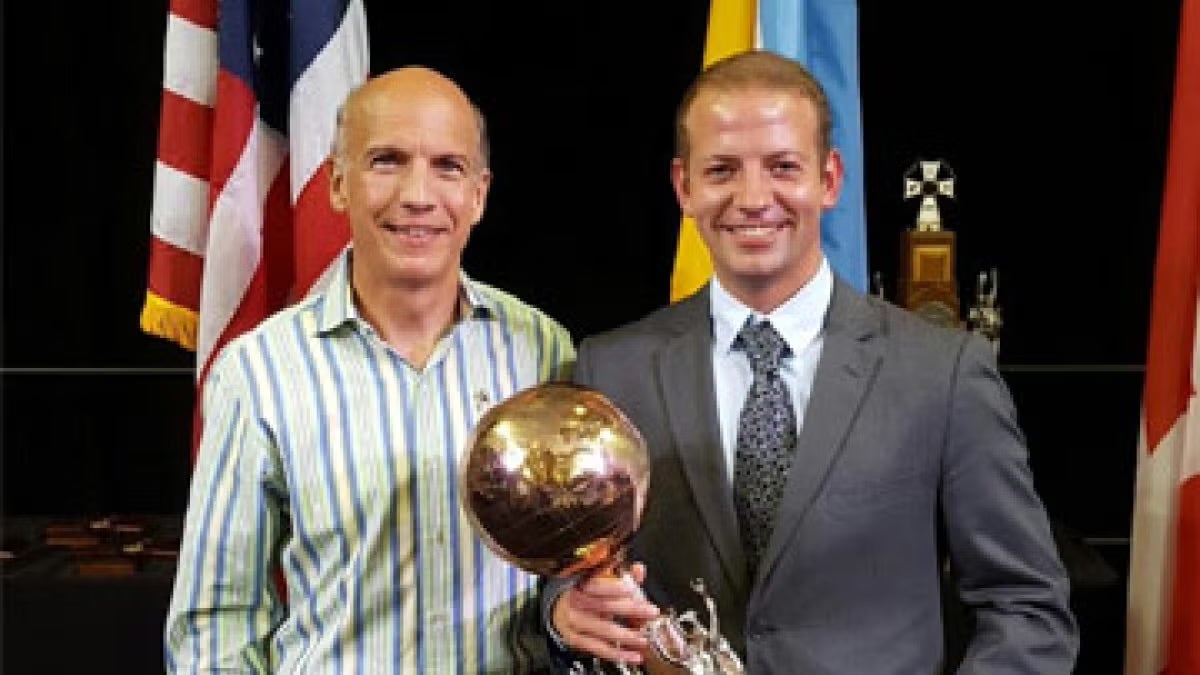
A lot of the leadership experience came from building something with a team that changed every year.
Baseball and Greek life, especially, were huge influences. I served as president of Sigma Chi and later as president of the Interfraternity Congress.
Those experiences taught me to understand what individuals value, to motivate them through growth and to find the common purpose that unites everyone. That was a far more difficult task, considering our purpose was always outside the classroom and 100% voluntary.
What interests you about the relationship between agriculture, nature and technology?
I think agriculture is the intersection.
Agriculture is the first biotechnology. Twelve thousand years ago, humans observed genetic differences in plants, selected particular traits and repeated that process over generations. The development of teosinte into maize is one example.
Agriculture integrates biology with the human perspective. It is one of the most intimate expressions of the relationship between people and nature.
What’s next for Prophet AI?
We’re raising a pre-seed round to support as many deployments as possible. We want to keep building relationships with vested customers and eventually move toward a larger seed round.
Our priority is to expand across all of poultry: producers, genetics, animal health and welfare. Other livestock, like swine and aquaculture, are next on our roadmap, along with other controlled environments like greenhouses.
Karin Ong is a second-year CWRU student, interning with the university's Veale Institute for Entrepreneurship.