Five questions with a Mandel Student out in the field
Get to know a Master of Social Work student building practical skills at a local organization
At the Jack, Joseph and Morton Mandel School of Applied Social Sciences, field education is more than a requirement—it’s the foundation of how Master of Social Work (MSW) students become practice-ready professionals. Accounting for more than 20% of the MSW curriculum, field placements immerse students in real-world settings where they apply classroom knowledge, build critical skills and contribute meaningfully to the communities they serve. Through a network of more than 1,000 partner organizations and close mentorship from experienced social workers, students gain hands-on experience across areas such as mental health, community development and child welfare—bridging theory and practice while shaping their path as future change leaders.
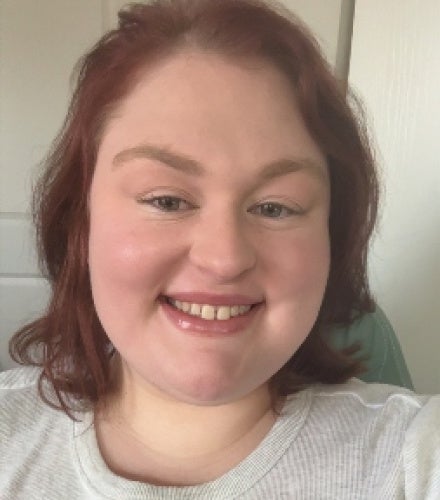
Read on to learn about the field work assignment Grace Shults took on this year as part of her MSW educational journey.
Where are you doing your field work?
I am a policy and advocacy intern at the ACLU of Ohio. I work on the issue of youth justice, which is led by my field instructor and task supervisor Pat Gleydura. They are a fantastic example of what being a macro social work practitioner is and have been extremely helpful so far in the learning process.
What does a typical day look like for you?
A typical day for me at the ACLU lately has been policy research and analysis related to youth justice initiatives. I have also been fortunate enough to learn more about how the ACLU tracks legislation that is going through the Ohio legislature—in this case related to youth justice, although there are many issue areas that they are tracking. I also attend both internal and external youth justice policy coalition calls and stakeholder meetings where I have been able to meet many advocates from different professional backgrounds which has been a really cool learning experience.
I did also get to write a blog for the ACLU’s website in December highlighting how the ACLU is a great example of macro work in action! We need macro-level social workers and the ACLU has helped shape my ability to better advocate as an up-and-coming macro practitioner.
Tell us about a meaningful experience you’ve had during your placement.
Recently, the youth justice team and other community advocates in Cuyahoga County did a walkthrough of a juvenile detention facility and allowed me to tag along as an intern. We interviewed youth in the facility about their living conditions and heard what was working and opportunities for improvement and met the administrative team who gave us updates on the “behind-the-scenes” work and what they have improved.
It was a really immersive and important experience for me, both as a professional and frankly as a human being. Sometimes when working on the macro/policy level, it is easy to get caught up in the abstract and focus on looking at issues from a birds-eye view. Sometimes that is actually necessary to ensure that you are able to adequately advocate for change for as many communities as possible.
However, at the end of the day, all levels of social work are about people. They are not statistics, or case studies for a policy memo. They are people who are worthy of dignity and quality of life. My being able to actually talk to youth that are system-impacted reminded me of what the point of social work is in the first place: to enhance and uplift the wellbeing of all people.
How your field work is shaping your professional goals or perspective on social work?
The ACLU of Ohio is an amazing field placement. Truly all of the professionals I get to work with from day to day—whether they are social workers or not—have made me a better social worker for knowing them. Getting to work and learning in a historic institution such as the ACLU is an amazing privilege.
We need social workers in these macro-level spaces (as many as possible!). That is my key takeaway: Social work is not just therapy or case management (although those are vital to overall health of communities). Social work is also advocacy, policy work and making sure that those who hold power know that they are impacting real people, for better or worse.
What advice would you give other MSW students getting ready for their own field work placement?
Remember what you’re doing this for: Social work is about people!
*Interview has been edited for brevity and clarity.