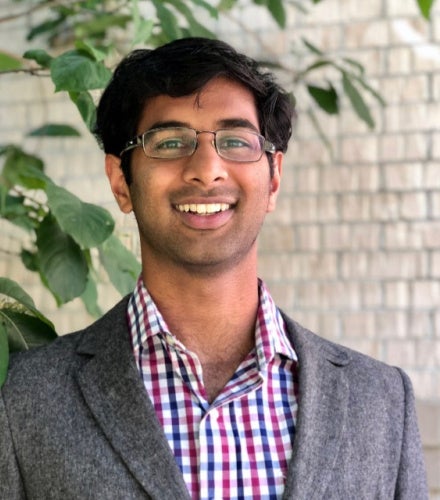
He studies fuel cells. On the side, he makes lassi.
A conversation with CWRU alum and entrepreneur Siddharth Rajupet, founder of Gopala Foods
The first customers for Siddharth Rajupet’s plant-based lassi were his tennis teammates.
He had been making the yogurt drink at home, partly for the pleasure of it and partly because the plant-based versions he wanted weren’t on any store shelf. Once he had the recipe right, he handed a mango lassi to friends on the court to try. They asked to buy more.
Soon he was setting up stalls at games and concerts. The hobby had turned into a business.
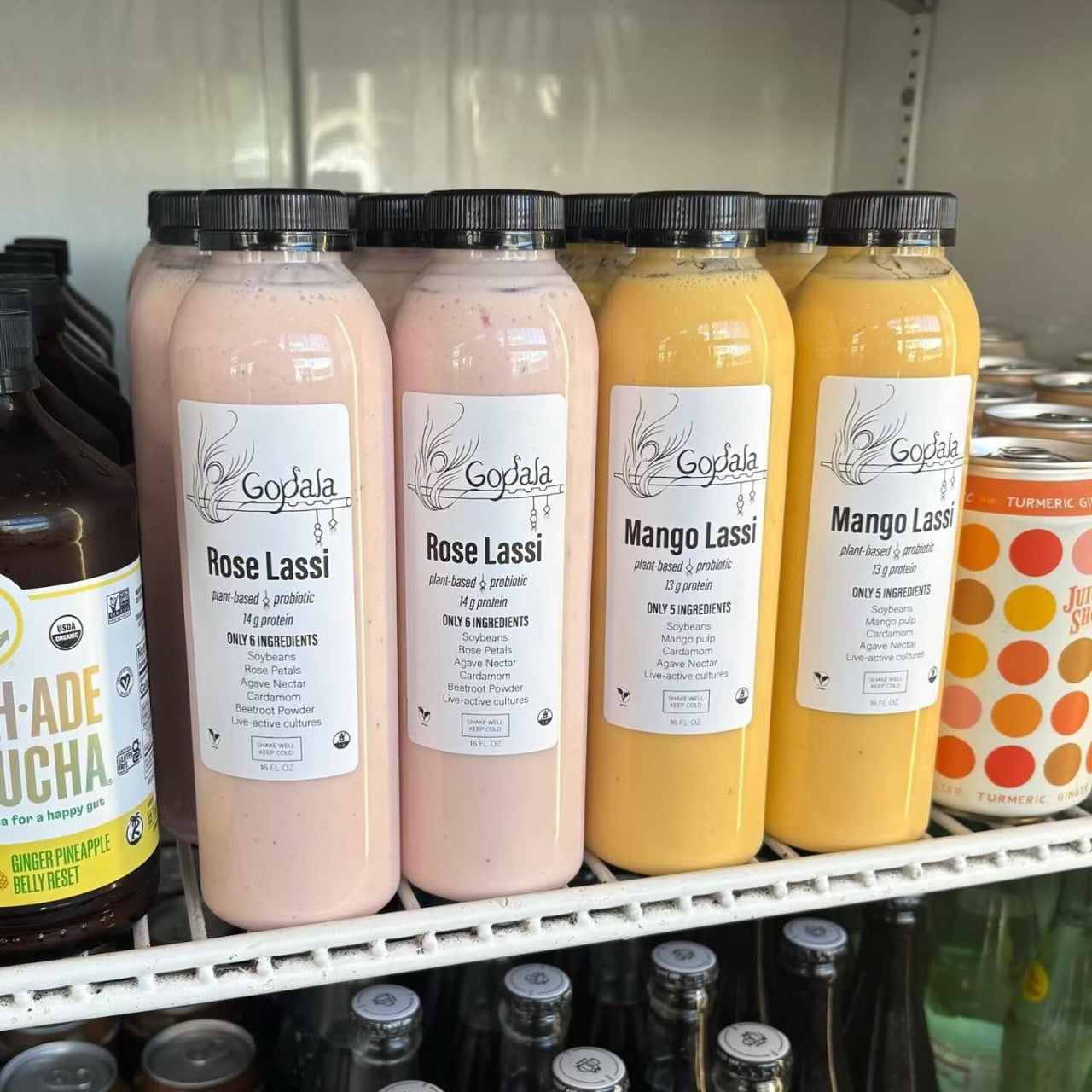
That business is now Gopala Foods, which makes a fully plant-based lassi—a traditional Indian yogurt drink—in flavors like mango and rose, with the probiotics and protein of the dairy version.
Unlike other commercial plant-based lassis, Rajupet’s uses no gums, oils, additives or chemical thickeners. The brand is carried at independent grocers including Village Market, Berkeley Organic Market and Rainbow Grocery.
The name comes from Sanskrit—Gopala, “protector of the cows,” and a nod to Sri Krishna, a deity famously fond of butter and curd.
Rajupet (CWR ’18, GRS ’21, chemical, biomedical engineering) earned both a bachelor’s and master’s degrees from the Case School of Engineering. While at CWRU, he also excelled on the men’s tennis team, earning all-UAA recognition his sophomore year.
Now he is pursuing a PhD at UC Berkeley, where he studies fuel cells—devices that turn hydrogen into electricity without burning it. His work has already earned national recognition, including a 2025 graduate student award for energy research and a published paper on how electrode structure affects fuel cell performance.

Cooking was part of his CWRU years, too. Near-daily shifts in the kitchen with the Food Recovery Network made a food business feel familiar by the time he started one.
In a conversation with the CWRU Veale Institute for Entrepreneurship, Rajupet talks about his unintentional start in entrepreneurship, how he bridges cooking with his engineering skills and his advice for students.
When did you first conceptualize the idea for Gopala Foods? Was there a specific moment of insight that led you to develop the company?
There actually wasn’t a specific moment—it was unintentional. Growing up, I always liked yogurt; it’s a central part of Indian cooking. As I leaned toward a plant-based diet, I started looking for plant-based yogurt alternatives, but there weren’t any in stores. So I experimented a lot at home.
My chemical engineering background let me have fun nerding out about making yogurt with different techniques. At first I was making it for my own enjoyment, and once I’d mastered it, I gave a mango lassi to my tennis friends to try. They wanted more. I set up impromptu stalls at games and concerts to sell to people for fun, and that evolved into a small food business.
Did you always have an interest in the food science field?
Cooking is one of my favorite hobbies, and I’ve crossed into food science as a result. I really enjoy it—it sits right at the intersection of my science and cooking passions.
How did you balance studying a rigorous major with maintaining a business in a different field?
It’s definitely been challenging, but doing one benefits the other. I had to be diligent about managing my time and prioritizing the important parts of the business. With limited hours, I was forced to choose the highest-leverage routes for growth—the ones that would give the biggest return on my time.
Are there experiences you engaged with at Case that informed your approach to entrepreneurship?

At Case, I was juggling my studies and the tennis team, both huge time commitments, and that developed my time-management skills. I was also part of the Food Recovery Network Club, where we donated leftover food from the dining halls to local soup kitchens.
Being in a physical kitchen nearly every day made me a lot more comfortable in a food-business environment.
When did you gain an interest in entrepreneurship?
I’d say it was at Berkeley, when I took an alternative foods course. One assignment was to develop a food product as though you were going to commercialize it. I also made a lot of entrepreneurship-minded friends there.
What is the importance of applying classroom knowledge to the real world? How can other students aim to achieve this?
The most important skill is the ability to learn independently. That habit of pushing yourself through coursework carries over into industry or grad school. You learn how to handle discomfort—especially with a rigorous scientific background, which I now put to work developing my product.
Was there a time when you felt vastly out of your comfort zone on your entrepreneurial journey?
All the time. Having no business background means every step is about figuring things out. Getting out of my comfort zone is what makes it fun, though.
Are there aspects of your cultural background that still help shape the company today?
Definitely. The reason I love yogurt in the first place is my Indian background, and the product works because it brings Indian culture into the flavors. A lot of people aren’t that familiar with the traditional flavors, so introducing them will always be an essential part of the company.
How do you ensure your product stands out against competitors in the food industry?
It ties back to the cultural roots—I haven’t seen other yogurt brands using traditional Indian flavors. The other piece is that it’s hard to find plant-based yogurts that are nutritionally comparable to dairy and relatively unprocessed. Right now we’re working with soy, which is nutritionally comparable to dairy milk and doesn’t require thickeners. Ours has both an appealing label and a superior taste.
How do you reach customers?
Primarily through word of mouth. I haven’t ventured into marketing and advertising yet, though eventually I will. For now, we build close connections with independently owned grocery stores and local restaurants.
What’s next for you?
Finishing up my PhD and figuring out where to take the product. I’m interested in a lot of things—the business side, and potentially teaching and academia, too.
Karin Ong is a second-year student studying child psychology and Japanese; she is an intern with the Veale Institute for Entrepreneurship.