Hispanic Heritage Month: Meet four Hispanic members of the CWRU community
From participating in a medical brigade in Guatemala to creating a platform to empower student voices, individuals of Hispanic and Latine heritage are engaged with countless facets of Case Western Reserve University.
In recognition of Hispanic Heritage Month, which takes place annually from Sept. 15 through Oct. 15, we’re highlighting the experiences of several Hispanic and Latine members of the CWRU community.
Learn more about their journeys at the university and how their heritage has shaped their lives, communities and connections with others—and read about three others featured last month.
Answers have been edited for clarity and length.
Mia Osborne
Fourth-year neuroscience student on the pre-med track with minors in Spanish and chemistry, College of Arts and Sciences and CWRU School of Medicine
As an adoptee from Guatemala, Mia Osborne did not grow up with the same opportunities to learn about her own culture as others may. Much of her early connection to Hispanic culture came through her Mexican grandfather and the traditions and values he shared with her.
Over the years, experiences such as learning Spanish, participating in a medical brigade in Guatemala and studying abroad in Chile have helped Osborne develop a stronger relationship with her heritage.
“Hispanic Heritage Month has become increasingly more meaningful as I have grown older and learned more about my own identity,” she said. “For me, this month is both a celebration of where we come from and an opportunity to recognize that there is no single way to be Hispanic, as our experiences, traditions, and relationships with our identities can all look different.”
At CWRU, Osborne expresses her identity through her involvement in the Hispanic community and Spanish studies, while preparing for a career in medicine by strengthening her Spanish fluency to better communicate with Spanish-speaking patients.
Read more from Osborne.
In what ways has your cultural background influenced your experiences at CWRU and beyond?
My cultural background has influenced both what I study and the kind of physician I hope to become. As an adopted Guatemalan student and a first-generation college student raised by a single mother, I came to CWRU knowing that my path might look different from those of some of my peers. Over time, I have learned to see those experiences as an important part of my perspective.
It has particularly influenced my interest in Spanish and healthcare. Through my work in patient care, I have seen firsthand how language can affect whether someone feels comfortable, understood, and empowered in a medical setting. Experiences like studying abroad and volunteering have further strengthened my desire to understand cultural competency. They have made me want to become a physician who not only treats a patient's medical condition but also recognizes the cultural, linguistic, and personal factors that shape their experience with healthcare.
What events or programs are you most excited about or looking forward to during Hispanic Heritage Month at CWRU and in the Cleveland area?
One event I am especially looking forward to is the Fusion Latina celebration at Severance Hall. I am excited to hear traditional music representing different Latin American countries and to experience the celebration with friends. I think events like this are a great reminder of how diverse Hispanic and Latine culture is, while also giving people from different backgrounds an opportunity to celebrate together.
If someone wanted to understand your culture through one meal, song, film or holiday, what would you choose?
I would choose tamales because they are an important part of both Guatemalan and Mexican culture, which makes them especially meaningful to me. Spending time with my grandpa and sharing a meal from his culture was one of my favorite things to do as a child, and I still hold onto those memories today. Since his passing, I wish I had the chance to sit down with him now and learn more about his life and culture. Tamales remind me of those moments with him and how food can bring people and generations together.
Jaral Arroyo-Jefferson
Second-year mechanical and aerospace engineering student with a minor in computer science, Case School of Engineering and the College of Arts and Sciences
The sounds of Puerto Rican music, the flavors of family recipes and the accomplishments of Puerto Rican athletes are familiar reminders of home for Jaral Arroyo-Jefferson. A Miami native, he carries those pieces of his heritage with him while continuing to learn about the history and traditions that have shaped his family and community.
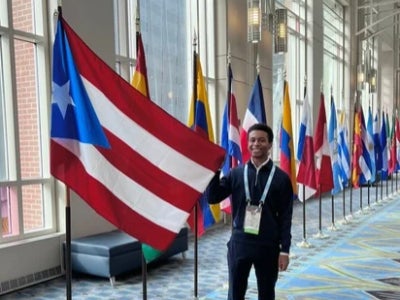
That sense of pride extends into Arroyo-Jefferson’s work as vice president of communications for the Society of Hispanic Professional Engineers, where he helps promote Hispanic representation in STEM and make engineering more accessible to students from underrepresented backgrounds.
“My culture gives me a real sense of pride in my journey into engineering, knowing I'm helping open that path for others who come after me,” Arroyo-Jefferson said.
Arroyo-Jefferson’s SHPE involvement also gives him the opportunity to help create spaces where other CWRU students can experience and share Hispanic culture—from hosting Lotería Night and other cultural events to sharing aguas frescas (a light, non-alcoholic drink that blends fruit, seeds and flowers), tres leches cake and churros at pop-ups.
Hear more from Arroyo-Jefferson.
Are there particular traditions, foods or celebrations that help you feel most connected to your heritage?
For big holidays like Thanksgiving and Christmas, my family gets together and cooks traditional Puerto Rican dishes like arroz con gandules (a traditional rice dish), lechón (pork), and tostones (fried green plantains). It's always one of my favorite times of the year. Music has also always been present growing up. Reggaeton and bachata were constantly playing around the house, and they're still a big part of what I listen to today.
What do you think the campus community should know about Hispanic heritage in general?
I'm Afro-Latino, and one thing I always try to show people is that Hispanic identity comes in all shades and backgrounds. We're not one look or one story. What unites us isn't appearance, it's a shared culture, history and connection that spans across race and country of origin.
If someone wanted to understand your culture through one meal, song, film, or holiday, what would you choose?
I'd pick "Vivir Mi Vida" by Marc Anthony. It's the kind of song that plays at every family gathering, the kind that gets everyone up dancing, no matter what's going on. It captures that spirit of celebrating life and family together, which is a huge part of what my culture means to me.
Abigail Figueroa
Second-year biomedical and electrical engineering student with a minor in Spanish, Case School of Engineering and the College School of Arts and Sciences
From speaking Spanish at home to learning salsa and bachata, Abigail Figueroa’s Peruvian heritage has always been woven into her everyday life. As a child, her mother played a central role in nurturing that appreciation, even founding a Spanish Book Club at their local library in Massachusetts.
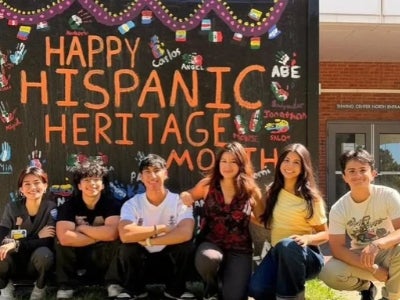
When Figueroa arrived at CWRU, she sought opportunities to embrace and celebrate her culture and found them through her involvement with La Alianza and Case Salsa.
“My time as a freshman representative for La Alianza was eye-opening because I finally found a space where I could authentically be myself,” Figueroa said. “I didn’t realize just how much I missed cultural connection until I found myself consistently showing up to Case Salsa practice and finally learning how to dance to the classics my mom would play in the car.”
That experience eventually inspired Figueroa and her friend, Natalie Pillai Juárez, a second-year biology student, to create Qué Pasa Case, an Instagram page highlighting Hispanic voices, organizations and achievements at CWRU.
Read more about Figueroa.
Are there particular traditions, foods or celebrations that help you feel most connected to your heritage?
A uniquely Peruvian tradition I love sharing are chocolatadas. During Christmas, everyone gathers to drink hot chocolate and eat panetón, a tall, dome-shaped Italian sweet bread. Panetón is such a nostalgic dessert that was always around my grandmother’s home. My grandmother would host great chocolatadas—she was always a leader of her community. Along with that, she would craft elaborate Nacimientos (Nativity scenes) that the entire neighborhood would stop to admire. When she would visit my mom and I in the U.S., she recreated her masterpieces using the pinecones and sticks we would collect on our walks.
What events or programs are you most excited about or looking forward to during Hispanic Heritage Month at CWRU and in the Cleveland area?
As someone who loves music, especially when performed live, I want to go to Severance Hall’s Fusión Latina event. I also want to check out CentroVilla25 and get some delicious food. On campus, La Alianza will host a tortilla-making night with the community pantry and our annual Gala Latina pretty soon, so I’m very excited for those and for the events other Hispanic clubs will host as well.
What do you think the campus community should know about Hispanic heritage in general?
People should know there’s great pride when someone shares their Hispanic heritage. I’ve seen Mexicans, Ecuadorians, Puerto Ricans and others enthusiastically tell me all about what they love from their culture. I am the same way—I could talk for hours about Peru. Our background is important to us. We are proud of who we are and where we come from. Nothing can change that.
Miguel Muñoz
Chemical and biomolecular engineering PhD candidate, Case School of Engineering
At CWRU, food and soccer are two of the easiest ways to get Miguel Muñoz talking about his Mexican heritage.
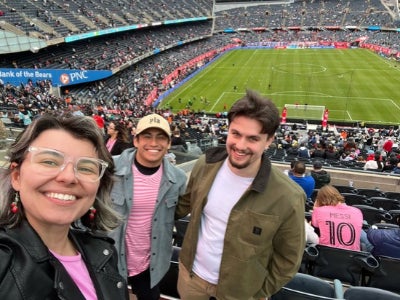
Born and raised in Zacatecas, Mexico, Muñoz stays connected to home through Spanish, family and friends, Mexican food and music, traditions and a lifelong love of soccer. With dozens of jerseys, he’s always ready to talk about the latest game, and watching a match can make him feel instantly connected to home while at CWRU.
As an international student, Muñoz carries his heritage into his work as a researcher and graduate student ambassador at Case School of Engineering’s Department of Chemical and Biomolecular Engineering, where he sees representation as an opportunity to help younger students envision themselves pursuing similar paths.
“I think representation matters,” said Muñoz, whose research focuses include studying organic materials for energy storage applications. “Seeing people with similar backgrounds succeeding in science, engineering, academia, and other fields can help younger students imagine those possibilities for themselves.”
When Muñoz wants a taste of home, he heads to one of his go-to spots in Cleveland: Cilantro Taqueria. While tacos are a favorite, nothing takes him back to Zacatecas quite like tacos envenenados, a signature dish made with a stuffed, fried tortilla that he hasn’t had since moving to the United States.
Learn more about Muñoz.
In what ways has your cultural background influenced your experiences at CWRU and beyond?
Growing up in Zacatecas shaped many of the values I still carry with me, particularly family, perseverance, hard work, adaptability and maintaining a sense of humor when things become difficult. At CWRU, I have been very grateful for the opportunities to grow as a researcher and a scientific communicator. I have presented my work nationally and internationally, contributed to Department of Energy-supported research through the BEES2 Energy Frontier Research Center, and collaborated with researchers across different institutions.
I have also been fortunate to receive recognitions including the Outstanding Oral Presentation Award, Outstanding Journal Article Award, and Outstanding Researcher Award. I also created the scientific artwork representing BEES2, based at CWRU, which received the People’s Choice Award at the U.S. Department of Energy EFRC-Hub-CMS-CCS Principal Investigators’ Meeting. I see those recognitions as a reflection of the mentorship, collaborations, and opportunities I have received at CWRU, and I am very grateful for that support.
What does Hispanic Heritage Month mean to you personally?
For me, Hispanic Heritage Month is an opportunity to recognize where we come from, but also what Hispanic and Latine communities are contributing today. Moving from Mexico to the United States made me more conscious of how much our background shapes the way we approach challenges, build relationships and create community.
What parts of your culture do you find yourself carrying with you in your everyday life?
Family is probably the strongest connection for me. Food, music, celebrations, and even soccer are all tied in some way to memories with family and friends in Mexico. Soccer has remained an especially strong connection. I grew up playing and following the sport and even after moving to the United States, watching a game can immediately make me feel connected to home. Living abroad has made me appreciate these everyday parts of my culture much more.