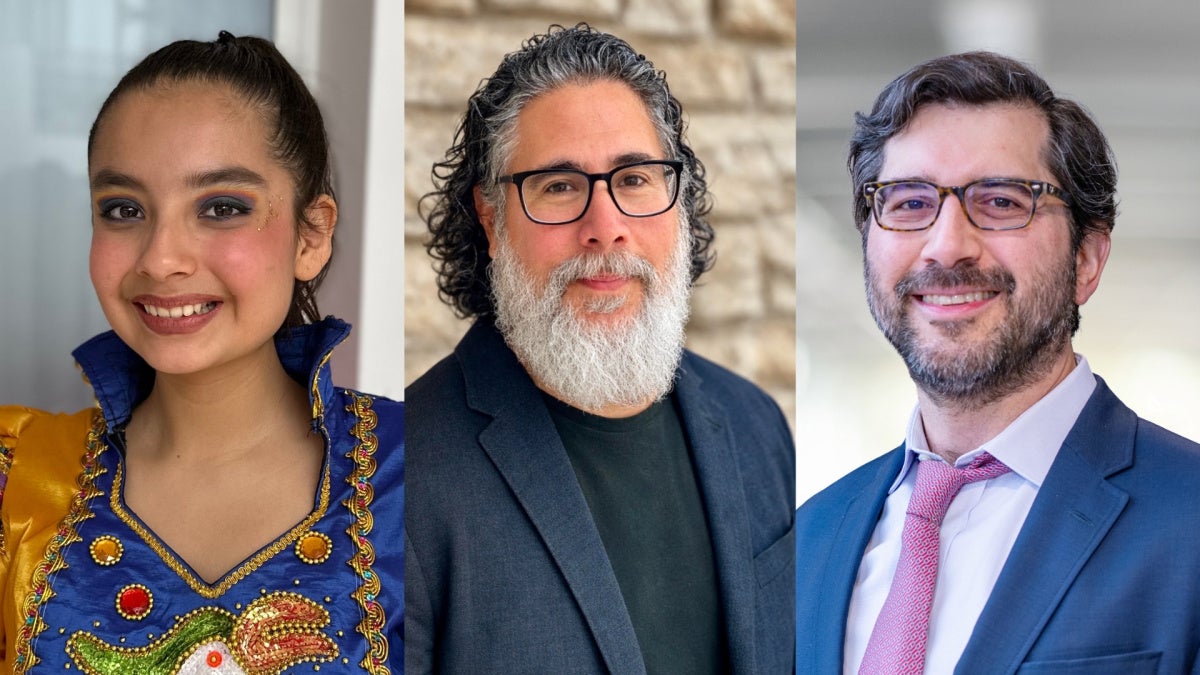
Hispanic Heritage Month: Meet three Hispanic members of the CWRU community
From sharing Peruvian folk dance to providing quality care to patients of various backgrounds, individuals of Hispanic and Latine heritage are engaged with countless facets of Case Western Reserve University.
In recognition of Hispanic Heritage Month, which takes place annually from Sept. 15 through Oct. 15, we’re highlighting the experiences of three Hispanic and Latine members of the CWRU community.
Learn more about their journeys at the university and how their heritage has shaped their lives, communities and connections with others—and stay tuned for four more later this month.
Answers have been edited for clarity and length.
Catalina Luque
First-year cognitive science and dance student, College of Arts and Sciences
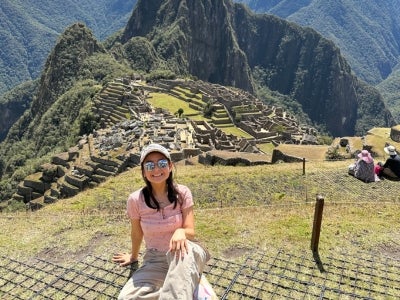
An international student from Lima, Peru, Catalina Luque initially worried that her cultural background would make it difficult to fit in at CWRU. To her surprise, she found a community that immediately embraced her identity—from suitemates who aimed to learn Spanish to faculty and staff members who focused on the well-being of students, regardless of cultural backgrounds.
At CWRU, Luque aims to honor her Peruvian heritage by sharing her culture with classmates, having dance parties to Peruvian folk and cumbia music, and visiting the Inca collection at the Cleveland Museum of Art. She also hopes to share her Latine and Hispanic identities through international student events and stories about her life in Peru.
“I feel so safe in the CWRU community to do this, which feels like a privilege not everyone has right now,” Luque said.
“I realized [CWRU] was where I could bloom in all aspects of my life—both scientifically and artistically—without sacrificing anything I find dear to my heart and identity,” she continued. “In the short time I’ve been here, I’m convinced that I made the right call!”
Read more from Luque.
If someone wanted to understand your culture through one meal, song, film or holiday, what would you choose?
I would choose the song “Cariñito” from the band Bareto. It is a nationally loved song in my country—we play it just about everywhere on any occasion. Each time I listen to it I can picture in my head the beautiful landscapes, I can smell the ají amarillo (a hot yellow-orange chili pepper) in my food, and I can feel the love for my people miles away. It never fails to make me smile.
What cultural experiences or communities at CWRU are you most excited to explore and contribute to?
I’ve gone to some events by La Alianza, so I’ve been in touch with some fellow Latinos. I would really like to hang out with them more and see how much we have in common. I’m also looking forward to teaching Peruvian folk dance in my Dance 121: Dance in Culture class, where we learn how the body expresses history throughout the world. I would love to reach more people and choreograph a full piece of one of our traditional dances one day.
What do you think the campus community should know about your heritage in general?
We are strong and tightly knit, and we know the value of the effort those who came before us made. But, something that I love about my generation of Hispanics is that we let that respect fuel us in a different way. The outcome is not to follow the exact footsteps of our ancestors, but to carve our own paths tailored to our passions and to create a future with fewer limitations and borders for those who will come next. I hope someday this world can learn to appreciate our differences.
Esteban Vazquez-Hidalgo
Postdoctoral scholar, Department of Population and Quantitative Health Sciences, CWRU School of Medicine
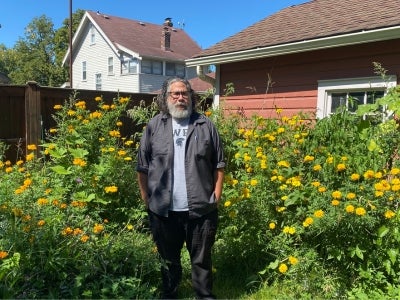
Born in Mexico and raised in the United States, Esteban Vazquez-Hidalgo was the first person in his extended family to graduate from college and earn a PhD. In 2022, he left his hometown and community in San Diego, California, for Cleveland.
“That was hard,” he said. “Harder still was building my community in Cleveland.”
A year later, Vazquez-Hidalgo joined the CWRU community as a postdoctoral scholar at the Department of Population and Quantitative Health Sciences. Since then, he has embraced opportunities to connect with others, serving as co-president of the university’s Postdoctoral Association and participating in CWRU’s Society for Advancement of Chicanos/Hispanics and Native Americans in Science chapter. He has also engaged in mentorship and community outreach programs, including MathCorp SuperSaturdays, Math Movement Summers and La Alianza coffee meetups.
“For me, Hispanic Heritage Month is not about a calendar. My heritage is with me every day, in my first language, the food I miss and the sound of Mexican music drifting from backyards,” Vazquez-Hidalgo said. “It is also about recognizing what my parents gave up so I could be here. With that said, Hispanic Heritage Month is an opportunity for people to pause and hear stories like mine. That is why it is personally meaningful to me.”
Learn more about Vazquez-Hidalgo.
If someone wanted to understand your culture through one meal, song, film or holiday, what would you choose?
I'd pick mole. A lot of people aren't familiar with it, and those that are familiar know it because of one unusual ingredient: chocolate. I would share my mom's mole. She's from Sonora and the way my mom makes it is a little on the spicy side, but is so good with chicken, some Mexican rice and some freshly made corn tortillas. I have lots of memories of my mom in the kitchen making that and corn tortillas. When she’s around, the kitchen is the place to be. While I can't share those memories of my mom, I can share the food she made.
Are there particular traditions, foods or celebrations that help you feel most connected to your heritage?
Día de los Muertos (Day of the Dead) is the tradition most meaningful to me. For Dia de Muertos, I bake pan de muerto (a traditional Mexican sweet bread) for my family, and I decorate the house with papel picado. This year I'm growing cempasúchil, the Mexican marigold flower.
Another way I incorporate my heritage is reflected in how we celebrate my mom's birthday. It falls close to Día de Reyes (Three Kings Day), so instead of a birthday cake, I make a rosca, a traditional ring-shaped sweet bread.
When I want to share my heritage with my Cleveland friends, I love sharing my foods. They aren't always a hit though, and that's ok. But when I share some good fresh corn tortillas from a San Diego tortilleria, cafe de olla con piloncillo (a traditional Mexican spiced coffee), marranitos (traditional pig-shaped Mexican sweet breads), mole and spicy salsas, I feel like everything is right at the moment.
What do you think the campus community should know about your heritage in general?
I would like the campus community to know that Hispanic heritage is not one thing. Hispanic is an umbrella term that covers a lot. It spans dozens of countries, histories and cultures shaped by different combinations of African, indigenous and European ancestry. That all shows up differently in our languages, food, music and appearance. Our cultures are not interchangeable. There is not one way to be Hispanic. Two people from the same country can have very different traditions. The nuance is important and it matters. It is worth knowing, and it can be fun learning about it.
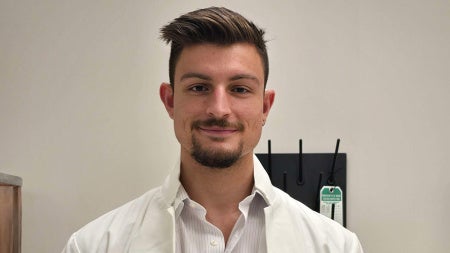
Federico Perez
Professor of medicine, CWRU School of Medicine
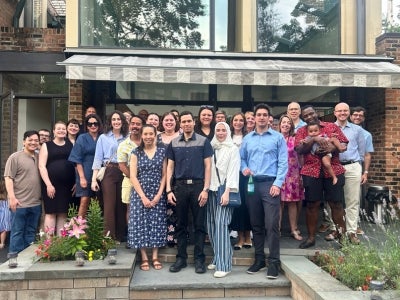
Federico Perez’s connection to Case Western Reserve University began nearly 30 years ago as a medical student in Cali, Colombia, when his school underwent a curricular revision modeled after CWRU’s Western Reserve Curriculum.
Impressed by its philosophy, Perez later came to CWRU and University Hospitals for an internship, followed by training in infectious diseases and clinical research. Today, he is a tenured professor at the CWRU School of Medicine based at the Louis Stokes Cleveland VA Medical Center and program director of the UH-CWRU Infectious Diseases Fellowship Program.
Raised to be a “citizen of the world,” Perez learned to discover, appreciate and nurture different identities and traditions. As a physician, he carries that perspective into caring for patients, teaching, conducting research and raising his children with his wife.
“I am incredibly proud of my Hispanic heritage not because it separates me, but because it helps me build connections across ideas, cultures, and backgrounds,” he said. “In short, I am here because CWRU is a beacon of education and research whose light reaches far, making it possible for learners and scholars from all corners of the globe to thrive.”
Read on to learn more about Perez.
What do you think the campus community should know about Hispanic heritage in general?
The concept of Hispanic heritage is fascinating, in part because it is fluid and can mean so many different things to different people. To some on the outside, it may seem like an effort to separate and create differences. I see it as a powerful demonstration of the bonds of culture and tradition that unite us.
Colombians and Uruguayans, for instance, are separated by more than 5000 miles overland and by stark historical, ethnic, socioeconomic and political divergences. Yet it only took a few moments with my Uruguayan friends to discover the deep chords of Hispanic heritage that compose lifelong kinship: we are family. Hispanic heritage is a manifestation of our common humanity, and that is worth celebrating.
If someone wanted to understand your culture through one meal, song, film or holiday, what would you choose?
I would choose the song “Rebelión” by salsa legend Joe Arroyo, which perfectly captures salsa musicianship at its highest level, featuring a dynamic piano solo and a powerful trumpet section. The lyrics are even more accomplished, memorializing 17th-century slaves in Cartagena, Colombia. When you dance to that song, you can’t help but feel awe at their suffering and resilience, which endure in our culture.
In what ways have your cultural traditions shaped your sense of identity?
Music and dance are central to my sense of Hispanic identity. Where I come from, almost every social gathering includes dancing, usually salsa. A Spanish word for when people gather to celebrate is “ágape.” I am a very poor dancer, but I enjoy the music and the experience of “agape” in another sense: how dancing can bring people together spiritually as much as physically.