How CWRU School of Medicine merges clinical education with community impact
“Teaching advocacy gives students agency. They learn to identify gaps, translate evidence and pursue solutions that improve care—whether through clinical practice, research or policy.”
— Lia Logio, vice dean for medical education
For Lia Logio, MD, advocacy belongs in medical education—regardless of whether a student is earning an MD or another degree—because today’s healthcare systems can, and must, keep improving on access, affordability and coordination of care to make it more user-friendly.
“Teaching advocacy gives students agency,” said Logio, the vice dean for medical education at Case Western Reserve University School of Medicine and the John L. Caughey Jr. MD Professor of Medicine. “They learn to identify gaps, translate evidence and pursue solutions that improve care—whether through clinical practice, research or policy.”
For example, the school offers the Advocacy and Public Health Pathway, one of nine pathways that provide interested MD students opportunities for additional expertise in various areas from preventive care to entrepreneurship. The advocacy pathway prepares future physicians to influence practice and policy. Currently, 37 students participate and learn to write legislation, champion policies and address health disparities through courses, mentoring, community experiences and advocacy work with others on campus.
All students in the school’s clinical programs learn about advocacy and have opportunities to deepen their skill set. “Being patient-centered,” Logio added, “is advocating for the patient in front of you.”
Read on to learn about some students who have engaged in advocacy.
Practicing care, pursuing change
Taseen Alam sees advocacy as a core skill he is gaining in his medical education—something to be developed alongside those in clinical reasoning and communication.
“Our [healthcare] system isn’t perfect. But that’s nota reason to disengage.
It’s a reason to get involved—and try to make it better.”
— Taseen Alam

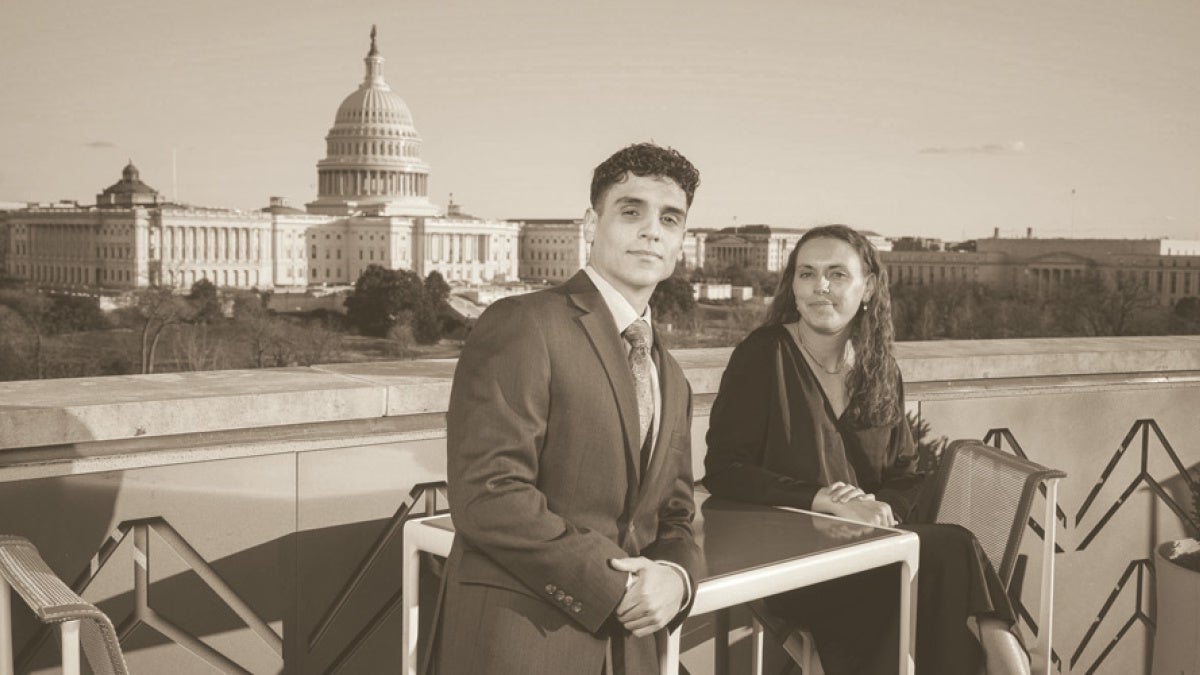
Now in his third year in the traditional MD program, Alam has helped lead voter registration drives, organized seminars on global humanitarian healthcare and co-authored an op-ed in The Columbus Dispatch about access to care. He has lobbied at the Ohio Statehouse on healthcare legislation and is researching how the Dobbs decision—the 2022 U.S. Supreme Court ruling that reversed the Roe v. Wade abortion-rights decision—is reshaping medical education, particularly in states with abortion restrictions.
As part of the Advocacy and Public Health Pathway, he works with faculty mentors and upper-class students who help him consider how insurance coverage and government and hospital policies shape care—and to act through op-eds, voter-registration efforts and meetings with legislators.
“Being a good physician has always meant caring for patients,” Alam said. “But now it also means understanding the policies that shape their care—whether it’s access to services, vaccine confidence or reproductive rights. If we can’t talk about those issues, we can’t fully serve them.”
As a physician, he hopes to stay involved in policy, research and community dialogue.
“Our [healthcare] system isn’t perfect,” he said. “But that’s not a reason to disengage. It’s a reason to get involved—and try to make it better.”
A pathway home
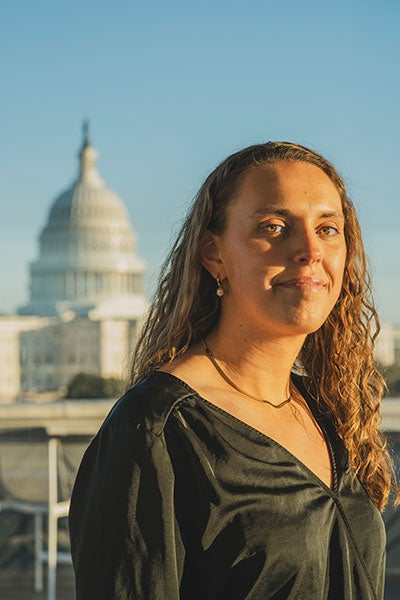
When a bill to license certified anesthesiologist assistants (CAAs) in Virginia reached a critical stage, Felipe Joglar-Viera and Shannon Moore didn’t bring policy briefings or talking points to the state’s General Assembly. They brought their stories.
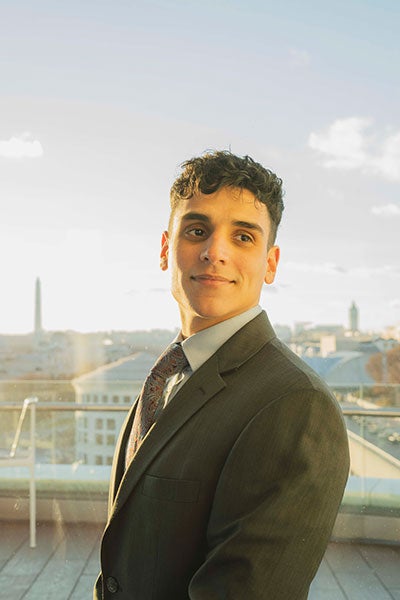
Both students in the medical school’s Master of Science in Anesthesia (MSA) program in Washington, D.C., the Virginia natives were asked to testify before legislators by the CWRU program’s site leaders, working in coordination with the Virginia and D.C. academies of anesthesiologist assistants.
The students’ message: Let us serve where we’re from.
At the time, Virginia didn’t license CAAs, shutting out future providers such as Joglar-Viera and Moore despite a growing anesthesia workforce shortage. Their testimony, while short, made the case for change in human terms.
“We were there to put a face on what it could mean for patients and providers,” Moore said.
The bill didn’t pass right away. When it stalled, Joglar-Viera testified again.
Last July, the General Assembly approved the legislation. Since then, the medical school’s MSA program has begun placing students in Virginia hospitals for clinical rotations—a change that happened faster than either student expected. Joglar-Viera was among the first.
“It felt like a full-circle moment,” he said. “Not long ago, this wasn’t even possible. And now I’m working in a hospital in my home state.”
Because Virginia is still building the licensure and hospital-credentialing process for CAAs, Joglar-Viera and Moore may not be able to start in-state right after graduation. Still, they’re proud to have helped make that option possible.
“We helped open the door,” Moore said.
Clinical training, civic purpose
“Advocacy is such a broad term that it can feel overwhelming. We wanted to create something that shows what it actually looks like in practice.”
— Cecilia Bulgrin, second-year student in the Master of Science in Physician Assistant Studies (PA) program
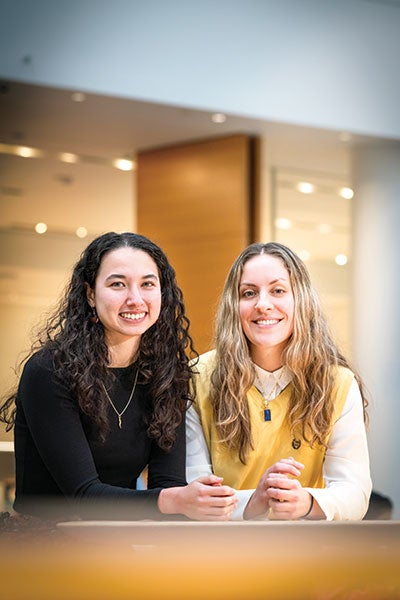
While volunteering at Cleveland’s Homeless Stand Down—a community health and resource fair for people experiencing homelessness—Mia Vargo (CWR ’23) and Cecilia Bulgrin, second-year students in the Master of Science in Physician Assistant Studies (PA) program, met a physician involved in reproductive-health advocacy. That conversation sparked an idea: Build a program to help future healthcare providers engage confidently and effectively on issues their patients face.
With support from faculty and community partners, Vargo and Bulgrin launched a yearlong advocacy series open to students in CWRU’s medical and nursing schools. Now in its pilot year, the series includes panel discussions, skill-building sessions and applied activities—such as role-playing patient and policymaker conversations and writing op-eds.
The inaugural theme was about reproductive rights, but the structure is meant to be reused and adapted. Future themes may focus on issues such as food insecurity, maternal health or housing availability.
“Advocacy is such a broad term that it can feel overwhelming,” Bulgrin said. “We wanted to create something that shows what it actually looks like in practice.”
The program also highlights how advocacy can vary based on a person’s role on a patient’s team.
“It’s going to look different between doctors, nurses and PAs—because of our different roles and the amount of time we spend with patients,” Vargo said. “As PAs, a big part of advocacy is meeting people where they are and connecting them to what helps most.”
And she’s already feeling the benefits. “This project is helping me—and hopefully others—feel more informed, more capable, and more ready to act,” she said.
A springboard to national office
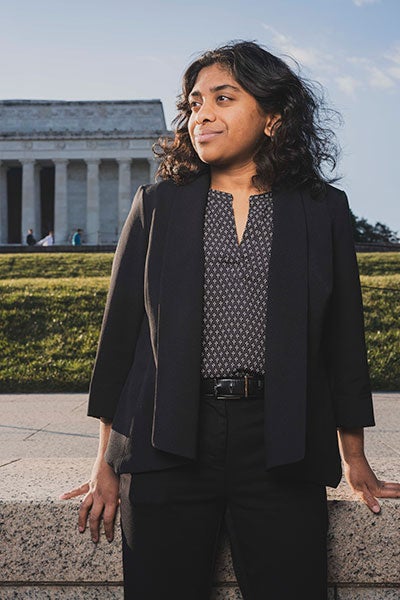
Nikitha Balaji paused their studies at the School of Medicine to serve as national president of the American Medical Student Association (AMSA), which, with 35,000 members, is considered the nation’s largest student-led organization for future physicians.
Balaji is based in Washington, D.C., and said that AMSA has focused this year on advocating against major cuts to federal healthcare programs, including Medicaid, and broader efforts to protect the independence of the medical profession by keeping it rooted in evidence-based healthcare and not subject to political forces.
The School of Medicine’s Advocacy and Public Health Pathway “gave me tools I use every day—from building coalitions and writing op-eds to meeting with lawmakers,” said Balaji, who plans to return to CWRU in the spring for their third year of medical school. “Having the [full-time opportunity] to lead advocacy work this year has made it clear that this kind of engagement isn’t separate from being a physician—it’s part of how we improve care and push the profession forward.”
“Having the [full-time opportunity] to lead advocacy work this year has made it clear that this kind of engagement isn’t separate from being a physician—it’s part of how we improve care and push the profession forward.”
— Nikitha Balaji
Clinical care with a policy lens
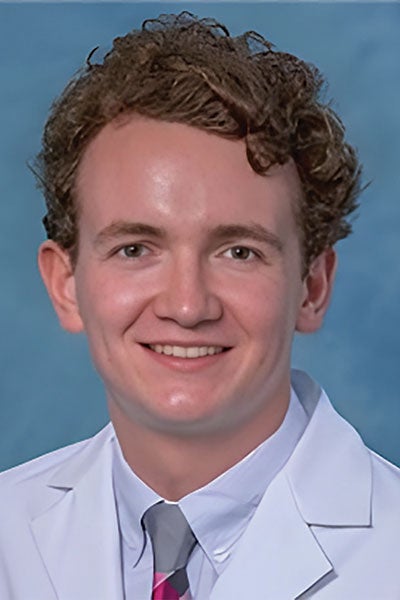
Ben Fesko (CWR ’24) came to the School of Medicine to earn his MD—not to study legislation. But the school’s joint course with the School of Law on controversial topics in health law and policy changed that—revealing how societal decisions ripple into clinical care. Now a second-year student, he has testified at the Ohio Statehouse on his own behalf to oppose a bill that would allow what he felt could be excessive use of off-label drug prescriptions, and he co-led a campus conference for students on legal protections for physician advocates.
“Understanding how laws are written—and how they land in the clinic—has changed how I talk with patients,” Fesko said. “I also want to be the kind of physician who sees how the system affects care and does something about it.”