How neuroscience is emerging as a long‑term economic driver for Northeast Ohio
NeuroNEO 2026 showcases region’s path to becoming neuroscience powerhouse
Northeast Ohio has all the pieces to further establish its reputation as a nationally leading, economically competitive hub for neuroscience: cutting-edge research, world-renowned clinical care and a robust translational ecosystem. Regional leaders view neuro as a force multiplier that can anchor long-term economic growth for Northeast Ohio by uniting its existing strengths.
What will it take to cement Northeast Ohio as a neuro powerhouse?
Leaders from Cleveland's anchor healthcare and academic institutions gathered on May 5 at Case Western Reserve University for NeuroNEO 2026, a one-day summit hosted by the Cleveland Innovation District. Attendees from healthcare, academia, industry, economic development and beyond were challenged to forgo institutional boundaries and honestly evaluate the region's neuro ecosystem.
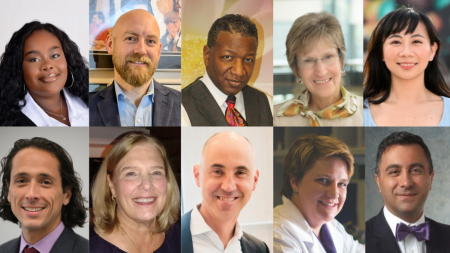
“Case Western Reserve University sits at the intersection of discovery and translation,” said CWRU President Eric W. Kaler. “As a convener within the Cleveland Innovation District, we are focused on catalyzing interdisciplinary research and creating pathways for collaboration across academia, healthcare and industry. This is particularly important in scaling neuro research that connects fundamental discovery to clinical application and broader impact."
In his opening remarks, President Kaler highlighted the upcoming Interdisciplinary Science and Engineering Building (ISEB), a $300 million building opening in October, which will include two neuro-focused research clusters: Neurotechnology and Neuro/Robotics.
Case Western Reserve hosted the summit as part of its two-year term chairing the Cleveland Innovation District, a more than $500 million public-private partnership among CWRU, Cleveland Clinic, Cleveland State University, The MetroHealth System and University Hospitals in collaboration with the Ohio Department of Development and JobsOhio. The partnership aims to accelerate research, create jobs, and educate the workforce of the future.
“The Cleveland Innovation District is establishing a point of collaboration in Northeast Ohio to advance life sciences in high-growth fields, including neuroscience,” said JobsOhio President and CEO J.P. Nauseef. “NeuroNEO helps align research, education, healthcare and industry to scale innovation, create jobs and strengthen Ohio’s talent pipeline.”
Northeast Ohio's existing strength in neuro was on display throughout the event.
In a lightning round format, more than a dozen researchers from across institutions each gave three-minute talks highlighting their neuro research programs with translational potential.
Investigators, clinicians and innovation leaders shared how the region's existing resources converge to leverage Cleveland’s brain and rehab science into real-world solutions. They highlighted research centers and programs, spanning functional electrical stimulation, rehabilitation research, neurotechnology, human-tech research, neural engineering, imaging research and more. The research is supported by a network of entrepreneurial validation and training programs with organizations and partnerships to help move ideas from lab to market, including tech transfer offices, incubators and accelerators.
Together, they painted a picture of a region where a student, researcher, or founder with a promising neuro idea can find mentorship, facilities, funding, and clinical pathways within a single, connected ecosystem.
“As demand for neurological care continues to grow, excellence in neurology and neurosurgery has never been more important,” said Cliff A. Megerian, MD, FACS, CEO of University Hospitals, and the Jane and Henry Meyer Chief Executive Officer Distinguished Chair. “University Hospitals has seen strong growth in neurological care, and through the Cleveland Innovation District we are working with regional partners to support continued innovation, training, and high‑quality patient care.”
In a session highlighting the depth and breadth of the region's clinical talent, Cleveland Clinic leadership explained how its Mellen Center for Multiple Sclerosis provides interdisciplinary, specialized care for MS patients. A rehabilitation physician from MetroHealth highlighted its continuum of care for spinal cord injuries and innovative clinical programs such as tendon and nerve transfers. A University Hospitals neurosurgeon pointed to its Peripheral Nerve Surgery Center that works to repair and restore function to damaged nerves. A representative from VA Northeast Ohio Healthcare System outlined its multiple Neurology Centers of Excellence for headache, Parkinson’s Disease, MS and traumatic brain injury.
“The Cleveland Innovation District brings together partners who share a responsibility to improve lives through innovation,” said Cleveland Clinic CEO and President Tom Mihaljevic, MD, holder of the Morton L. Mandel CEO Chair. “At Cleveland Clinic, our work in neuroscience spans research, care, education and utilizing the latest technological advances. Next year, we will open a state-of-the-art Neurological Institute building, which reflects our continued focus on advancing neurological care for patients while supporting the region’s broader innovation ecosystem.”
Leaders of several neuro companies from Northeast Ohio shared what aspects of the ecosystem helped them succeed, while highlighting areas of opportunity for the room to consider. Attendees worked to identify regional habits, silos or practices that should be addressed, as well as what investments or policy changes are needed to secure future growth.
"By bringing the neurological field's top minds together and collaborating with our Cleveland Innovation District partners, we will further elevate our region's impressive status as a hub for neurologic innovation,” said Christine Alexander-Rager, MD, president and CEO of The MetroHealth System. “Even more importantly, we will be able to accelerate the time it takes to get new exciting life-changing technologies and treatments to the patients we proudly serve."
Data presented during the conference showed that more than half of National Institutes of Health-funded projects in Cleveland between fiscal years 2021 and 2025 were neuro-related. Additional figures showed that neuro startups raise three times the amount of venture capital per round compared to others in the region, accounting for 38% of the area's venture capital between 2015 and 2025.
"For Cleveland State University, collaborations with initiatives such as NeuroNEO are essential," said Laura Bloomberg, president of Cleveland State University. "They ensure that our academic programs, credentials, and workforce initiatives are aligned with the evolving needs of the field, and they strengthen the regional network supporting neuro research, care, and industry growth across Northeast Ohio.”
Michael Oakes, CWRU’s executive vice president for research and economic development, moderated a closing panel that reflected on the day and focused on a path forward. Leaders from the region's health systems and universities examined the region's unique strengths—world-class talent, lower cost of living, a deep history of neurotech and biomedical expertise, a robust translational ecosystem, existing models for cross-institutional collaboration, and more. The discussion underlined the theme of the day and the leaders' shared vision: convert Cleveland's hidden gem for neurotech expertise into a globally competitive innovation engine.
The event was sponsored by the Office of Research and Technology Management at Case Western Reserve University, JobsOhio and the Cleveland FES Center.