Making sense of heart failure care
Inspired by her mother’s experience, CWRU nursing PhD candidate Rania Aljohani studies how patients understand and use health information
Rania Aljohani’s mother consistently took her medication. Still, every few months, she returned to the hospital, where she might spend a week being treated for fluid buildup in her legs and abdomen.
Aljohani was young when her mother, who had severe heart failure and heart valve disease, died at 40.

Aljohani believes a better understanding of heart failure and how to manage it at home might have improved her mother’s quality of life.
Now a PhD candidate at Case Western Reserve University’s Frances Payne Bolton School of Nursing, she is studying what patients understand about their condition, how they manage it at home and how both relate to their quality of life.
“Receiving information does not necessarily mean the patient understands it or knows how to apply it,” she said.
For her dissertation, Aljohani is studying those relationships among adults with heart failure in Saudi Arabia, where she works as a nursing lecturer. She is looking at patients’ experiences at one point in time to identify connections that future studies can explore.
The work reflects the focus of October’s Health Literacy Month: helping people find, understand and use health information. For someone with heart failure, that can involve taking medications, limiting salt, checking weight and recognizing symptoms that warrant a call to a clinician.
Reading the signs
Aljohani has encountered patients with substantial formal education who nevertheless struggle to manage their disease. She is examining how health literacy and knowledge of heart failure relate to patients’ self-care.
“Managing heart failure at home demands constant vigilance,” said Mary Dolansky, PhD, who holds the Sarah C. Hirsh Endowed Professorship at the nursing school and is a member of Aljohani’s dissertation committee.
A patient might faithfully follow instructions to step on a scale every morning, Aljohani explained, without understanding why the number is important. A sudden increase could signal fluid retention. Would the person recognize the change and know whom to contact—or wait until an appointment months away?
“The patient may be able to read this instruction,” Aljohani said. The challenge is connecting the instruction to a decision.
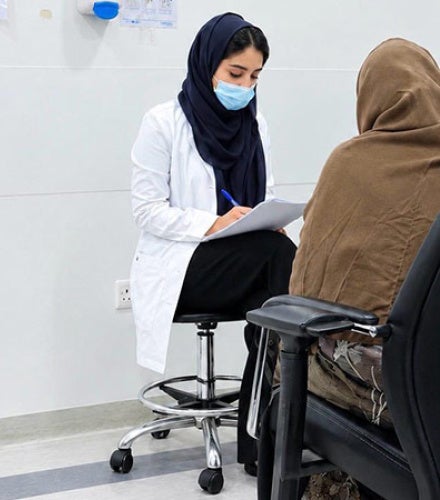
Five days a week, Aljohani meets with patients at a cardiac clinic in Jeddah, Saudi Arabia, to assess their understanding of written health information. She began collecting data this summer and expects to finish by year’s end.
She is waiting for the full sample before drawing conclusions about how health literacy, disease knowledge and self-care relate to quality of life. The findings could help nurses identify patients who need more support and improve patient education and discharge guidance—steps Dolansky said could reduce preventable hospital readmissions.
“We want to know what factors influence poor self-care,” Aljohani said. “We need to figure out all of these gaps.”
Bringing the work home
Aljohani came to CWRU in 2023, after earning a master’s degree in nursing education at Indiana University of Pennsylvania in 2017. A scholarship through her employer supported her doctoral studies.
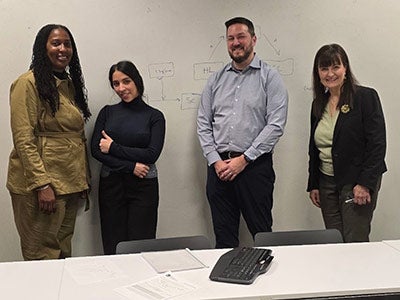
She was particularly drawn to Carolyn Harmon Still, PhD, the nursing school’s associate dean of research, whose work examines how people manage chronic conditions. Still became her advisor.

Working with Still and her dissertation committee has helped Aljohani develop the skills to design her study, collect and analyze data, and write about the results. Co-authoring papers with Still has also given her experience she plans to carry into her own research and teaching.
“Rania’s passion for improving care stands out,” said Dolansky, who is also a professor in the CWRU School of Medicine.
After completing her PhD, Aljohani hopes to continue collaborating with CWRU faculty, follow patients over time and test approaches to supporting self-care. Her dissertation is an initial step toward understanding what those approaches should address.
Her mother’s experience helped shape Aljohani’s interest in the decisions patients make between hospital visits. For someone standing on a scale each morning, managing heart failure involves understanding what a change in weight means and knowing when to seek help.
“Do they know when to contact their health care provider?” she asked.