From Mars rover crystals to machine learning: a CWRU alum’s AI built for materials manufacturing
A crystal Katie Colbaugh helped grow is currently sitting on Mars.
It rode there aboard NASA’s Perseverance rover, which touched down on the Red Planet in February 2021 and has been searching for signs of ancient life ever since.
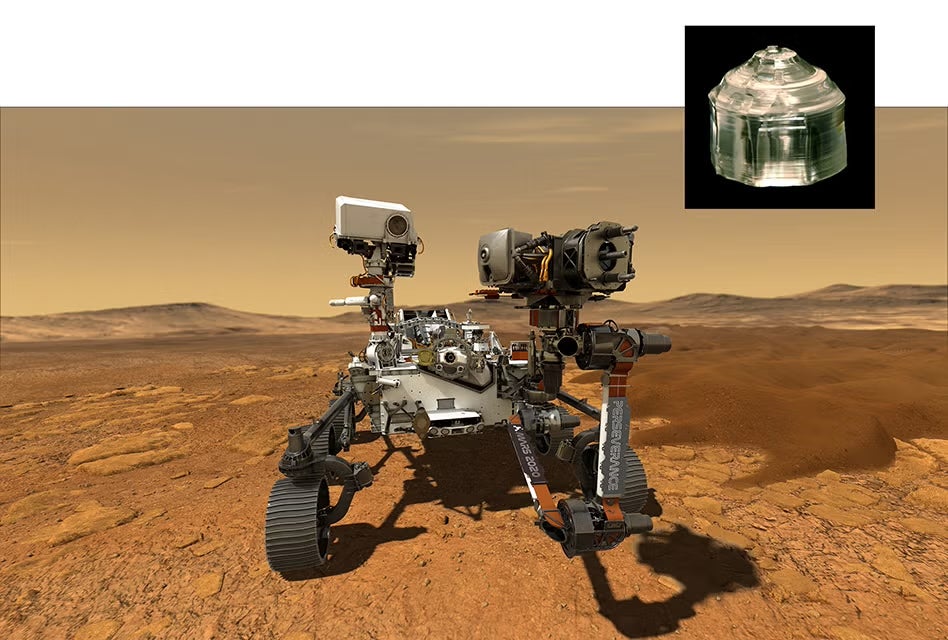
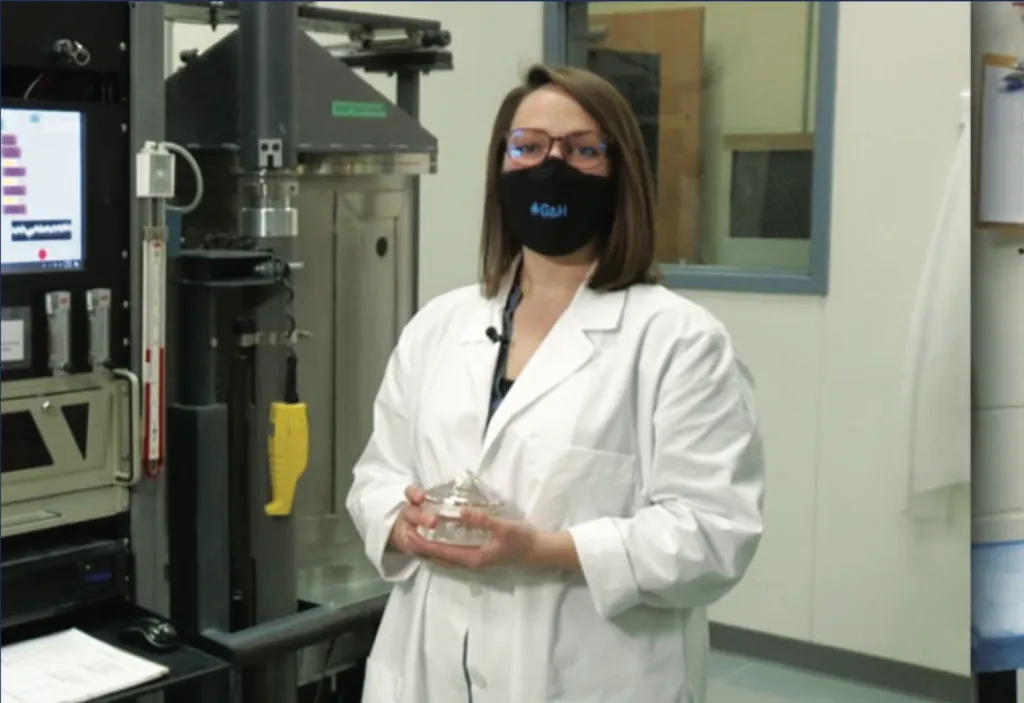
Colbaugh and her colleagues at Gooch & Housego—a Highland Heights, Ohio company that makes specialty crystals for lasers—grew the crystal by hand, a painstaking process that can take up to two years and unfolds inside chambers hotter than 1,000 degrees.
After nearly a decade growing crystals like that one, Colbaugh (CWR ’13, GRS ’15, materials science) launched Leucite in 2024—a software solution for material manufacturers to unlock the intelligence hidden in their production data—using machine learning to predict problems before they happen and transform how factories operate.
She had seen the cost of getting it wrong: wasted materials, months of delay, years of know-how walking out the door when a senior technician retired. Colbaugh left her job as a manager to build the technology, co-founding the company with industry veteran Petia Koutev.
Her path to founder started at Case Western Reserve University, where she arrived on a Presidential Scholarship, planning to become a doctor.
Undergraduate research in the Department of Materials Science & Engineering in the Case School of Engineering allowed her to realize her passion for the subject, and she stayed at the university for a master’s degree. Then, while working in the materials manufacturing industry, she earned a PhD in chemistry from Duquesne University.
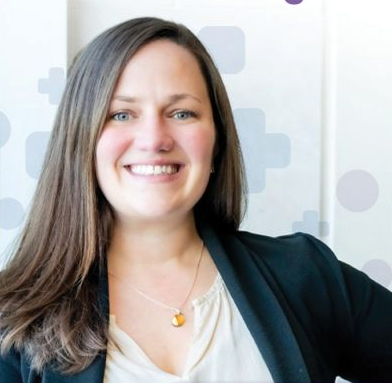
Her seven years at Gooch & Housego took her from intern to crystal growth and manufacturing manager. On the team were fellow CWRU alums: Matt Whittaker, PhD (CWR ’96; GRS ’00, ’07, materials science) and Robert Kidwell (CWR ’18), who worked alongside her on the crystals for the Perseverance mission to Mars.
She went on to lead the New Product Engineering team at Saint-Gobain Crystals and also teaches at CWRU as an adjunct professor.
Colbaugh credits CWRU’s entrepreneurial community—including LaunchNET and the Veale Institute for Entrepreneurship, and the connections she made through friends and her master’s advisor—for helping her make the leap from corporate leadership to founder.
In the conversation below, Colbaugh talks about what’s straining the materials industry right now, the tricky business of training AI on highly specialized processes, and what she’d tell a student thinking about a career in science and entrepreneurship.
What is the impact of your company, Leucite, and how did it start?
I began with almost a decade of experience in materials manufacturing, such as crystals and high tech-materials used for photonics, laser spectroscopy and medical devices.
I was an engineer and saw a lot of challenging constraints on the industry. I left my job as a manager to build the machine learning technology I wish I had.

How did you get your start growing a professional network to launch your idea?
I first started out at CWRU LaunchNET. I made numerous introductions through friends at the university and my master’s advisor, who connected me with a slew of people in Cleveland.
I did the JumpStart Trailblazer accelerator and the NSF I-Corps program at the University of Akron, where I also met knowledgeable people. I also met many admirable people who I reached out to based on my gut.
What advice do you have for students aspiring to pave a sustainable future in materials manufacturing as well?
My advice is to get as much experience as possible, which gives rise to passion and innovation. It’s not always corporate or the job you think you should have.
Staying curious and constantly exploring new areas of interest, interacting with new people, putting yourself in unexpected situations—and enjoying every moment of it, including maybe some discomfort—creates moments of insight and inspiration
I believe that materials scientists must have such breadth of knowledge; I’ve wired a PLC controller, written software, analyzed crystal structure defects, X-ray analytics, chemical analysis, mechanical strength testing, phase diagram analysis, written chemical and calculus equations to describe processes, thermal modeling software, built furnaces and so on.
But? I also teach yoga, and I run into so many interesting people and get insightful ideas while practicing. And I spent time working as a technician at an auto shop, which helped me learn how things work from a different perspective.
Have the fundamental knowledge down so you can carry it over into large-scale work. This is all fascinating to me, and has been enriched with a range of experiences.
What initially drew you to this field and how did experiences, resources or spaces in CWRU allow you to explore your interests?
I started out as a piano and biology major because I wanted to be a doctor. In my first year, I worked at the School of Medicine, then switched into biomedical engineering. CWRU offers so many research opportunities, and I worked in the neurological surgery imaging lab for the entirety of my undergraduate experience.
I did some research in the materials science department, too. I would encourage anyone to get involved with everything available on campus.
The co-op I did was extremely helpful for me to see industry applications in the orthopedic biomaterials company. During my master’s degree, we collaborated with Iowa State University, which led to my first job.
Again, the networking and human connection at [CWRU] provided a great foundation for learning.
What is a common hurdle that you think every entrepreneur faces?
There are so many it’s hard to think of one. Personally, I’m used to presenting a product in its final stages. Building a company involved extensive work in the early stages before the product was ready.
That was extremely challenging for me, because of the way I had worked in research. In the entrepreneurial journey, you work with unfinished ideas. So that can be exciting on some days—difficult on others.
What is the story behind your company name? What factors should students be considering when naming their own company?
Initially, I named the company Crystal Growth Solutions because I was so focused on that. I quickly realized it was not broad enough. We wanted a name with inspiration and clarity.
Leucite is a gemstone that forms after volcanic activity. We love that, because this is exactly what happens when you build a startup from scratch—lots of volcanic activity that will crystallize into something beautiful. It reflects the build-up of energy that leads to the product and the service we provide to the customer at the end—perfectly crystallized to meet their needs.
What do you feel is a pressing issue in the materials science field currently?
At the moment, supply chain and resource resiliency are major issues. The high prices of raw materials place pressure on the industry. A lot of metal alloys and high tech ceramics rely on rare earth materials that come from specific locations, which is disrupted further by supply chain problems.
Out of interest, if a problem is detected late, does that waste the raw materials put into the product?
It can, depending on what the process is. Sometimes you can, for example, melt and reform an alloy. If you’re looking for a specific microstructure or composition, sometimes the materials can’t immediately be reused. Recycling is critical, however extracting them at a pure level after they’ve been mixed poses a challenge.
The technical team usually has decades of hands-on empirical knowledge that is hard to train, transfer and replace. People are retiring, and losing members at any level can be detrimental, costing you years. That’s where machine learning can retain nuanced information about processes to expedite solving problems. Our goal is to provide a data based tool to back up their decisions.
Machine learning is critical to capture and incorporate the parameter changes to give predictive data in a helpful way.
How do you navigate challenges that arise from training your AI model to predict accurately?
Our models are trained on specific industrial data sets, so they’re built to incorporate physical phenomena and domain expertise within the company. My cofounder and I have 30-plus years of experience between us.
We’re not using LLMs or generative AI. We’re building tailored machine models based on processes we address. We can input equations but also knowledge of output variables, such specific material output properties, yield, or defects. We get 80 to 90 percent data accuracy on relatively small datasets. Our parameters are wildly different throughout and integrating them into a meaningful model is the core of what we do.
How do you maximize your outreach to your target audience? How can students work to connect with companies or consumers who are harder to access in the early stages?
That comes down to networking.
It’s easier to have a referral than to do cold online outreach via email. Reaching out personally or through a connection is important. Not many people, when asked for help, will reject you.
CWRU offers an amazing base of alumni, and there are so many opportunities to connect in-person with industry, through conferences, startup events, and tech meet-ups, in Ohio!
Karin Ong is a second-year student and an intern with the Veale Institute for Entrepreneurship