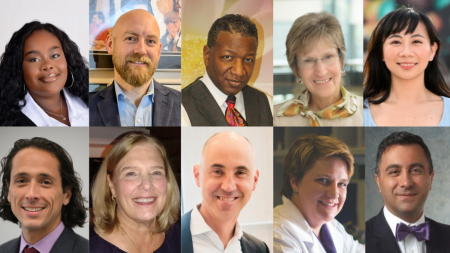
Meet four students who received Graduate Research Fellowship Program awards from the U.S. National Science Foundation
Four Case Western Reserve University students and five alumni are among those selected nationwide to receive Graduate Research Fellowships from the U.S. National Science Foundation (NSF) for the 2026–2027 academic year.
In total, 2,500 graduate research fellows were selected from a pool of nearly 14,000 applicants based on intellectual merits, broader impacts, and their potential to contribute to scientific innovation.
CWRU students Morgan Schuld, Jennifer G. D'Silva, Sara Santosh Desai and Cataldo Strangi received the Graduate Research Fellowship, which provides three years of financial support over five years. Hear more about their work below.
CWRU alumni award winners are: Kyle R Golobish (CWR ’23), Aniya Hartzler (CWR ’24), Niveda M Kasthuri (CWR ’25), Nikhila Balasubramaniam (CWR ’24), and Anjali Raju (CWR ’24). Since it was established in 1952, the program has supported more than 70,000 graduate research fellows.
In addition, six CWRU students and alumni were recognized with honorable mention, highlighting the university’s strong representation in the highly competitive graduate funding program. The CWRU students and alumni who received honorable mentions were: Soumyaa Das (CWR ’25), Rae Catherine Dugger (CWR ’25), Griffin Pardo (CWR ’26), Daniel Andrew Passmore (CWR ’26), Beckett Pierce (CWR ’24), and Zelda Cheng.
Morgan Schuld
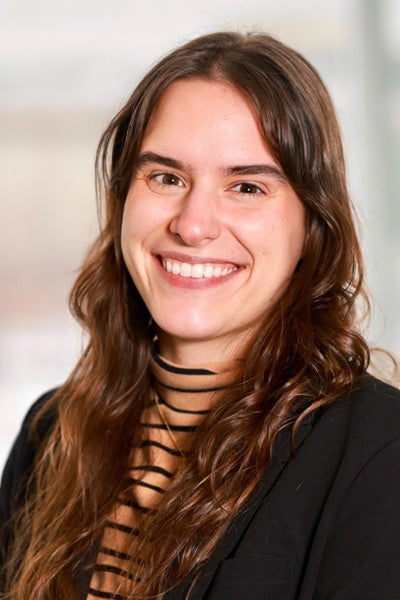
Program/School: PhD in Chemical and Biomolecular Engineering
Expected graduation year: 2029
Undergraduate degree: University of Toledo
Hometown: Rocky River, Ohio
Describe your research in a couple of sentences.
Rare earth elements (REEs) are essential for clean energy technologies and national security. REEs can be recovered from domestic mining wastewaters, but need to be separated from other competing cations. Current solvent extraction methods generate large amounts of organic radioactive waste. Membrane-based separations could reduce waste, but commercially available membranes cannot distinguish ions with similar properties. My work develops new polymer membranes that incorporate chemistries to selectively separate REEs from these competing cations. This approach could enable continuous, low-waste REE recovery from domestic waste and provide design principles for advanced materials to recover valuable metals from diverse aqueous sources.
How has CWRU supported your growth?
I am very lucky to have an extensive support network at CWRU, starting in the lab and extending to the Department of Chemical Engineering and the School of Graduate Studies. I feel wonderfully supported in my lab group with my principal investigator, Christine Duval, and my fellow lab members. Dr. Duval offers great guidance, encourages our individual development, and has created a positive lab culture. I genuinely look forward to coming to school each day. The Department of Chemical Engineering also fosters a great community and supports our academic and professional development as graduate students. Finally, through a Lubrizol Fellowship, I am part of a cohort guided by the School of Graduate Studies, where we are developing career competencies beyond our research.
What will this fellowship help you accomplish?
Even completing the National Science Foundation Graduate Research Fellowship Program (NSF CRFP) application felt like a huge accomplishment in and of itself. With the solicitation announced so late and the general uncertainty in the scientific community right now, I was really proud just to submit an application. The process was an extremely valuable exercise in iterative writing and self-reflection, so I was grateful to have the opportunity to practice these key skills with constant helpful feedback from Dr. Duval.
The support from the program will help me advance my research as well as my personal and professional development. Being able to participate in the program has also given me greater confidence in my ability to contribute meaningfully to the fields I care about: wastewater treatment, membrane separations, and critical mineral recovery.
Jennifer G. D'Silva
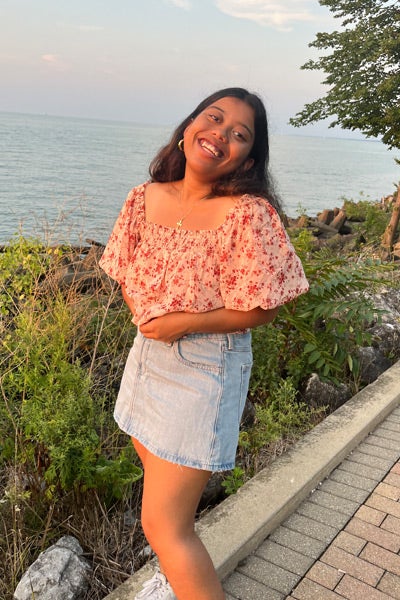
Program/School: PhD in Biomedical Engineering
Expected graduation year: 2030
Undergraduate degree: Biomedical engineering
Hometown: Portland, Oregon
Describe your research in a couple of sentences.
I am a first-year biomedical engineering PhD student studying how nanoplastics interact with neural tissue and contribute to neuroinflammatory responses in the brain. My work focuses on developing in vivo models of cortical nanoplastic exposure to investigate mechanisms of microglial activation, astrocyte reactivity, blood-brain barrier disruption, and neuronal health over acute and chronic time scales. My research integrates concepts from biomaterials, neural engineering, and spatial biology to better understand how emerging environmental contaminants may affect the central nervous system. Broadly, I hope this work will improve our understanding of brain-material interactions and inform the development of safer biomaterials and neural technologies.
How has CWRU supported your growth?
CWRU has supported my growth by providing a collaborative environment that encouraged both independent thinking and hands-on learning throughout my undergraduate and graduate training. As an undergraduate in biomedical engineering, I benefited from extensive experiential learning opportunities that allowed me to engage in research early, develop technical laboratory skills, and apply classroom concepts to real scientific problems. Through mentorship from faculty, graduate students, and collaborators, I am gaining confidence in experimental design, scientific communication, and problem-solving. These experiences helped to shape my interests in neural engineering and biomaterials research and motivated me to pursue a PhD degree at CWRU. Continuing at CWRU for graduate school has allowed me to further develop as a researcher while continuing to work alongside supportive mentors and peers who challenge me intellectually and encourage my long-term professional and personal growth.
What will this fellowship help you accomplish?
This fellowship would provide critical support as I continue developing as an independent researcher in biomedical engineering. Having this support, I can devote greater focus to advancing my research on nanoplastics and neuroinflammation, while expanding my technical skills in neural engineering, imaging, and quantitative analysis. Beyond supporting my academic training, the fellowship would also provide opportunities to attend conferences, collaborate with researchers across disciplines, and communicate my work to broader scientific audiences. This experience would help me build the foundation needed for a long-term career in translational neuroengineering research.
Sara Santosh Desai
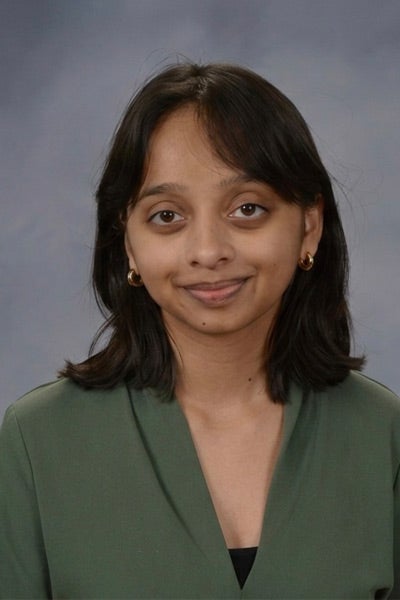
Program/School: College of Arts and Sciences
Expected graduation year: Spring 2026
Undergraduate degree: Biochemistry.
Hometown: Mumbai, India
Describe your research in a couple of sentences.
My project focused on developing a portable biosensor for the detection of heavy metals like cadmium, arsenic, and mercury in water. Recently, increasing industrial pollution has resulted in widespread heavy metal contamination of water bodies. Consumption of these contaminated fluids causes severe damage to our cardiovascular and nervous systems. Most biosensors used for detecting heavy metals currently use bacterial whole cells, which makes them environmentally sensitive and hard to transport. Our biosensor combats these issues by using a portable cell-free format with fluorescent molecules that provide an easy-to-read output.
How has CWRU supported your growth?
Through URO’s Provost Summer Undergraduate Research Grant, I was able to work full-time in the Mathur Nano Lab over the summer before my junior year. This experience helped me solidify my interest in pursuing a PhD. Additionally, my biochemistry advisor pointed me toward external research and development opportunities, such as the Goldwater Scholarship, which the Undergraduate Advising Support Office helped me apply for. My time as part of the CWRU Undergraduate Biochemistry Society helped me explore different research avenues and identify my interest in infectious disease mechanisms.
What will this fellowship help you accomplish?
Upon graduation, I will be pursuing a PhD in Cellular and Molecular Biology. The NSF GRFP helps support my research throughout the course of my graduate education and introduces me to a community of passionate researchers. During the next five years, I aim to investigate infectious disease mechanisms.
Cataldo Strangi
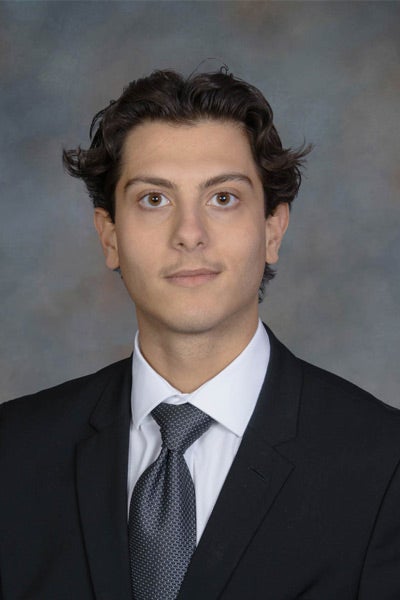
Program/School: Biomedical Engineering
Expected graduation year: Spring 2026
Undergraduate degree: Biomedical engineering - biomechanics
Hometown: Cleveland, Ohio
Describe your research in a couple of sentences.
My research sits at the intersection of biomedical engineering, mixed reality, and clinical translation. At University Hospitals, I contribute to large-scale cardiovascular clinical trials focused on chronic total occlusions: coordinating international studies on the long-term effectiveness of drug-coated balloon interventions, developing applications that streamline data exchange between patients and care teams, and translating clinical needs into engineering-driven research and grant proposals. In parallel, at the Interactive Commons at Case Western Reserve University, I develop mixed-reality applications using HoloLens to enhance education across disciplines, integrating holographic duplication, sensor-embedded systems, and real-time motion tracking to bridge digital and physical learning environments.
How has CWRU supported your growth?
Case Western Reserve University has supported my growth through exceptional mentorship, abundant research opportunities, and a deeply collaborative environment. Faculty have challenged me to think critically and pursue ambitious ideas, while guiding me to make them tangible. I am especially grateful to Debra McGivney, Mark Griswold, and Bernardo Cortese, whose mentorship has shaped both my technical development and professional direction. Through CWRU’s extensive resources, from the Interactive Commons to clinical research partnerships, I’ve been able to engage in projects spanning mixed reality, biomechanics, and cardiovascular medicine. These experiences have not only strengthened my engineering skills but also taught me how to translate ideas into real-world impact. CWRU has given me the tools, network, and confidence to grow as both a researcher and a future engineer.
What will this fellowship help you accomplish?
The National Science Foundation Graduate Research Fellowship Program provides multi-year financial support to graduate students pursuing research-based degrees, enabling greater independence in academic and research decisions. This fellowship will allow me to pursue a PhD in Biomedical Engineering with the flexibility to choose labs and projects based on impact rather than funding constraints.
With this support, I will continue advancing my work in human biomechanics, developing translational engineering approaches that directly address clinical challenges. By studying how the body moves, adapts, and recovers, I aim to design solutions that improve mobility, rehabilitation, and long-term patient outcomes. The fellowship will give me the freedom to pursue interdisciplinary collaborations, take on ambitious research questions, and focus on creating technologies that meaningfully improve the lives of real people, which will guide my future career.