Meet new faculty at Case School of Engineering
The students in Case Western Reserve University’s undergraduate Class of 2029 aren’t the only new faces on campus this semester. We also welcomed new faculty members across the university, including at Case School of Engineering.
Read on to get to know some of those new faculty members, who shared their thoughts on their careers and research endeavors.
Answers have been lightly edited for length.
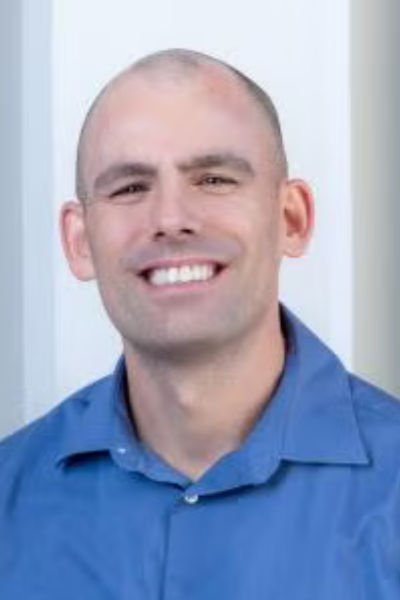
Brian Krupp
Assistant Professor of Computer Science
Brian Krupp focuses on how mobile features and the Internet of Things (IoT) can benefit the community, including how we can better understand what mobile applications do with our data. Krupp leads the Computing and Society Lab (CASLab) at Case Western Reserve University, which focuses on this research.
What are your specific teaching and/or research areas and interests?
I teach a variety of courses within the department including computer security, programming language concepts and iPhone application development. I am also developing a new course, secure software development. My research primarily focuses on the intersection of computing and society and how we can have a positive impact on society with computing. I am the faculty advisor of CASLab, which is a primarily undergraduate research lab that focuses on this type of work. More information on the lab's work can be found on their website.
What do you look forward to at Case Western Reserve University?
I look forward to engaging with students and helping them achieve their goals, which can happen in the classroom, through research, advising, etc. As corny as it may sound, student success is what really drives me. Nothing brings more joy to my work than a student landing the job they wanted, publishing a research paper, or just understanding a topic that took a little more work than they anticipated. I also look forward to connecting with my colleagues and interacting with the campus community as a whole.
Do you have any personal goals, hobbies, family interests that you would like to share?
I love to go hiking, play games with my kids, and reconnect with friends. I also enjoy doing work on my house and yard, and I like to cook. I've also recently started making my own sauerkraut because of recent research on the benefits of fermented foods for gut health, so if you are interested in making your own, stop by, I might have some tips!
What’s one piece of advice you have for students?
My one piece of advice for students would be to embrace the journey with a growth mindset and don't just look to getting the diploma. These years at CWRU can be formative, if you allow it. Too often I see students just trying to add things to their resume or hyper focused on the grade. In my years of teaching, the students that embrace the journey are not only more successful, but also seem to be more happy in life.
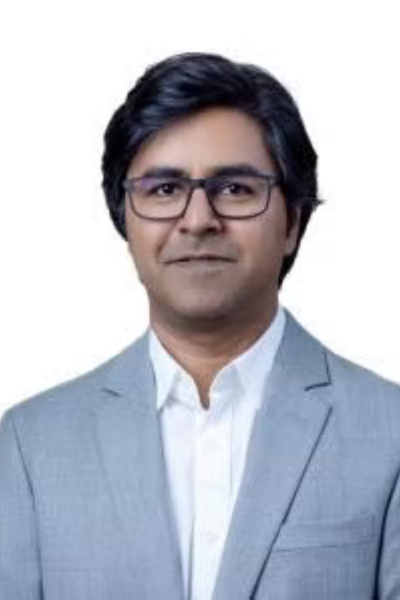
Neamul Khansur
Assistant Professor, Department of Materials Science and Engineering,
Neamul Khansur studies ceramics, multimodal energy conversion and storage materials, room temperature fabrication of ceramic films, X-ray and neutron diffraction and in situ structural characterization.
What are your specific teaching and/or research areas and interests?
My teaching and research interests include processing-structure-property relationships in advanced ceramic materials for energy conversion and storage application. Currently, I am teaching fundamentals of materials science and engineering for graduate students, and will offer a materials laboratory for undergrad where I introduce processing, microstructure and property relationships of metal alloys and ceramics.
What do you look forward to at Case Western Reserve University?
I look forward to involving undergraduates in my research group and supporting and growing their research interests, with specific focus on fundamental understanding of functional properties of ceramic materials for advanced applications.
Do you have any personal goals, hobbies, family interests that you would like to share?
As a family we like hiking and cycling. I like to play cricket and badminton. Although I cannot play cricket regularly, I play badminton every week at least for two hours.
What’s one piece of advice you have for students?
Find a balance between thinking and doing.
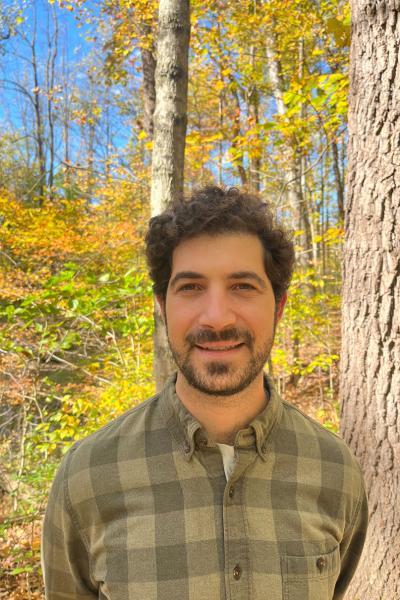
Samuel Root
Assistant Professor of Macromolecular Science & Engineering
Samuel Root’s teaching focuses on the intersection of experiment and theory to investigate multiscale processes involving complex interfaces in functional polymer composites, with applications in energy sustainability, healthcare and robotics.
What are your specific teaching and/or research areas and interests?
This semester I have launched a new upper-level elective course focused on the electrical properties of polymer materials. This course builds on my research interests in the field of soft electronics, where the unique characteristics of polymers are leveraged to develop innovative devices for emerging robotics, biomedical and energy applications.
What do you look forward to at Case Western Reserve University?
I am looking forward to leading a research group, engaging with the talented students at CWRU and collaborating with other faculty on interdisciplinary research.
Do you have any personal goals, hobbies, family interests that you would like to share?
Outside of my academic pursuits, I enjoy traveling, spending time outdoors and reading books about history.
What’s one piece of advice you have for students?
My advice is to ask lots of questions, work hard but make sure to rest, and be kind to those around you.
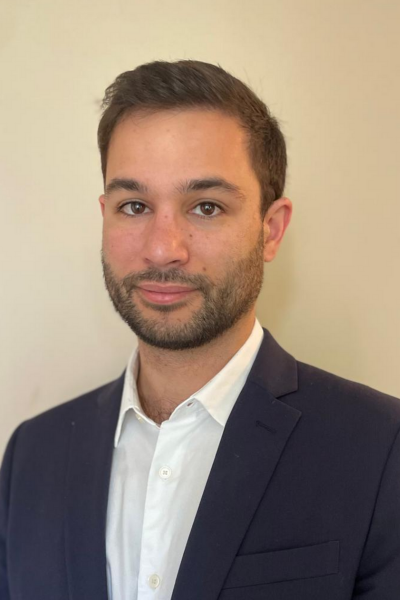
Zachary Patterson
Assistant Professor in Mechanical and Aerospace Engineering
Zach Patterson's overarching research thrust is to develop robot systems that can operate with stronger safety guarantees in sensitive settings. Most work on this topic currently focuses on algorithmically guaranteed safety.
While Patterson works in this area, the basic physical properties of the robot ultimately provide constraints on what safety means and how strict the algorithm must be. Therefore, he is building robots that are designed with these algorithms in mind in order to maximize their effectiveness. The end goal is to create robots that, like humans, are not afraid of bumping into the world in unexpected ways.
What are your specific teaching and/or research areas and interests?
I am a researcher studying intelligence, both algorithmic and physical. My expertise is in robotics, control theory and dynamical systems. In particular, much of my ongoing research focuses on the incorporation of physical and algorithmic compliance into robots, with the goal of producing systems that can more naturally, gracefully and safely interact with the world around them.
My teaching interests are in control, robotics, sensors and machine learning. Currently I am teaching mechanical engineering measurements laboratory and in the spring I will be teaching nonlinear dynamics and control.
What do you look forward to at Case Western Reserve University?
I am thrilled to join Case Western Reserve and especially my department because of the strong bioinspired robotics community here. I am also excited about the possibilities for cross-disciplinary collaboration at the Human Fusions Institute, particularly with an eye towards healthcare applications, an area of particular strength for Case Western Reserve and the city of Cleveland.
Do you have any personal goals, hobbies, family, interests that you would like to share?
I am originally from Western PA and am a proud child of the rust belt. Although I do root for the Steelers (please don't hold that against me). Outside of work I also enjoy playing piano, reading and exploring Cleveland's vibrant brewery scene.
What’s one piece of advice you have for students?
Be humble and don't be afraid to ask questions. Intellectual humility and curiosity will get you a long way. I don't have all the answers and neither does anybody else.
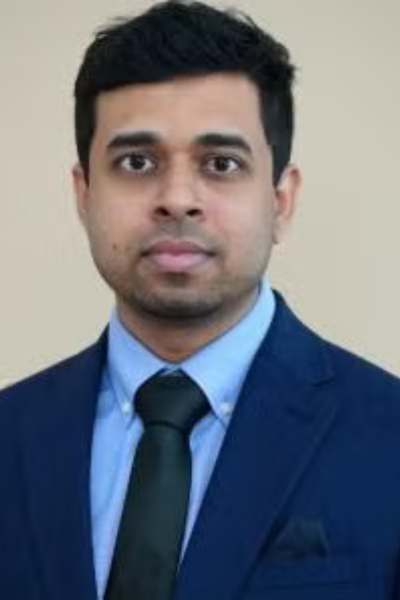
Sumon Biswas
Assistant Professor, Department of Computer & Data Sciences
Sumon Biswas joined Case Western Reserve University in fall 2024 as an assistant professor in the Department of Computer and Data Sciences. His research sits at the intersection of software engineering and AI, with a focus on building responsible, reliable LLM-based systems.
Before coming to CWRU, he was a postdoctoral researcher at Carnegie Mellon University and earned his PhD in computer science from Iowa State University.
What are your specific teaching and/or research areas and interests?
I work where software engineering meets AI, with a focus on building responsible, trustworthy AI systems. My group blends formal and empirical methods to improve fairness, safety, and reliability across end-to-end machine learning and LLM-based workflows. In recent work, we’ve been looking at how to make AI systems and Large Language Models more auditable and easier to integrate into real software ecosystems.
On the teaching side, I emphasize reproducible, engineering-grade practice in responsible AI and software engineering. My courses focus on practical learning—i.e., project-based work, team collaboration and building end-to-end prototypes—so that students learn how to turn principles into working systems.
What do you look forward to at Case Western Reserve University?
Building a vibrant, collaborative lab that bridges computer and data sciences with partners across the College of Arts and Sciences, the School of Medicine and our hospital ecosystems. I’m excited to mentor students on rigorous, reproducible research; to co-create open-source tools the community can use; and to contribute to CWRU’s leadership in trustworthy, engineering-grade AI.
Do you have any personal goals, hobbies, family, interests that you would like to share?
Outside the lab, I enjoy exploring Cleveland’s parks and museums, trying new coffee spots and tinkering with open-source workflows that make everyday research smoother. A current personal goal is to grow an inclusive mentoring network that helps students translate research into real-world impact.
What’s one piece of advice you have for students?
Treat your ideas like software: version-control them, test them and iterate in public. Ask clear questions, write down assumptions and build small end-to-end demos early. Excellence follows consistent, honest feedback loops—seek them out and enjoy the process.