Four Case Western Reserve University researchers have joined the ranks of the National Academy of Inventors (NAI) Senior Members, a program recognizing success in producing and commercializing technologies that have brought—or aspire to bring—real impact on society.
Jonathan Karn, Jacob G. Scott, M. Hassan Najafi and Steve Majerus join the 2026 NAI Class of Senior Members, which is composed of 230 emerging inventors from 82 NAI institutions across the globe.
“It’s truly an honor to see our faculty recognized by the NAI,” said Michael Oakes, executive vice president for research and economic development. “Their discoveries don’t just advance science. They make a tangible difference, turning research into breakthroughs that improve lives and transform communities. This recognition underscores the power of innovation to address the challenges facing our world.”
Launched in 2018, the NAI senior member recognition program now has 945 senior members in total. The 2026 class of senior members will be inducted at NAI’s annual conference, taking place June 1-4 in Los Angeles, Calif.
Learn more about CWRU’s new NAI senior members below.
Jonathan Karn

Jonathan Karn, PhD, is a Distinguished University Professor, Reinberger Professor, chair of the Department of Molecular Biology and Microbiology at the School of Medicine and a globally recognized leader in HIV molecular biology and viral transcription research. Since 2008, Dr. Karn has directed the Rustbelt Center for AIDS Research, strengthening collaborative HIV research across institutions.
Karn’s research has fundamentally reshaped the understanding of HIV latency—the mechanism that allows the virus to persist despite antiretroviral therapy. His discoveries in transcriptional control and viral persistence have opened new avenues for HIV cure strategies. Most recently, he’s patented a novel approach to measuring the latent HIV reservoir in clinical samples—an essential tool for monitoring patients and evaluating cure-directed therapies.
Earlier innovations include foundational contributions to high-throughput DNA genotyping technologies developed with Orchid (later acquired by Labcorp Holdings Inc.) and partly assigned to Beckman Coulter Inc. In 1997, he founded RiboTargets, a pioneer in RNA-targeted drug discovery now part of Ligand Pharmaceuticals, Inc.
Steve Majerus

Steve Majerus, PhD (CWR ’08; GRS ’08, ’14, electrical engineering and applied physics), is an assistant professor in the Department of Electrical, Computer and Systems Engineering at Case School of Engineering and serves as deputy director of engineering and innovation at the Advanced Platform Technology (APT) Center of the U.S. Department of Veterans Affairs (VA).
His research focuses on implanted sensors and closed-loop systems to restore lost bodily function, including using neuromodulation to control urinary incontinence or hypertension. These approaches, which aim to adjust treatment in real-time to a patient’s unique needs, are especially relevant to individuals with spinal cord injuries or neurological disorders.
Key technologies invented by Majerus are being commercialized by two companies in the United States. For example, the Glean Urodynamics System—a catheter-free diagnostic tool for urinary incontinence—began nationwide clinical use in July 2025.
M. Hassan Najafi
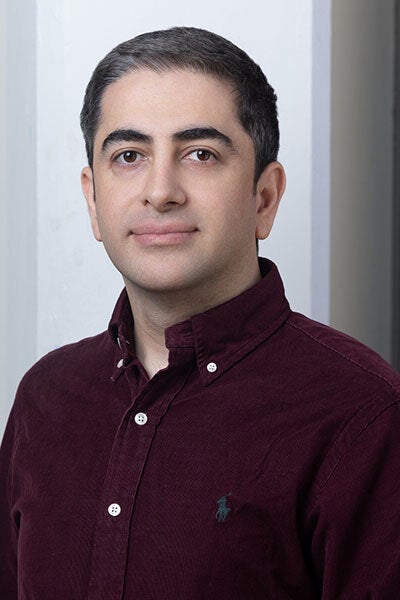
M. Hassan Najafi, PhD, is an associate professor in the Department of Electrical, Computer, and Systems Engineering, where he directs the Emerging Computing Technologies (ECT) Laboratory.
His current research focuses on designing energy-efficient and robust hardware for artificial intelligence (AI) and edge sensing. His research work is marked by pioneering advances in stochastic computing, unary computing, hyperdimensional computing and low-power VLSI design. His issued patents cover technologies now recognized as milestones and new directions in probabilistic and time-domain signal processing.
Najafi’s work has demonstrated tangible hardware that delivers significant reductions in area, power and energy. This enables longer battery life and lower device cost for healthcare wearables, noise-tolerant processors and edge AI.
Jacob Scott

Jacob G. Scott, MD (MED ‘08), is a professor of medicine and physics at the College of Arts and Sciences and the School of Medicine; and a board-certified clinical (radiation) oncologist and established NIH investigator working at Cleveland Clinic. He is a veteran of the US Navy submarine force turned academic physician-scientist. Scott is also co-director of the Center for AI Enabling Discovery in Disease Biology (AID2B) at CWRU.
His lab pursues research decomposing the complexity of cancer using mathematical modeling and the biological and clinical validation of these models. With an educational background spanning physics, medicine, mathematics and engineering, Scott has a unique perspective on cancer and systems biology. He communicates and collaborates with professionals across many disciplines.
Scott also works in the space of mathematical radiation biology, where he’s collaborated with partners to pioneer the concepts of the genomic adjusted radiation dose (GARD) and temporally feathered radiation therapy (TFRT). His commercialization efforts have been largely focused in this space. Most of his patents are in radiation planning/radiation genomics, which he’s working to bring to the mainstream through industry partnerships.