

An oral history: The School of Dental Medicine has cared for the local community for more than a century
It was 1923, and Western Reserve University dental students were busily seeing patients. Cleveland’s population was nearing 1 million, and access to dental care was scarce. The university’s dental clinic was one of the best options, particularly for poor, underserved populations—which meant demand was high.
“Dental operations are performed daily, except Sunday,” boasted an annual catalog.
More than 7,000 patients were treated at the clinic that year, a service that provided both patient care and vital hands-on experience for students. By then, community engagement had long been integral to the dental program, which launched in 1892.
It was part of a broader public-health vision: that dental services should be provided in the community, not just in the clinic, and that educating future dentists and caring for local residents were intertwined responsibilities.
“Oral healthcare is an integral part of overall healthcare—and we have an obligation to help our community be healthier,” said Manish Valiathan, DDS (DEN ’99, ’02), associate dean for clinical affairs at Case Western Reserve University School of Dental Medicine. “Many of our patients come from this ZIP code [where the clinic is] and the adjacent ZIP codes, so there is a definite impact we’re having within the community.”
Through the decades the programs and technology have evolved—but the commitment has remained steadfast.
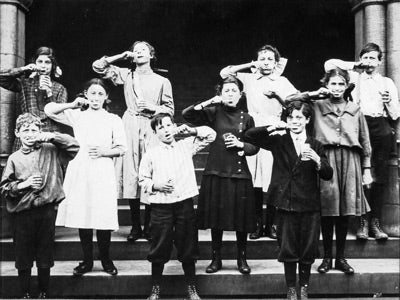
1910: Attention… BRUSH!
A toothbrush drill in 1910 at Marion School in Cleveland. A year earlier, members of the dental school community organized local dentists to visit classrooms and care for children in an impoverished neighborhood.
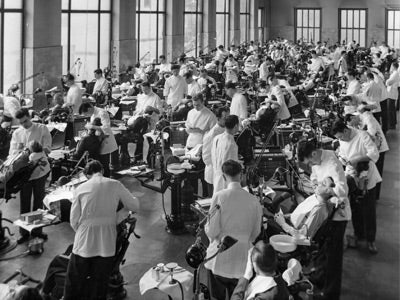
1940s: Dental care for the community
In the 1940s and 1950s, students completed required clinical hours by caring for patients referred by community organizations.
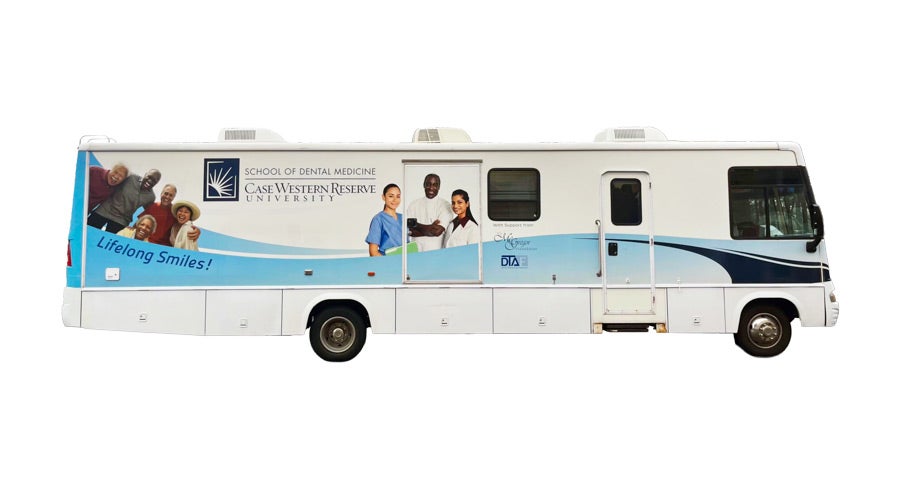
1960s: On the move
The dental school was spearheading mobile and home-based dental care, bringing portable equipment to seniors and homebound patients and establishing a tradition of meeting patients where they are. A similar tradition continues with the school’s Geriatric Dentistry Program—Lifelong Smiles, which, since 2015, has brought dental services—including exams, X-rays, cleanings and fillings—to adult day centers and assisted-living facilities.
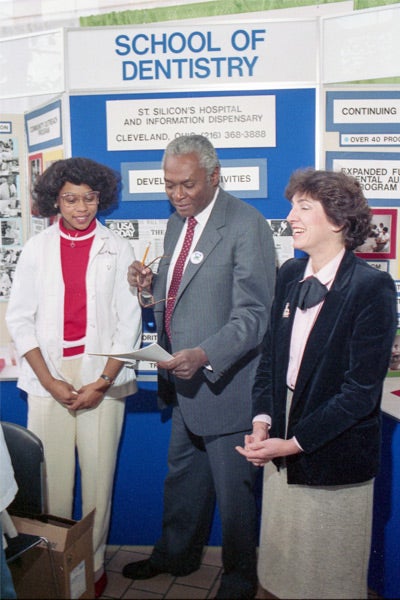
1980s: Serving the underserved
The dental school sent students into Cleveland Metropolitan School District’s public elementary schools to apply sealants to the teeth of underserved children—a program that continues today.
That was a life-changing experience for Kristin Williams. “When we went into the schools, we saw rampant decay and abscesses in children who had never seen a dentist,” said Williams, DDS, (DEN ’89; GRS ’05, public health). “I had never seen anything like it. That was the moment it became impossible to look away.”
Williams (pictured right when she was a dental student) later returned to the school as a faculty member and now serves as the associate dean for admissions and student affairs—and heads the initiative known as the Healthy Smiles Sealant Program. “I realized this wasn’t just a program, it was something that had to exist,” she said. “Without it, these kids would simply continue to fall through the cracks. And I wanted to be a part of making that difference.”
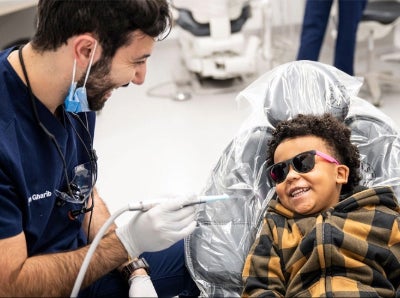
2003: Giving kids care and smiles
In 2003, the school began participating in the national Give Kids a Smile Day, providing free dental care to children from underserved areas and school districts. More than 20 years later, the event continues.
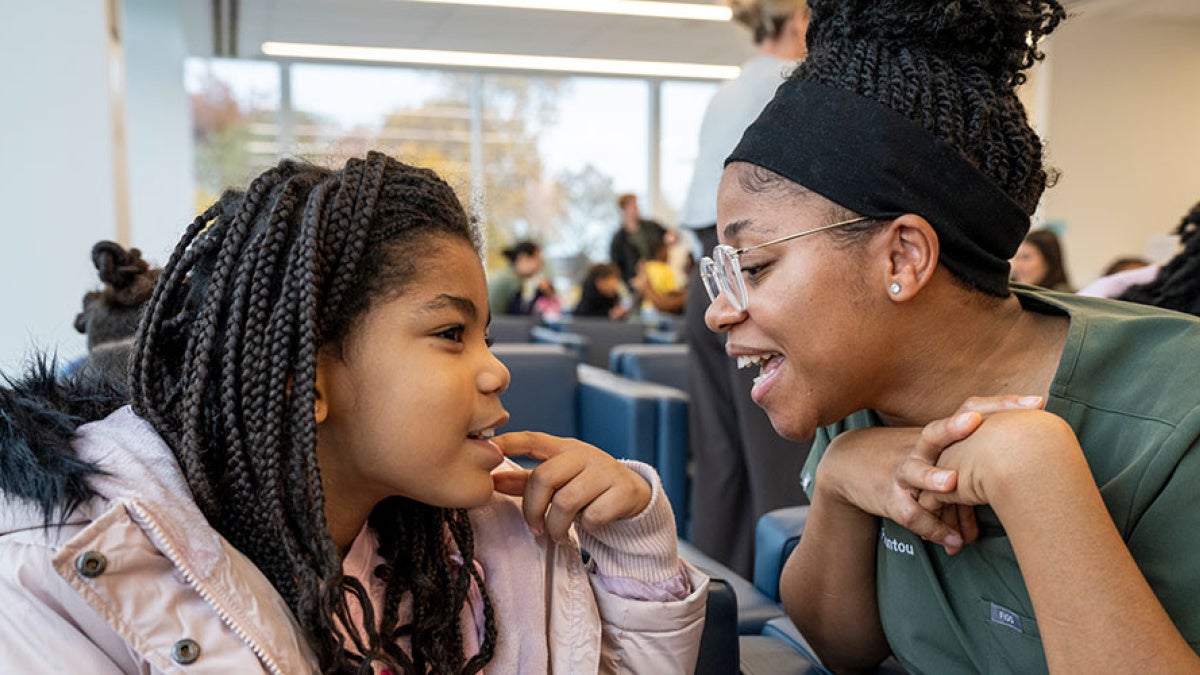
“Seeing nervous kids leave smiling and confident was such a meaningful experience,” said fourth-year dental student Kiani Mariani, who provided care at the annual event this past November. “Community dentistry reminds me that healthcare should be accessible and compassionate. It’s about building trust and supporting families in our community.”
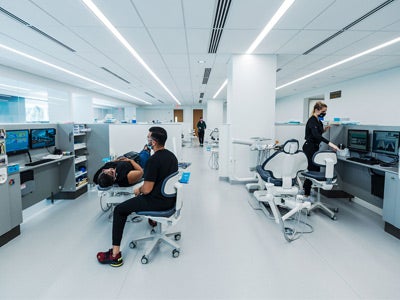
2019: A new home
The School of Dental Medicine Dental Clinic moved to a new building on the Health Education Campus of CWRU and Cleveland Clinic. It has state-of-the-art equipment over three floors and a prominent location on Chester Avenue, making it convenient and accessible to the surrounding community. Patients receive all the standard types of dental care. In addition, a specialized craniofacial orthodontic program connects multidisciplinary teams to care for children with complex congenital conditions. Students also provide exams for military veterans and schoolchildren at special events.
Beyond the clinic’s walls, programs at community centers and schools continue to expand, providing services to underserved populations.