No matter their field of study, Case Western Reserve University graduate students are routinely challenged to consider new ways of thinking and examine innovative approaches to age-old questions, often making significant scholarly contributions along the way. That couldn’t happen without exceptional instruction from the institution’s distinguished faculty.
Each spring, the university recognizes the impact faculty have by honoring individuals with the John S. Diekhoff Awards for Excellence in Graduate Teaching and Mentoring. Named in honor of John S. Diekhoff, who served at the university in several capacities from 1956 to 1970, the awards were first created in 1978 to honor distinguished teaching and later expanded in 2009 to include mentorship.
Faculty recipients will be recognized at the School of Graduate Studies diploma ceremony Friday, May 15.
Those selected for the mentoring awards this year are:
- Radhika P. Atit, PhD, professor in the Department of Biology; and
- Brian Taylor, PhD (CWRU ’05; GRS ’09,’12, mechanical engineering), assistant professor in the Department of Mechanical and Aerospace Engineering.
This year’s teaching honorees are:
- Chao-Pin Hsiao, PhD, associate professor at Frances Payne Bolton School of Nursing; and
- Jessica Taylor, PhD, associate professor in the Department of Physiology and Biophysics and associate director of the Master of Science in Medical Physiology program at the School of Medicine.
Read more about their work with graduate students.
John S. Diekhoff Awards for Excellence in Graduate Mentoring
Radhika P. Atit, PhD
Professor, Department of Biology
College of Arts and Sciences
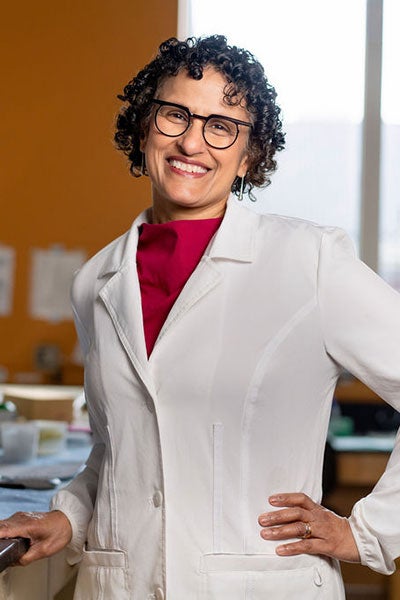
When it comes to her work studying topics such as skin fibrosis and craniofacial bone development, Radhika Atit, PhD, is as passionate about student success as she is about the subject matter. The professor of biology at Case Western Reserve University has spent two decades shaping graduate education through a mentoring philosophy grounded in curiosity, trust and individualized support—an approach that has earned her the John S. Diekhoff Award for Graduate Mentoring.
Since joining the university in 2005, she has guided more than a dozen doctoral students—building a track record defined by both scholarly achievement and the lasting relationships she fosters with those she mentors.
For Atit, mentorship is not confined to scheduled meetings or formal instruction—it is a constant, intentional practice. “It comes naturally to me and I am a product of great mentors,” Atit said. “It’s a way of life.”
She emphasized that students learn as much from observing how she navigates challenges as they do from direct guidance, and describes her mentorship as both active teaching and continuous role modeling.
Her approach has evolved over time. Initially focused on structured benchmarks, Atit quickly recognized that effective mentoring requires flexibility and understanding of each individual.
“It’s not about the deliverables, it’s about the process,” she said. This philosophy has led her to prioritize relationship-building, meeting regularly with each student and tailoring her guidance to their unique strengths, goals and needs.
Students are quick to applaud the impact of this approach.
“She is a very supportive and thoughtful mentor who encourages independence while providing clear guidance when needed,” wrote one nominator. “She values careful experimental design and clear communication, and she takes time to help students organize their ideas into well-structured projects.”
In her lab, Atit works alongside students studying skin fibrosis and craniofacial bone development, using mouse genetic tools to investigate how extracellular matrix and lipid depletion influences tissue growth and disease. She is known for fostering a supportive and inclusive culture in the lab where students feel valued both as scientists and as individuals.
“As an international student so far away from home, Dr. Atit has always treated me like her family—we even call her ‘lab mom,’" a nominator wrote. “She taught me how to write and think creatively, and has helped mold me into the scientist I am today.”
For Atit, the ultimate goal is helping students grow into empowered, independent thinkers—an investment that extends well beyond graduation.
“I really love helping young people find their voice,”Atit said, “helping them find their confidence and the best version of themselves.”
Brian Taylor, PhD (CWRU ’05; GRS ’09,’12, mechanical engineering)
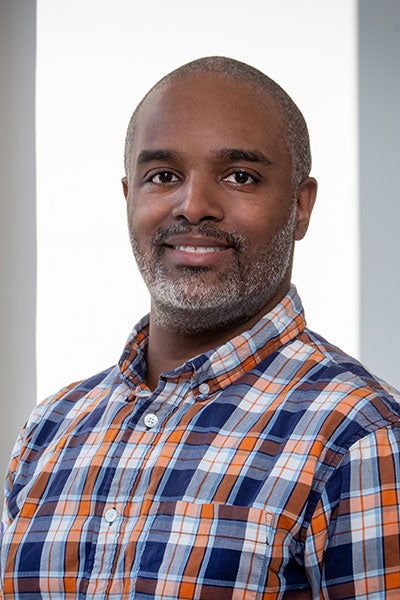
Assistant professor, Department of Mechanical and Aerospace Engineering
Case School of Engineering
A triple alumnus, Brian Taylor, PhD, knows what it takes to succeed at Case Western Reserve University as a student. Now, as an assistant professor of mechanical and aerospace engineering, he’s proven himself as a dedicated and highly effective graduate mentor, too.
Since joining the university in January 2023, Taylor (CWRU ’05; GRS ’09,’12, mechanical engineering) has built a reputation for fostering a supportive, collaborative environment that extends beyond the traditional boundaries of a research lab—just one reason he is being honored with the John S. Diekhoff Award for Graduate Mentoring.
Central to Taylor’s approach is a commitment to meeting students where they are—both academically and personally. “The mentorship happens where it needs to happen,” he said, noting that conversations may unfold in a lab, an office or even during a walk across campus.
In his lab, Taylor leads research in bio-inspired robotics, drawing on principles from biological systems and often exploring how organisms sense and navigate their environments. Student nominators consistently emphasized Taylor’s ability to cultivate a thriving intellectual network within his lab, also noting his infectious enthusiasm for the work being done there.
“Dr. Taylor is highly enthusiastic about mentoring and research in bio-inspired control, and encourages students to generate novel ideas," one nominator wrote. "His active interest in his students fosters a sense of community that inspires team members to support one another and contribute beyond their own research."
Taylor’s mentoring philosophy is influenced by his own experiences as a graduate student at Case Western Reserve. During a difficult period in his life, he saw firsthand how a network of faculty and staff came together to support him. That experience now informs his efforts to ensure students feel equally supported. “I want them to know they’re not going to fall,” he said. “We’re going to catch you.”
That approach has not gone unnoticed by Taylor’s students.
“He understands that students face both academic and personal challenges,” one wrote, “and shows that they do not need to face these struggles alone.”
For Taylor, the recognition that comes with this award is meaningful not for its visibility, but for what it represents.
“You don’t do things like this hoping it’s going to get you press,” he said. “But seeing that someone recognizes what you’re trying to do—it lets you know you’re doing something right.”
John S. Diekhoff Awards for Excellence in Graduate Teaching
Chao-Pin Hsiao, PhD
Associate professor
Frances Payne Bolton School of Nursing
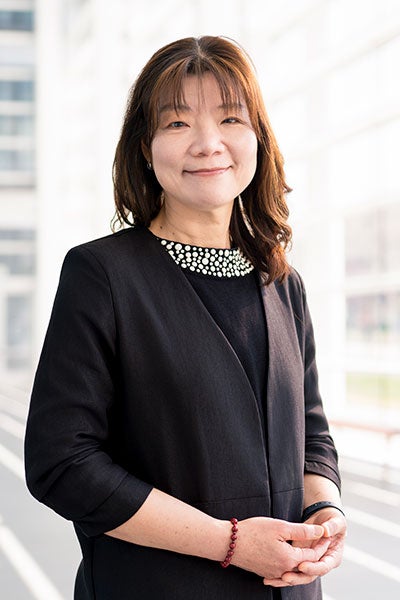
For Chao-Pin Hsiao, PhD, teaching and research are deeply intertwined—and grounded in commitments to improving patient care and empowering the next generation of nurse leaders. That dedication has earned her the 2026 John S. Diekhoff Award for Excellence in Graduate Teaching, an honor that reflects both her influence in the classroom and the lasting impact she has on her students.
Hsiao, associate professor at Frances Payne Bolton School of Nursing, came to Case Western Reserve University in 2013 with a PhD in injury mechanisms and biobehavior from University of Arizona, as well as a Master of Science in Nursing in oncology from National Taiwan University School of Nursing. A translational oncology nurse scientist, she balances teaching and mentoring graduate nursing students with an active research agenda, exploring cancer patient symptom management and mitochondrial mechanisms of treatment-related fatigue.
Before entering academia, Hsiao began her career as a registered nurse in Taiwan, an experience that helped shape her educational philosophy.
“I’ve always found a sense of happiness in helping others—whether that’s my patients, their families or my students,” she said. “When I became a teacher, I realized how powerful a teacher’s words can be. You can truly influence someone’s path, and through those small changes, help create a better environment for many people.”
That thinking is central to her teaching. In courses focused on research methods, she works to make complex concepts accessible and to build students’ confidence.
“I tell my students that I will guide them and give them the tools they need,” she explained. “I’ll open the gate for them—but they must be willing to walk through it themselves. My goal is to create a supportive learning environment and help them feel confident enough to take that step.”
In nomination materials, students said that approach makes a lasting difference, citing how Hsiao is a caring and deeply dedicated educator who creates a learning environment in which they feel valued and welcomed. Her ability to connect theory to real-world practice in an engaging way motivates students to think critically and explore beyond the classroom.
“Dr. Hsiao is an exceptionally dedicated, compassionate and inspiring mentor who combines academic rigor with genuine care for her students,” one student nominator wrote. “She goes beyond teaching content—her positive energy and genuine commitment to her mentees' growth fosters confidence and a lifelong passion for scholarship. Her enthusiasm for teaching and research is truly inspiring.”
For Hsiao, the most rewarding part of teaching is witnessing that growth.
“Seeing a student go from feeling uncertain to becoming confident in their knowledge and abilities is incredibly meaningful to me,” she said. “When they can explain their ideas, share their research and believe in themselves, that’s when I know they’ve truly learned—and that’s the most rewarding part of what I do.”
Jessica Taylor, PhD
Associate professor, Department of Physiology and Biophysics
Associate director, Master of Science in Medical Physiology program
School of Medicine
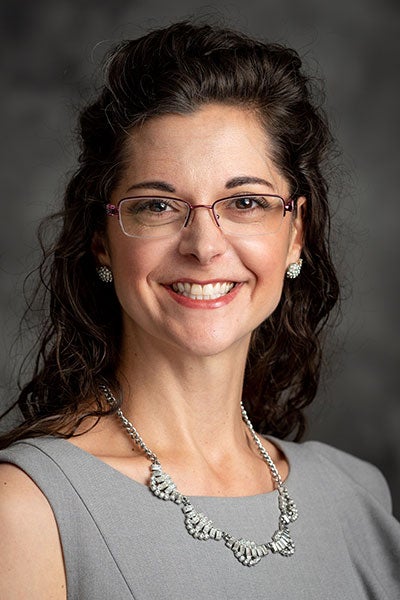
When Jessica Taylor, PhD, returned to the classroom after a brief step back from the academic sphere, it was with a purpose: To help graduate students better understand themselves as they navigate challenging academic and professional paths. Her success in that goal is now being recognized by Case Western Reserve University—and her students—through the John S. Diekhoff Award for Graduate Teaching.
Across her nomination materials, what distinguishes Taylor is clear: her deep commitment to students who may not fit the traditional mold. Her teaching philosophy centers on guiding those students to the right path—even if it’s not the one they originally thought they’d be on.
“The overwhelming majority of our students have had a hiccup along the way,” she shared. “And that’s okay; they just need somebody to help them.”
Taylor has been that “somebody” for hundreds of graduate students at CWRU.
A cardiovascular and exercise physiologist, Taylor has shifted her research focus after choosing a career centered on teaching. She now conducts medical education research, with a particular emphasis on precision education—an approach through which she examines factors predicting student success and uses that data to better tailor the experience for each student.
She applies what she learns in her research to her roles as an associate professor at the School of Medicine in the Department of Physiology and Biophysics and associate director of the Master of Science in Medical Physiology program, where she not only works closely with individuals as they prepare for and pursue careers in health and science, but also shapes the program for future students.
The Diekhoff Award, which is based on student nominations, holds special meaning for Taylor. “It means my kids were heard,” she said, referring affectionately to her students.
Ultimately, Taylor hopes her students leave with more than a degree.
“I hope they end up somewhere where they're happy, and that they remember what we taught them,” she said. “Not just the knowledge, but the skills they carry forward. And that they someday come back and say, ‘Hey, this was a good experience.’”