Recent news at CWRU School of Medicine
Cancer Center receives $25.5 million grant renewal

The Case Comprehensive Cancer Center has received a $25.5 million renewal grant from the National Cancer Institute (NCI), marking 38 years of continuous NCI funding since the center’s founding in 1987. The grant reaffirms the center’s key role in integrating the expertise of cancer researchers and clinicians among partner organizations Case Western Reserve University, University Hospitals and Cleveland Clinic.
“This award reflects the extraordinary capabilities of our research teams and the enduring strength of our consortium institutions,” said Gary Schwartz, MD, the center’s director, vice dean for oncology at CWRU School of Medicine and the Peter and Laurie Weinberger Professor in Cancer Research.
The merit score for the award ranked the center among the top 4.1% of NCI-designated cancer centers nationwide. The center uses grant funding to support research initiatives that detect, treat, and prevent cancer, educate and train current and future cancer scientists, and provide outreach to 4 million people in a 15-county area.
A ‘consummate educator’ and his lasting legacy: Lerner College’s executive dean steps down
Story By: Kayla Kingston

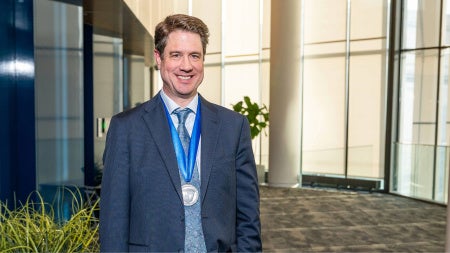
J. Harry “Bud” Isaacson, MD—who forged an innovative, collaborative and successful academic program as executive dean of Cleveland Clinic Lerner College of Medicine of Case Western Reserve University for more than seven years—stepped down at the end of 2025. He’ll continue his practice in general internal medicine as well as teaching and coaching at Cleveland Clinic.
Isaacson led the Lerner College and its five-year academic program through the challenges of the COVID-19 pandemic and the expansion of student applications and a curriculum that came to include pressing environmental issues and closer connections to the local community.
“From the earliest planning stages, our mission has been to create physician-investigators who are scientifically rigorous and also deeply compassionate, highly skilled clinicians,” said Isaacson, who was part of the planning before the 2004 opening of Lerner College, a CWRU program offered in partnership with Cleveland Clinic.
“Bud is the consummate educator,” said Lia Logio, MD, CWRU School of Medicine’s vice dean for medical education. “He has been a strong advocate for what is best for students and for upholding the high professional standards necessary.”
Isaacson “is not only a great clinician and educator but also a true coach and mentor,” said Neil Mehta, MD, associate dean for curricular affairs at Lerner College. “His unique ability to bridge differences and foster collaboration, even in the most complex matrixed environments, has always been inspiring.”
For Christine Warren, MD (MED ’09; GRS ’09, clinical research)—who first met Isaacson when she was in Lerner College’s inaugural class—his leadership and presence have been instrumental in fostering its close-knit, collaborative culture. “He is widely known as someone who ‘shows up’—whether to celebrate the achievements of others or to work alongside colleagues in addressing challenges,” said Warren, now associate dean for admissions and student affairs at Lerner College.
“He will truly be missed.”
Professor Anthony Wynshaw-Boris elected to the National Academy of Medicine
Story By: Kayla Kingston

Last fall, the prestigious National Academy of Medicine elected just 90 regular members and 10 international members to its ranks—a designation considered one of the highest honors in health and medicine.
Among the new members: Anthony Wynshaw-Boris, MD, PhD (GRS ’84, biochemistry; MED ’87), the James H. Jewell M.D. ’34 Professor of Genetics at CWRU School of Medicine’s Department of Genetics and Genome Sciences and a pediatric geneticist at University Hospitals Rainbow Babies & Children’s Hospital.
He was recognized for advancing research on the development of certain nervous-system disorders, including autism, and identifying targets for potential therapies.
The academy also highlighted Wynshaw-Boris’s work defining the actions of genes responsible for certain brain and nervous-system diseases, which in turn have led to major advances in understanding how both developmental nervous-system diseases and cancer disrupt normal bodily functions. He was also credited for his creative studies identifying targets for potential therapies.
“Being elected to the National Academy of Medicine is a tremendous honor,” he said, “and is a testament to the outstanding postdoctoral researchers and students who have worked in my lab as well as the collaborators that I have been fortunate to work with.”
“Being elected to the National Academy of Medicine is a tremendous honor and is a testament to the outstanding postdoctoral researchers and students who have worked in my lab as well as the collaborators that I have been fortunate to work with."
— Anthony Wynshaw-Boris, MD, PhD
A student and professor each earn prestigious Fulbright Awards
Screening newborns
Story By: Katie Laux
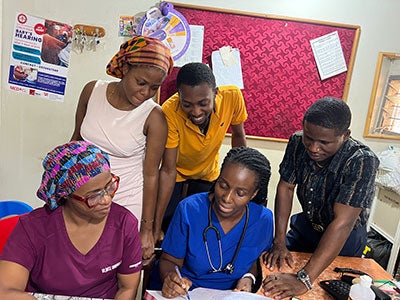
During a childhood encounter in a Ghanaian orphanage, Akua Abrah found her calling caring for the smallest of patients.
A fourth-year student at Cleveland Clinic Lerner College of Medicine, Abrah returned to her native Ghana in August as a Fulbright-Fogarty Fellow in Public Health. She is conducting a study involving glucose-6-phosphate dehydrogenase (G6PD) deficiency, a common but potentially serious condition that, in newborns, can result in severe jaundice, which in Ghana remains one of the leading causes of neonatal deaths.
Abrah has partnered with the Northern Pacific Global Health Research Fellows Training Consortium in Kumasi for nine months. She is screening newborns for the deficiency, following them over their first 28 days of life to monitor for jaundice-related complications, provide educational materials to parents and assess the cost-effectiveness of making the screening part of routine care. “It has been an amazing learning experience thus far,” she wrote in an email.
In June, Abrah will return to Cleveland to complete the final year of her physician-investigator training. She aims to practice neonatology in the United States and resource-limited settings across sub-Saharan Africa.
“Seeing firsthand how dedicated providers adapt creatively to the constraints of a resource-limited setting has shaped my understanding of what truly drives impactful newborn care,” Abrah wrote in an email, “and I will carry this insight forward as a future neonatologist committed to reducing preventable newborn deaths and strengthening neonatal care globally.”
Improving radiation therapy
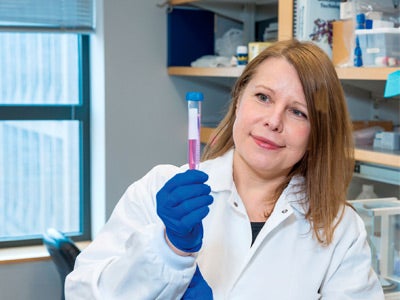
Agata Exner uses nanomedicine to enhance ultrasound imaging in the detection and treatment of cancer. Recently, her innovative, interdisciplinary research earned Exner a Fulbright award, which recently took her to Jagiellonian University in Krakow, Poland, for three months for a cancer radiation collaboration. Founded in 1364, it is one of the oldest universities in Europe.
“I’m really excited about this opportunity,” said Exner, PhD (CWR ’98, GRS ’00, ’03, biomedical engineering), the Henry Willson Payne Professor and vice chair of basic research in the Department of Radiology, director of the CWRU Center for Imaging Research and co-lead for the cancer imaging program at Case Comprehensive Cancer Center.
“Science does not thrive in isolation,” continued Exner, who is from a small town in southern Poland. “New collaborations can advance new tools, which can help solve urgent clinical problems.”
Exner is collaborating on research to explore new applications to essentially use nanoparticles to carry oxygen into the low-oxygen core of tumors to increase the effectiveness of radiation, which needs oxygen to kill cancer cells. The project combines her expertise in materials and ultrasound with the expertise of Jagiellonian faculty in radiation biology to potentially improve the effectiveness of radiation.
And once she’s back on campus, Exner said, she aims to continue the collaboration by seeking additional funding opportunities and forging student exchange and training programs. “It’s going to strengthen our research program,” she said.
Honoring medical faculty legacies
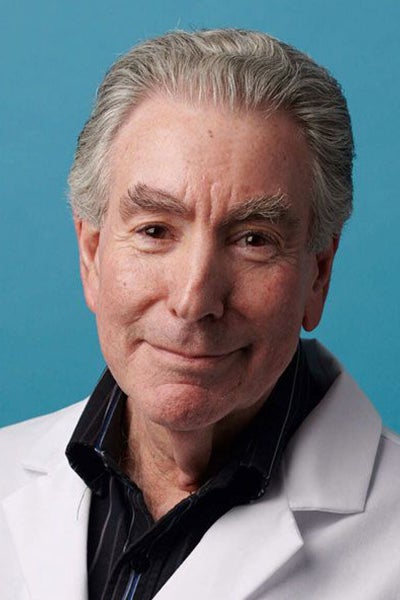
Jerry Silver, PhD (GRS ’74, anatomy)
Story By: Lisa Danielpour
A professor of neurosciences, he was committed to restoring meaningful function to millions of people worldwide with spinal cord injuries. Silver was a 45-year faculty member at Case Western Reserve University School of Medicine whose groundbreaking research in neuroscience and neural regeneration combined with his entrepreneurial spirit produced extraordinary discoveries to help patients. Silver died Jan. 7, 2025. He invented ADCON, a potent federally approved, anti-fibrotic gel, commercialized by Gliatech, used to prevent severely painful adhesions that can form initially after trauma or infection. His lab also developed a technology to help regenerate nerves after spinal-cord injuries that CWRU licensed to NervGen. (See p. 23 for more on NervGen’s work to advance the technology.)
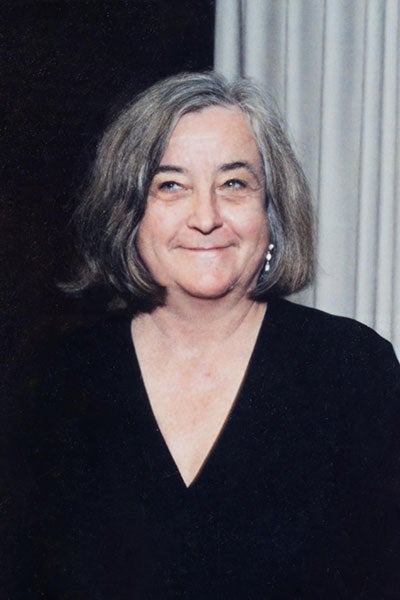
Lynn Landmesser, PhD
Story By: Lisa Danielpour
She was a longtime professor and renowned developmental neuroscientist who died Nov. 29, 2024. Her landmark research focused on identifying how genetically encoded molecular signals and the environment interact to form complex neural circuits during embryonic and postnatal development—a process that laid the groundwork for finding ways to restore lost movement. A Distinguished University Professor, Landmesser made countless contributions to prestigious biomedical organizations, including serving on the Scientific Review Board for the Howard Hughes Medical Institute for almost 20 years and as president of the Society for Developmental Biology. She also served on various committees for the Society for Neuroscience and the Sloan Research Fellows Selection Committee for Neuroscience.

Ge Jin, PhD (GRS ’00, physiology)
Story By: Kayla Kingston
A distinguished cancer and virology researcher and professor in the School of Medicine, he died Dec. 6, 2025. Jin made what is considered a paradigm-shifting contribution to science: discovering that exosomes (tiny signal-carrying particles) that are released from HIV-infected T cells promote the growth of oral, oropharyngeal and lung cancer cells. His work provided new insights into the biology of HIV and its relationship to cancer. As a mentor, Jin inspired students to pursue research with integrity and purpose. He became a professor in the School of Dental Medicine 20 years ago, later joining the medical school. Jin was also a member of the Case Comprehensive Cancer Center.